
Last updated November 3, 2026
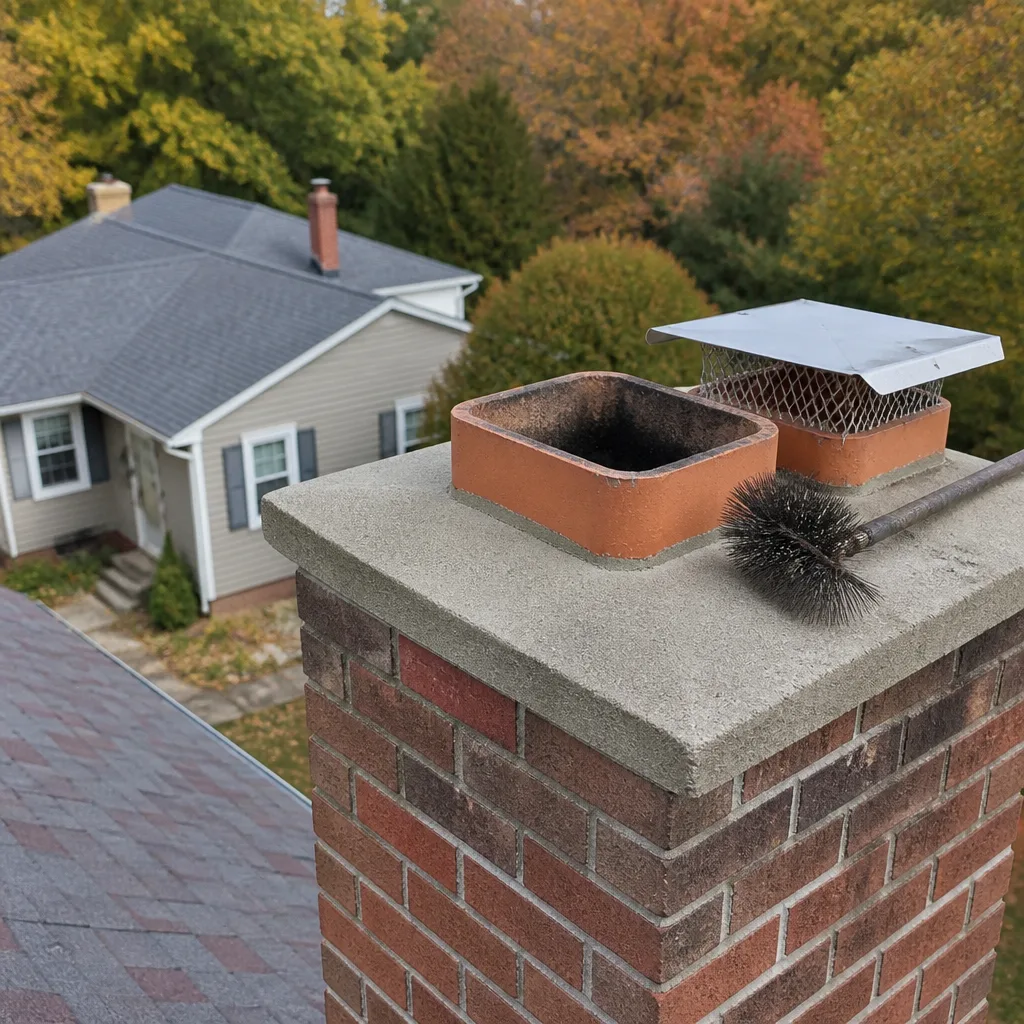 Sweep & inspection
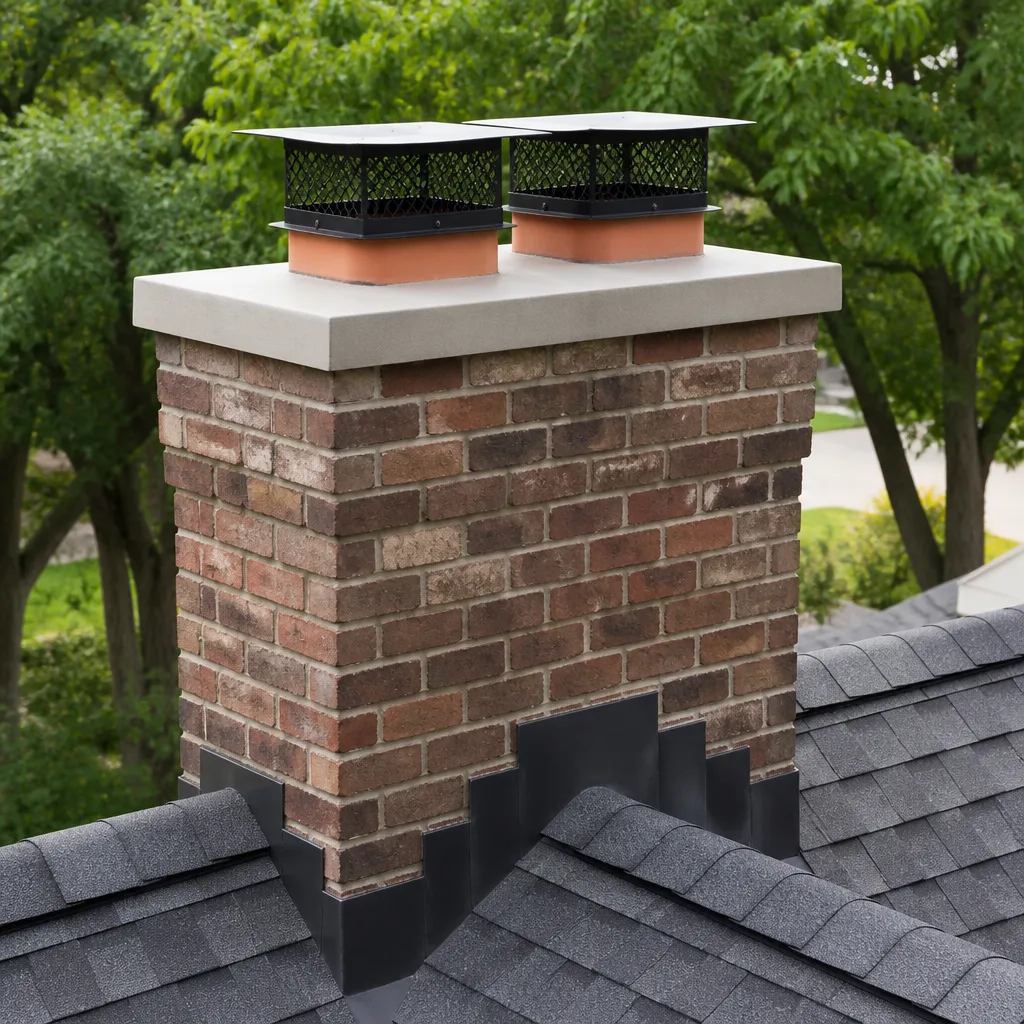 Caps & crowns
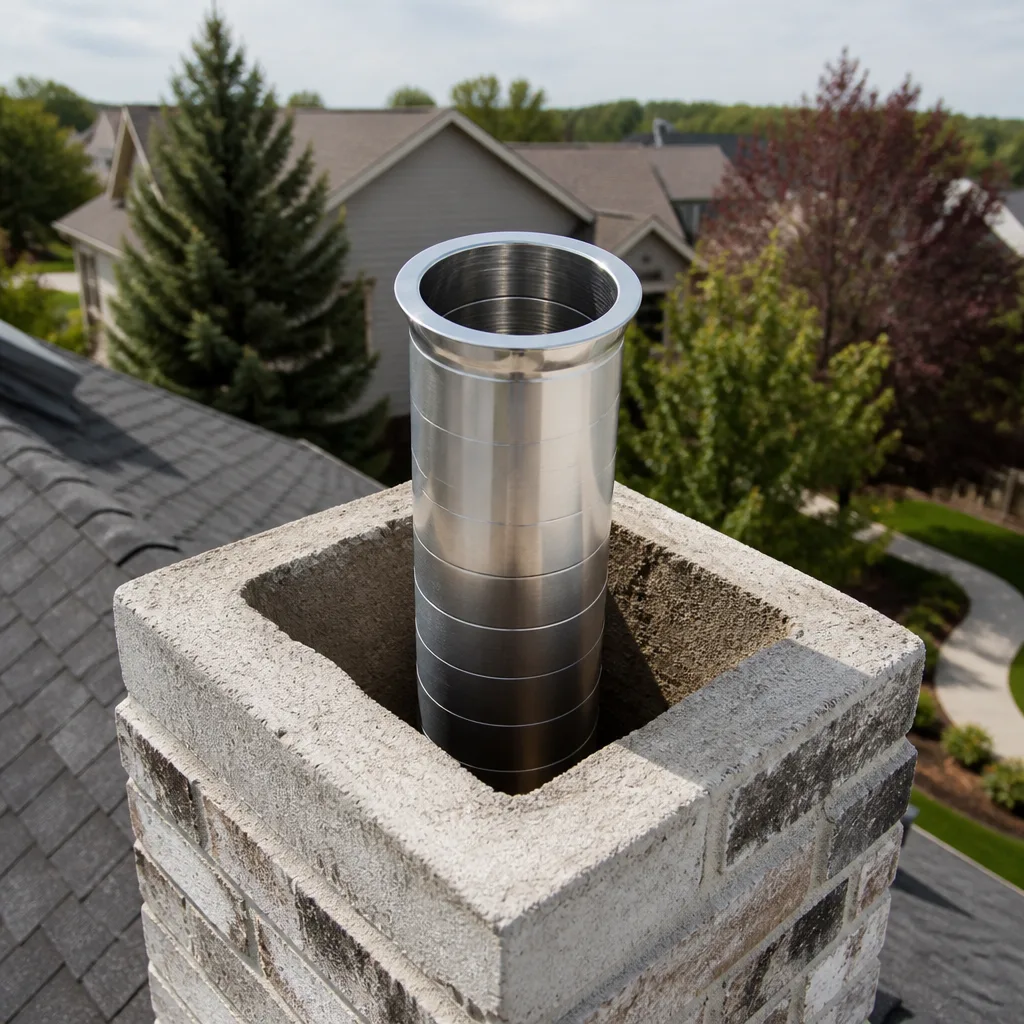 Flue relining
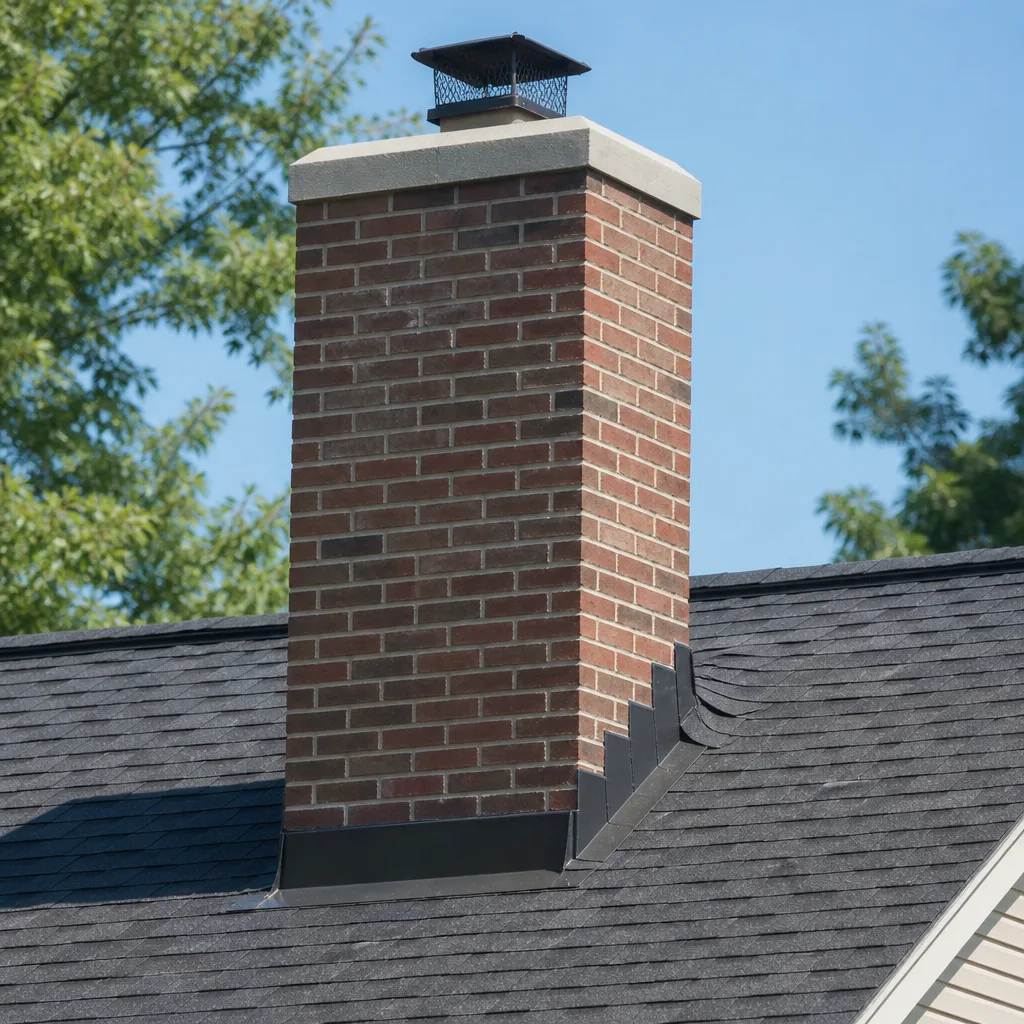 Masonry repair
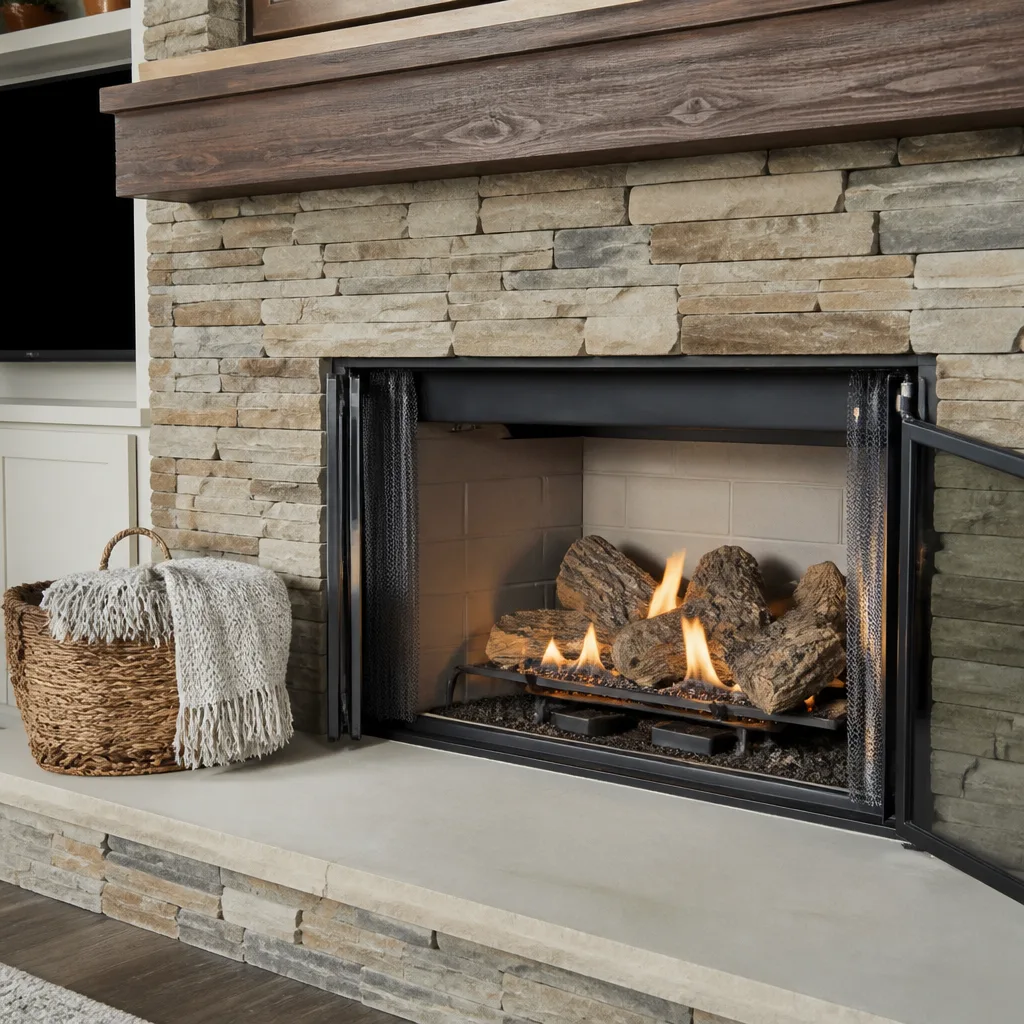 Gas fireplace service
Level 1 sweep and inspection to the NFPA 211 annual standard - flue, crown, cap, and flashing checked and photographed
Chimney sweep logs do not sweep chimneys. They loosen some creosote - which then falls where a brush and vacuum still have to collect it.
The Complete Chimney Sweep Guide for Encinitas Homeowners
Most Encinitas homeowners use their fireplace fewer than ten times a year. That sounds like good news for the chimney until you understand what actually happens inside a flue that sits idle for eleven months at a time. The coastal marine layer that rolls through Encinitas each evening introduces moisture that combines with cool, dormant flue surfaces, and when you do light a fire, the low heat of a casual evening burn produces a tar-like creosote that’s significantly harder to remove than the powdery stuff cold-climate chimneys accumulate. This guide walks through exactly what a thorough Chimney Sweep in Encinitas should cover, why the coastal climate changes the maintenance equation, and what you should know before anyone sets foot on your roof.
Quick Answer
A complete chimney sweep in Encinitas should cost between $189 and $329 for a standard Level 1 cleaning and inspection, take 45 to 90 minutes, and include the flue liner, smoke chamber, damper, firebox, chimney crown, and cap. Coastal Encinitas homes with salt air exposure and low-use fireplaces typically need annual inspection regardless of burn frequency, because Stage 2 tar-like creosote and mortar deterioration develop even when the fireplace sits unused. A sweep that doesn’t physically check the crown and smoke chamber isn’t a sweep, it’s a dusting.
Styles & brands we work with
- Sweep & inspection
- Caps & crowns
- Flue relining
- Masonry repair
- Gas fireplace service
Table of Contents
- The Anatomy of a Chimney Inspection: What’s Actually Being Checked
- Why the Encinitas Coastal Climate Changes Your Chimney’s Behavior
- Level 1, Level 2, Level 3: Which Inspection Does Your Chimney Need?
- Stage 1 vs. Stage 2 Creosote: Why Low-Use Fireplaces Are Trickier Than You’d Think
- What a Complete Sweep Appointment Should Include: A Checklist
- How Much Does a Chimney Sweep Cost in Encinitas?
- San Diego County Code Requirements for Wood-Burning Fireplaces
- How Often Should You Sweep a Chimney in Encinitas?
The Anatomy of a Chimney Inspection: What’s Actually Being Checked
When we inspect a chimney, we’re not just looking at whether the flue has soot in it. A real inspection covers seven distinct zones, each with its own failure modes and each affected differently by Encinitas’s coastal environment. Knowing these zones matters because it lets you verify that the technician actually did the work rather than running a brush up and down and calling it done.
Here’s the full sequence we work through on every chimney sweep in Encinitas:
- Chimney crown: The concrete or mortar cap at the very top. Hairline cracks here let rainwater into the masonry, and in Encinitas, salt-laden moisture accelerates spalling. We check for cracks, crumbling, and whether the crown overhangs the chimney body properly.
- Chimney cap and spark arrestor: The metal cover that keeps rain, birds, and debris out. Salt air corrodes cheap galvanized caps within a few years. We check for rust-through, blockage, and mesh damage.
- Flue liner: The passage that carries smoke up and out. Clay tile liners crack under thermal stress and seismic movement. Stainless steel liners corrode at weld points in coastal environments. We’re looking for gaps, cracks, and any signs that combustion gases could be leaking into wall cavities.
- Smoke chamber: The transitional area above the firebox where smoke compresses and accelerates before entering the flue. This area is often inaccessible without specialized equipment, which is why it gets skipped by less thorough sweeps. Corbeled brick and mortar deteriorate quietly here.
- Damper: The metal door that closes off the flue when the fireplace isn’t in use. Coastal rust is the enemy. A damper that won’t seal lets conditioned air escape year-round and lets marine layer moisture seep down into the firebox.
- Firebox: The chamber where the fire burns. We check for cracked firebrick, deteriorated mortar joints, and signs that heat has been escaping into surrounding framing.
- Hearth and clearance: The non-combustible floor extension and the space around the fireplace opening. We verify that clearances meet code and that no combustible materials have crept too close.
Each zone tells a story. A clean flue with a cracked crown is still a fire hazard and a water damage claim waiting to happen. A spotless firebox with a deteriorated smoke chamber is still a carbon monoxide risk. That’s why we say fire safety starts with what’s inside the flue, not just what you can see from the hearth.
Why the Encinitas Coastal Climate Changes Your Chimney’s Behavior
Chimneys in Encinitas age differently than chimneys in Poway or Escondido, and the difference comes down to two things: salt and moisture. The marine layer that sits over coastal North County for hours each day carries salt particles that settle on every exterior surface, including your chimney crown and cap. That salt is hygroscopic, meaning it attracts and holds moisture against the masonry. The result is a slow-motion corrosion cycle that inland chimneys don’t experience.
In our experience working on chimneys throughout Encinitas, from Leucadia up to Cardiff, we see the same pattern repeat: mortar joints at the top of the chimney soften years before the rest of the structure shows wear, because that’s where salt-laden moisture pools. Caps made of thin-gauge steel rust through at the seams. Dampers seize open or closed. And throughout all of it, the homeowner sees nothing from the living room.
What should you look for annually?
- Efflorescence: White, chalky deposits on exterior brick or masonry. It means moisture is moving through the masonry and carrying minerals with it. In Encinitas, this is often the first visible sign of salt working its way into the structure.
- Rust staining: Orange streaks below the cap or around the damper handle. This tells you corrosion is active and likely progressing.
- Spalling brick or stone: Faces of brick popping off, leaving exposed rough interiors. Coastal moisture penetrates the surface, and when it evaporates, the mineral expansion fractures the outer layer.
- Damper operation: A damper that’s harder to open or close than it was last year is often a sign that the metal throat or hinge is corroding.
One thing to be clear on: none of this is an emergency in the sense that you need to act today. But it’s also not something you can ignore for five years and expect to escape with a light cleaning. The coastal environment works slowly and steadily. An annual visual inspection by someone who knows what coastal chimneys look like is the cheapest form of insurance you can buy for a masonry structure.
Level 1, Level 2, Level 3: Which Inspection Does Your Chimney Need?
The National Fire Protection Association’s NFPA 211 standard defines three inspection levels, and knowing which one applies to your situation prevents you from paying for more than you need, or worse, accepting less than the situation requires. Here’s how each level breaks down for an Encinitas home.
Level 1 inspection: This is the standard annual check when nothing has changed. The technician examines all readily accessible areas: the exterior, the firebox, the damper, and the portions of the flue visible from above and below. No special equipment is needed. A Level 1 inspection always accompanies a standard chimney sweep. For most Encinitas homeowners with a fireplace that’s working normally, this is the appropriate scope.
Level 2 inspection: This becomes necessary when something has changed. That includes: buying or selling a home, changing fuel type (for example, converting a wood-burning fireplace to gas), experiencing a chimney fire, or any event that could have damaged the flue structure. In Encinitas specifically, a Level 2 inspection is warranted after a strong Santa Ana wind event if you suspect debris or structural movement, and it’s typically required after a nearby wildfire, because the flue liner can be damaged by the intense heat and particulate matter even if your home itself was untouched. A Level 2 inspection uses video scanning equipment to see the entire interior surface of the flue liner.
Level 3 inspection: This is the invasive one. It’s required when a Level 1 or Level 2 inspection reveals a suspected hazard that can’t be confirmed without opening up part of the structure. That might mean removing a section of chimney wall, a portion of the flue liner, or other building components. Level 3 inspections are rare, and they’re almost always the precursor to a significant chimney repair, not a routine maintenance step.
The takeaway: if someone quotes you a sweep price without asking whether anything has changed with your fireplace or home, they’re not doing an inspection, they’re selling a brush run. And if your home went through a wildfire event or a seismic shift and you’re told a basic visual check is sufficient, that’s a red flag. Encinitas sits in a seismically active region, and the Chimney Repair in Encinitas calls we receive often trace back to events the homeowner forgot about, a small earthquake, a Santa Ana event, a chimney fire they didn’t even realize had occurred. The inspection level exists to match the scope of work to the history of the structure.
Stage 1 vs. Stage 2 Creosote: Why Low-Use Fireplaces Are Trickier Than You’d Think
Creosote forms in three stages, and here’s the counterintuitive part that most guides get wrong: the nastiest stage for a coastal, low-use fireplace is Stage 2, the tar-like glaze that most people associate with fireplaces that burn constantly. It’s not constant burning that produces Stage 2 creosote in Encinitas. It’s the combination of cool flue surfaces, low-temperature fires, and moisture.
Here’s the progression:
- Stage 1: A fine, dusty, black or brown powder. This is what forms in hot, efficient fires and is relatively easy to remove with a standard wire brush. If you burn hot fires frequently in a well-drafted chimney, Stage 1 is what you’ll mostly find.
- Stage 2: A dark brown or black tar-like glaze that looks like dried molasses stuck to the inside of the flue. It’s hard, sticky, and will resist a standard wire brush. This is the form that develops in Encinitas fireplaces that are used occasionally, because the fires are never hot enough for long enough to burn off the condensation, and the coastal moisture adds to the accumulation. Once Stage 2 creosote forms, the sweep requires different tools: rotary loops, chemical treatments, or both.
- Stage 3: A hardened, thick layer that can resemble road tar. This is a serious fire hazard and often signals that a chimney fire has already occurred, or that conditions are ripe for one. Stage 3 creosote typically requires chemical treatment or liner replacement rather than mechanical sweeping alone.
For a homeowner in Encinitas who uses the fireplace for ten casual evenings a year, Stage 2 creosote is common. The fires are started with a firelog or a bundle of grocery store wood, they burn at low intensity for a couple of hours, and the flue never gets hot enough to drive off the moisture that condenses on its walls. The result is a sticky, difficult-to-remove coating that builds up in exactly the homes where people think they don’t have a problem.
This is why, as detailed in The Complete Guide to Chimney Cleaning in Encinitas, we don’t price a chimney sweep based on how many fires you’ve burned. We price it based on what’s actually inside the flue. A fireplace used twice a year can produce a harder cleaning than one used twice a week, and the coastal climate in Encinitas tilts the odds toward the harder end of that spectrum. Some of our most involved cleanings in neighborhoods like Olivenhain and Crest have been in fireplaces the homeowner used the least. The chemistry of creosote formation doesn’t care about your intentions, it cares about flue temperature and moisture, and those are working against you in a coastal climate.
What a Complete Sweep Appointment Should Include: A Checklist
When you book a chimney sweep, you’re not paying for a brush to go up and down. You’re paying for a systematic inspection of every component of the venting system, followed by a cleaning that addresses what the inspection found. Here’s what a complete appointment looks like from start to finish, written so you can check off the boxes as the work happens:
- Interior protection setup: Drop cloths laid from the entry to the fireplace, a HEPA or high-suction vacuum staged at the firebox opening, and the room sealed off to prevent soot migration. If the technician starts work without protecting the room, the job is already going sideways.
- Exterior access and roof inspection: The technician goes on the roof and examines the crown, cap, and chimney exterior. In Encinitas, this is the moment to catch salt-damaged caps and cracked crowns. If the technician never goes on the roof, the crown is not being checked.
- Firebox inspection: A visual check of the firebrick and mortar inside the firebox, looking for cracks, gaps, and heat damage. The damper is opened and examined for corrosion and proper function.
- Flue brushing: The actual mechanical sweeping of the flue liner, using brushes sized to the flue dimensions. For Stage 2 creosote, this may involve rotary equipment rather than a standard brush.
- Smoke chamber cleaning: The area above the damper where smoke compresses. This is one of the most commonly skipped steps in cheap sweeps, because it’s awkward to access. If it’s not cleaned, creosote continues to build up hidden from view.
- Post-sweep video or photo documentation: After the sweep, a camera scan of the flue interior shows what remains. You should receive this footage or still images. We include camera inspection and a photo report on every job, because it’s the only way to know what condition the liner is in after the creosote is removed.
- Report and recommendations: A written summary of what was found, what was done, and what, if anything, needs attention. If repair work is recommended, you should see the evidence: photos of the crack, the corrosion, the failed mortar joint.
Notice that this list is long on inspection and documentation and relatively short on brushing. That’s the correct ratio. A brush costs ten dollars. The expertise, the access equipment, the documentation, and the judgment to know what needs attention and what can safely wait, that’s what you’re paying for. For more guides & resources, see our blog. A clean chimney and a repaired one aren’t the same thing. We do both, and the sweep is where we determine which one you need.
For homeowners who want to handle the dryer vent side of things at the same time, one call covers your chimney and your dryer vent, both fire risks, one specialist. Our dryer vent cleaning in Encinitas service runs on the same principle: inspect the full vent run, document what’s inside, clean what needs cleaning, and report what you saw.
How Much Does a Chimney Sweep Cost in Encinitas?
In Encinitas, a standard chimney sweep with Level 1 inspection typically runs between $189 and $329. The spread comes down to what’s inside the flue, not how many fires you’ve burned. Here’s the breakdown of what drives that number:
| Service Component | Typical Range in Encinitas | What Affects the Price |
|---|---|---|
| Standard chimney sweep + Level 1 inspection | $189 – $249 | Flue size, access difficulty, roof pitch |
| Sweep with Stage 2 creosote removal | $249 – $329 | Tar-like buildup requires rotary tools and more time |
| Level 2 inspection (video scan) | $100 – $250 (add-on) | Required after wildfire, property sale, or system changes |
| Dryer vent cleaning | $119 – $189 | Vent run length and accessibility |
| Chimney cap replacement | $150 – $350+ | Material grade; coastal homes benefit from stainless steel |
If you’re seeing prices significantly below these ranges, ask what’s not included. In a coastal climate like Encinitas, the cheap sweep is usually the one that skips the smoke chamber, never goes on the roof, and doesn’t include any documentation. You’re not saving money, you’re just paying less for less work.
We recommend flat-price sweeps agreed before we book, because the last thing an Encinitas homeowner needs is a surprise upcharge once the technician discovers Stage 2 creosote. Call (866) 282-6347 for an exact quote on your fireplace and chimney. The estimate is free, and you’ll know the price before we arrive.
San Diego County Code Requirements for Wood-Burning Fireplaces
San Diego County regulates wood-burning appliances through a combination of state air quality rules and local fire safety codes. Understanding what applies to your Encinitas home prevents a surprise during a remodel, sale, or home inspection. Here are the key points:
- Residential wood-burning restrictions: San Diego County’s Air Pollution Control District restricts wood-burning on certain days when air quality is poor. While the fireplaces themselves are not banned for existing homes, new construction and major renovations face restrictions on installing new wood-burning fireplaces. Encinitas homes built in recent years typically have gas hearths for this reason.
- New construction rules: New wood-burning fireplaces must meet EPA emission standards, and in many San Diego County jurisdictions, gas fireplaces are the default for new construction. Existing wood-burning fireplaces are grandfathered but must be maintained to fire safety standards.
- Inspection triggers: A Level 2 inspection is required by NFPA 211 when a property changes hands, when the fuel type changes, or after any event that could damage the flue: earthquake, wildfire, chimney fire. In Encinitas, real estate transactions almost always trigger a Level 2 inspection, because the buyer’s home inspector will flag any fireplace with unknown maintenance history.
- Santa Ana wildfire preparedness: While not a code requirement per se, many insurance carriers in San Diego County now ask about chimney maintenance and cap condition as part of wildfire risk assessment. A chimney without a proper spark arrestor cap is a fire risk in high-wind conditions, and some insurers will decline coverage or raise rates if the deficiency is documented.
- Chimney repair permits: Structural chimney repairs, including full liner replacement and major masonry work, require permits in San Diego County. A chimney repair in Encinitas that involves structural changes should be permitted and inspected, not done on the side.
If you’re not sure whether your specific situation requires an inspection or a permit, the fastest path to an answer is a conversation with someone who deals with San Diego County chimney code every day. We’re happy to talk through the specifics of your Encinitas home and tell you exactly what applies.
How Often Should You Sweep a Chimney in Encinitas?
The standard recommendation from the National Fire Protection Association is to have your chimney inspected annually and swept as needed. That recommendation holds in Encinitas, with one important local modification: the “as needed” threshold is often lower here than it is in a cold-climate home, because the type of creosote that forms in coastal, low-use fireplaces is more hazardous than the powder that forms in high-use, cold-climate chimneys.
Here’s a practical schedule that works for most Encinitas homeowners:
- Annual inspection, every year: Even if you didn’t light a single fire. The inspection catches coastal corrosion, crown cracks, and damper issues before they become expensive repairs. Think of it like an annual termite inspection, but for the fire safety system inside your home.
- Sweep when buildup warrants: For a fireplace used fewer than 10 times a year, that’s typically every 1 to 2 years. The determining factor is the creosote stage, not the calendar. Some Encinitas fireplaces need a sweep every year because the coastal conditions accelerate Stage 2 formation. Others can go 24 months without issue. Only a visual inspection can tell you which camp you’re in.
- Level 2 inspection after any significant event: Earthquake, Santa Ana-driven debris impact, nearby wildfire, chimney fire. In a seismically active coastal zone, these events happen more often than homeowners remember.
- Dryer vent cleaning annually: While not technically part of the chimney schedule, we recommend dryer vent cleaning on an annual cycle for any Encinitas home with a laundry room. Lint accumulations in a vent that runs through coastal air humidity form a dense, sticky pack that’s harder to remove and more flammable than lint in dry inland climates. Our chimney cleaning Encinitas home service page covers the combined maintenance schedule for both systems.
If you’ve lived in your Encinitas home for more than two years and can’t remember the last time anyone looked at the chimney, you’re due. Not because something is definitely wrong, but because the only way to know is to look. And in a coastal climate, looking should happen every year.
Common Mistakes to Avoid
- Skipping the crown check: In Encinitas, the crown is the first component to fail because it bears the direct brunt of salt-laden marine layer moisture. A sweep that doesn’t include a roof-level crown inspection is missing the single most common point of coastal failure.
- Using chemical creosote logs as a substitute for sweeping: Creosote sweeping logs can reduce Stage 1 buildup, but they don’t remove Stage 2 tar-like creosote and they can’t inspect the flue. They’re a supplement for some fireplaces, never a replacement for a real sweep.
- Assuming a gas fireplace never needs service: Gas hearths don’t produce creosote, but they do accumulate dust, spider webs, and mineral deposits that clog burners and venting. Gas fireplaces in coastal homes can also develop corrosion in the venting that requires a specialist’s eye.
- Ignoring the dryer vent because “it’s just a dryer”: Dryer lint is more combustible than most homeowners realize, and in coastal humidity, it packs into a dense, sticky blockage that’s hard to remove. A clogged dryer vent is a house fire risk, and it’s an issue you can address with the same call that handles your chimney.
- Going with the cheapest sweep quote without asking what’s included: A low price that skips the smoke chamber, never visits the roof, and provides no documentation is not a savings. It’s a partial service that leaves the most dangerous areas untouched.
- Assuming infrequent use means no maintenance needed: The ironic truth of coastal low-use fireplaces is that they sometimes require more involved cleaning than daily-use fireplaces in cold climates. The creosote that forms in a cool, moist, low-use flue is the sticky kind, and it doesn’t brush away easily.
See the difference
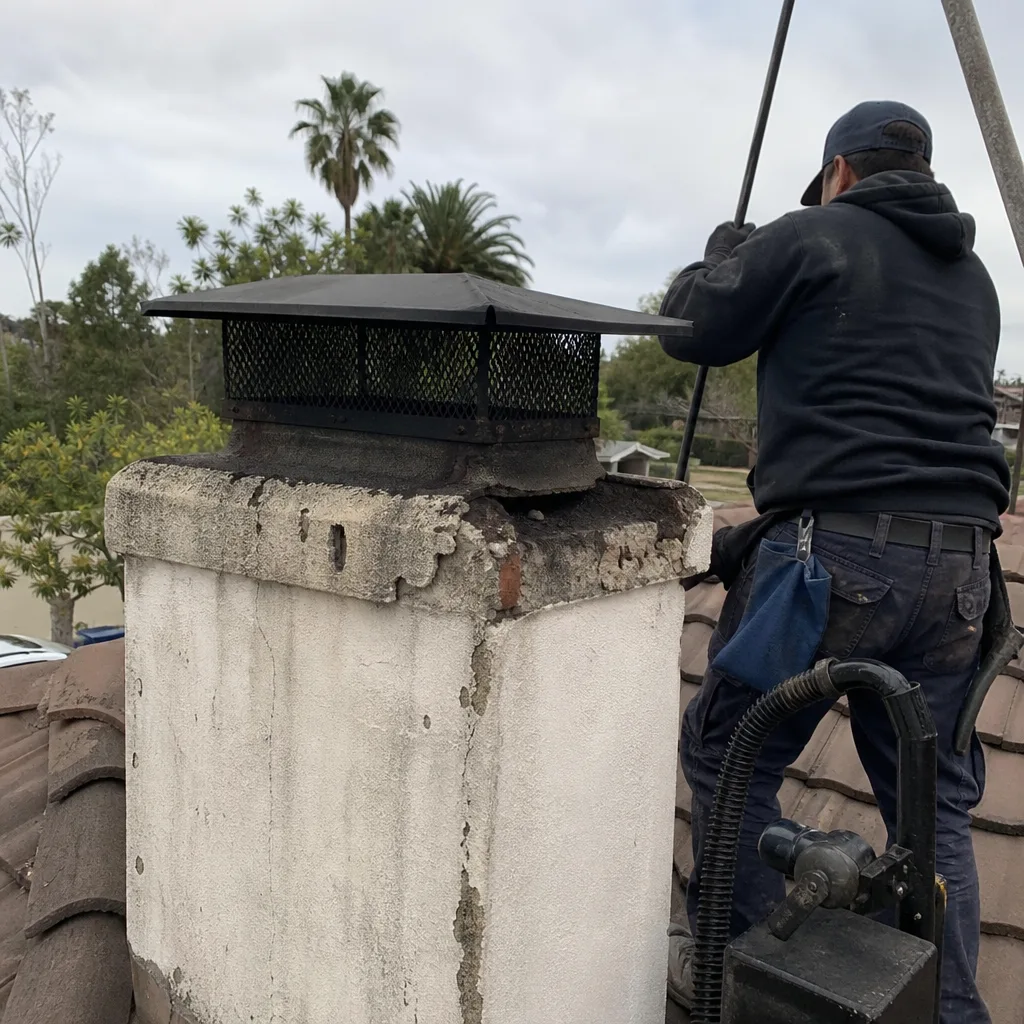 Before
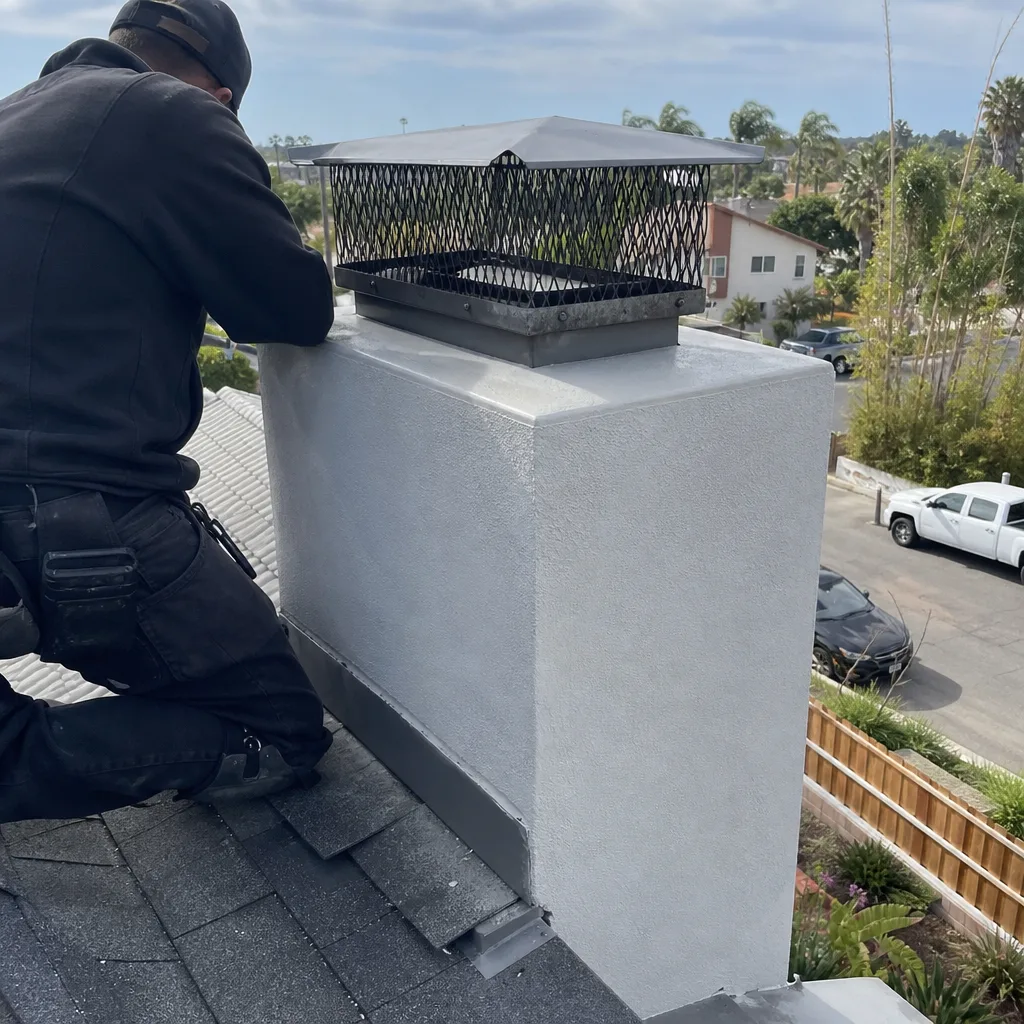 After
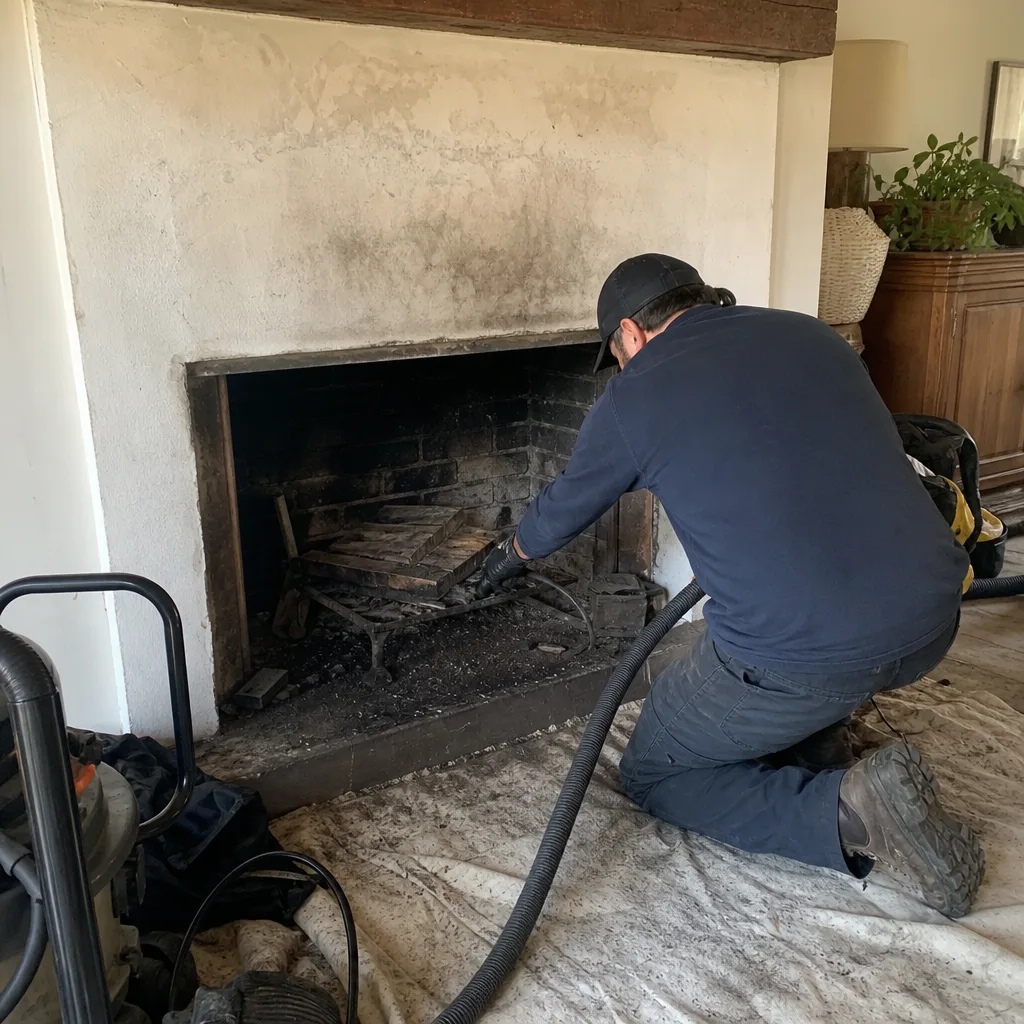 Before
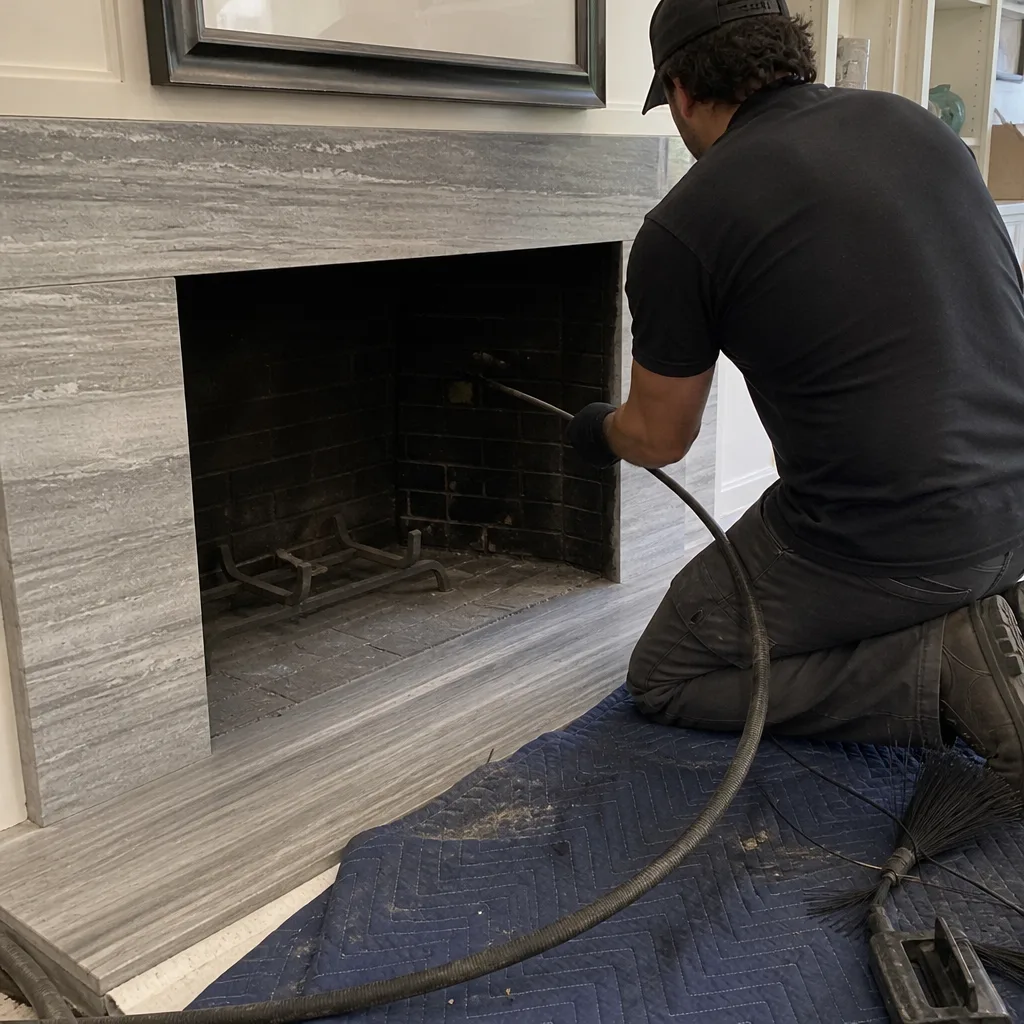 After
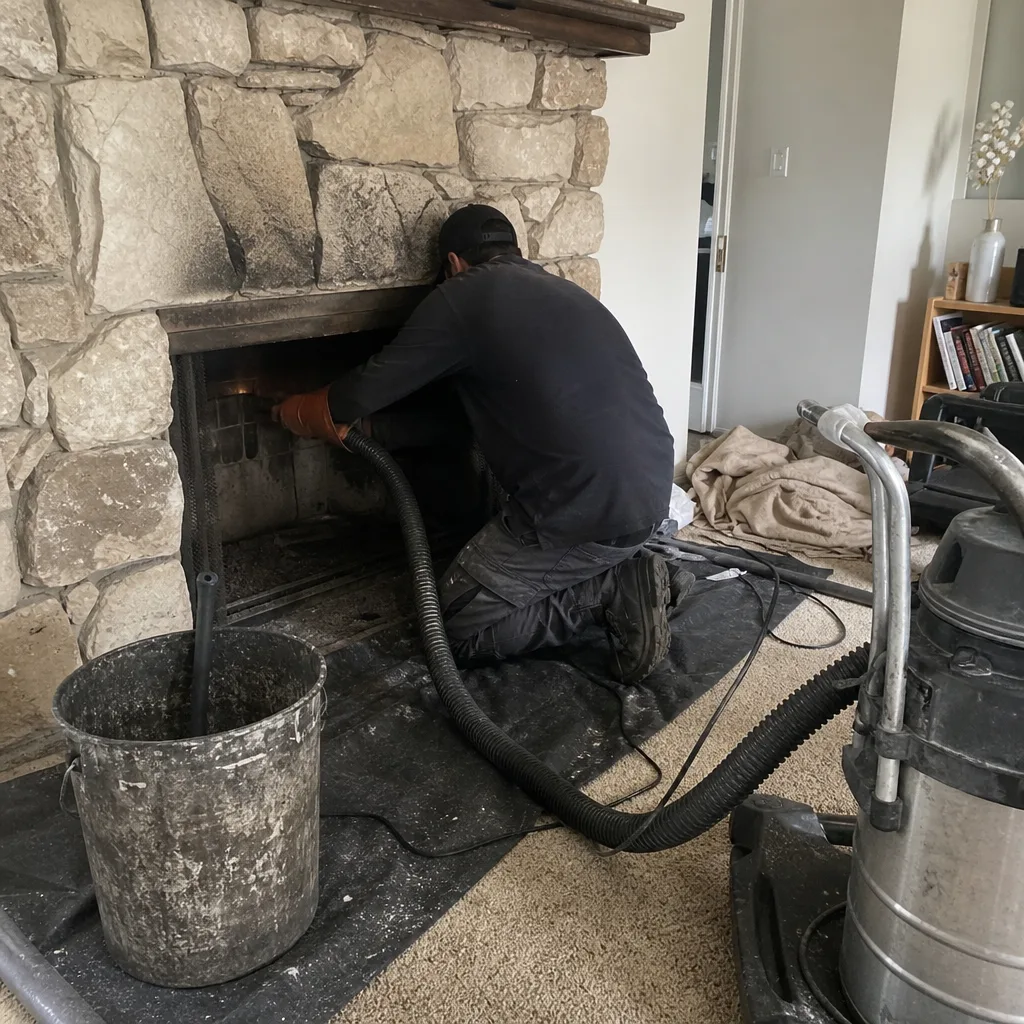 Before
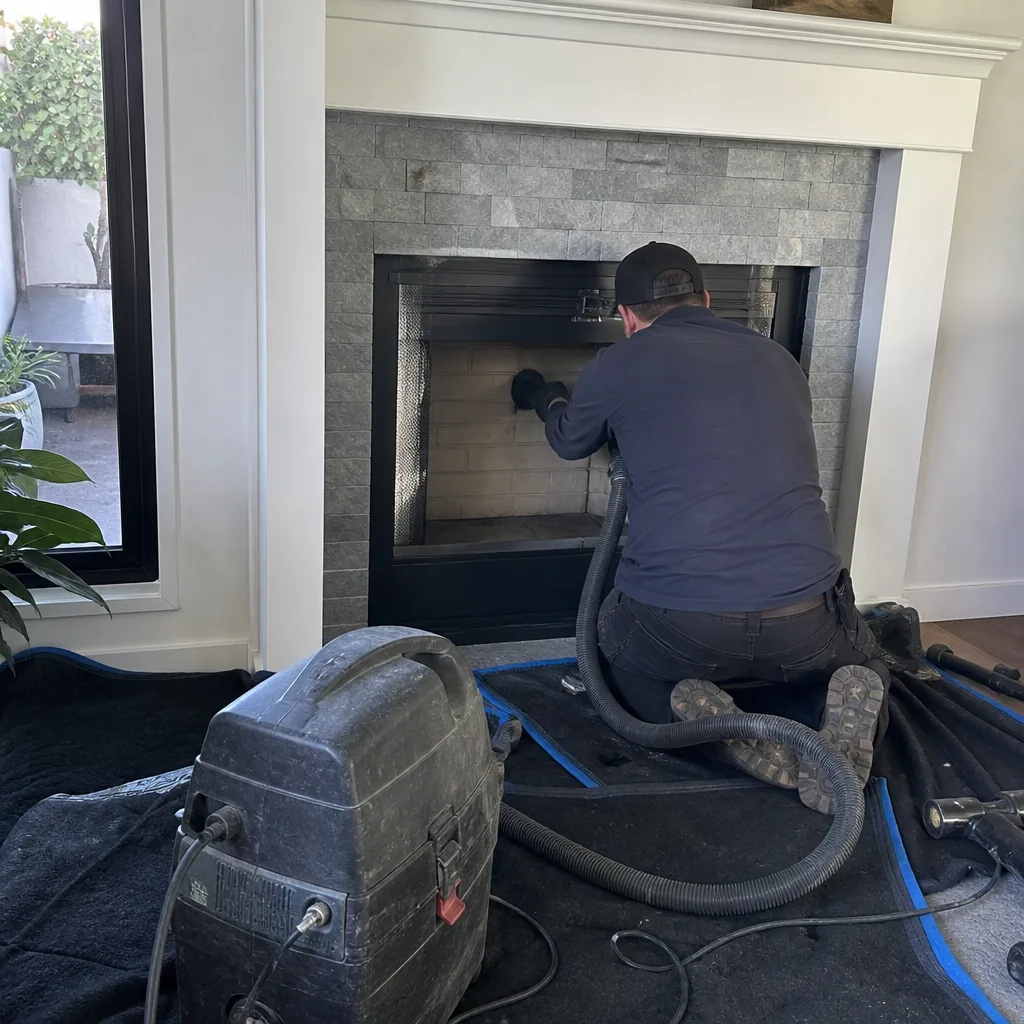 After
When to Call a Professional
You should call a professional when you see efflorescence on the chimney exterior, when the damper sticks or doesn’t seal, when you smell smoke or musty air from the fireplace when it’s not in use, when you’ve had a chimney fire or a nearby wildfire event, or when you’re buying or selling the home and need the fireplace documented. You should also call if your dryer takes longer than about 40 minutes to dry a normal load, which suggests the vent is partially blocked. Chimney Cleaning Encinitas offers free estimates in Encinitas, call (866) 282-6347. We’ll tell you what’s actually in your flue, what it costs to remove, and whether any repair work is actually necessary, and you’ll see the evidence for every recommendation.
Frequently Asked Questions
A standard chimney sweep with Level 1 inspection in Encinitas typically costs between $189 and $329, with the price determined by what’s inside the flue and how difficult the roof access is. Call (866) 282-6347 for a flat-price quote before you book, no surprises on the day of service.
A chimney in Encinitas should be inspected annually and swept every 1 to 2 years for a low-use fireplace, because the coastal climate produces Stage 2 tar-like creosote that’s harder to remove and more hazardous than the powder that forms in cold-climate chimneys.
Maybe, but you should see the evidence. A flue liner replacement is recommended when the existing liner is cracked, missing sections, or so deteriorated that combustion gases could leak into surrounding structure. If anyone recommends a new liner without showing you photos or video of the damage, get a second opinion. We don’t recommend any repair without camera documentation you can see for yourself.
The most likely outcomes are creosote accumulation that increases chimney fire risk, coastal corrosion that damages the cap and damper, and water intrusion through a cracked crown that damages masonry. None of these happen overnight, but all of them cost more to fix the longer they wait.
A Level 2 inspection is required by NFPA 211 when a property changes hands, and most home inspectors will flag any fireplace with unknown maintenance history. We handle Level 2 inspections for Encinitas real estate transactions regularly, and the documentation we provide satisfies the buyer’s inspection requirements.
Yes. One call covers both systems, and since we stock the professional-grade venting components (DuraFlex for chimneys, Famco and Gelco for dryer exhaust), any repair work identified during either cleaning can be handled on the spot rather than scheduled for a second visit. Call (866) 282-6347 to book both.
The Bottom Line
A chimney in Encinitas doesn’t fail the way a chimney in Ohio fails. The coastal marine layer, salt air, and the stop-start pattern of occasional fireplace use create a specific maintenance profile that generic guides miss. The good news is that it’s perfectly manageable with an annual inspection and a sweep when the inspection calls for it. The key is to work with someone who actually looks at the whole system, the crown, the cap, the flue, the smoke chamber, the damper, the firebox, and documents what they find. We inspect, clean, and fix, so you’re not scheduling a second contractor. If you’ve been in your Encinitas home for more than two years without a chimney check, the time to schedule one is now.
Written by the team at Chimney Cleaning Encinitas, serving Encinitas since 2012.