Last updated November 2, 2026
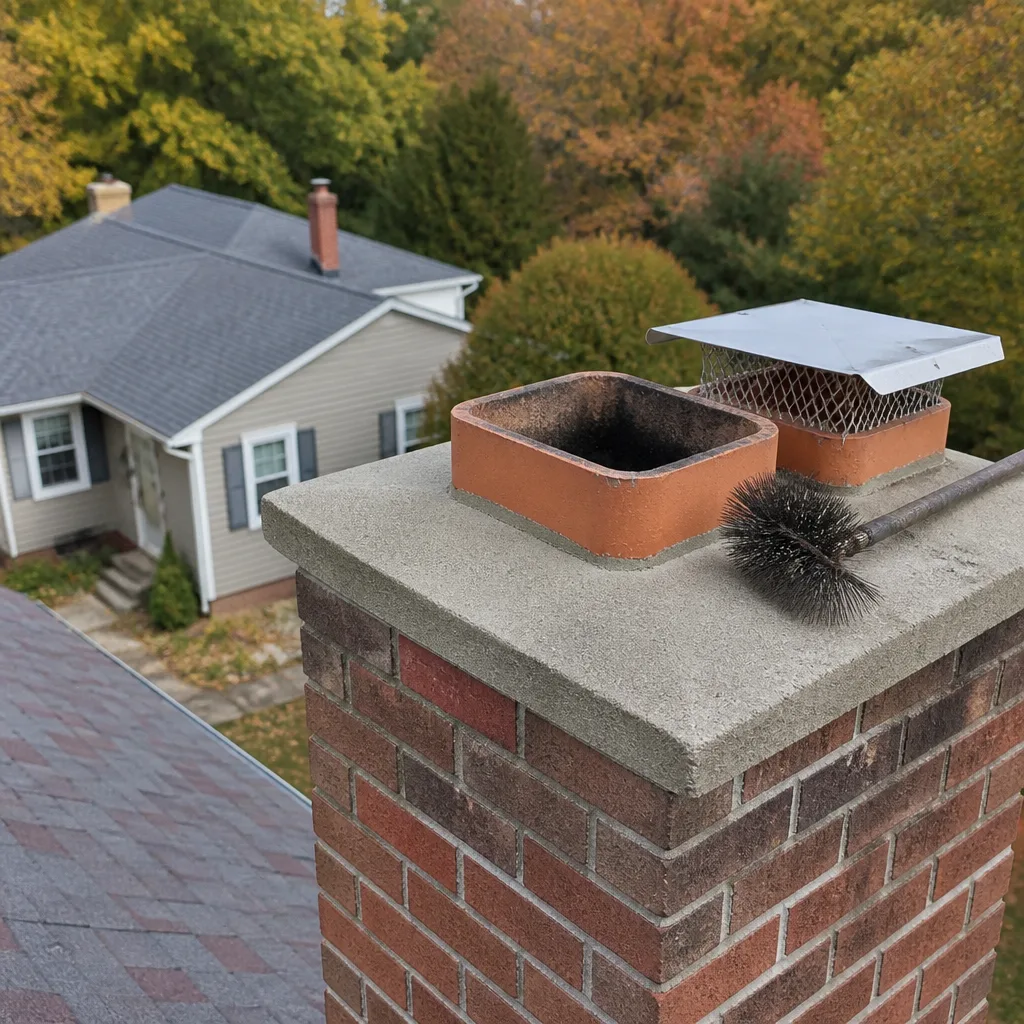 Sweep & inspection
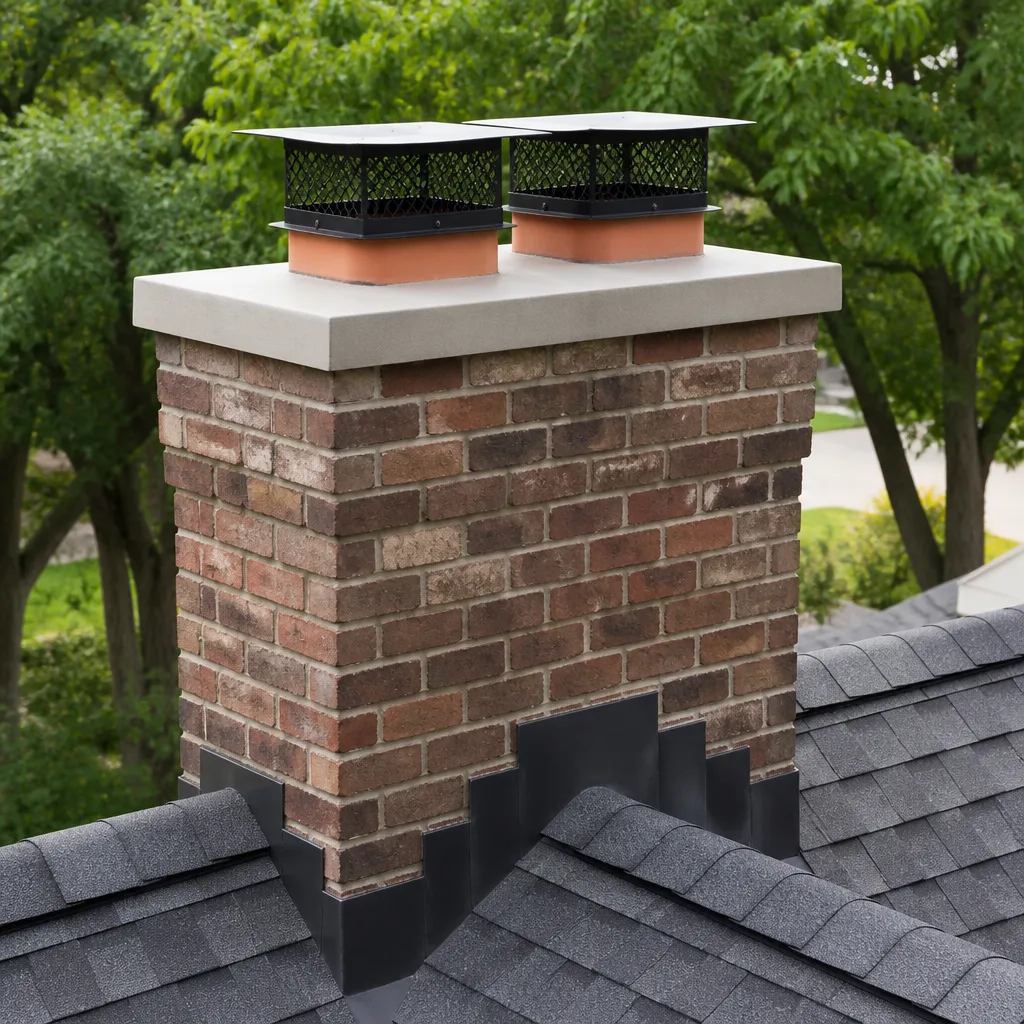 Caps & crowns
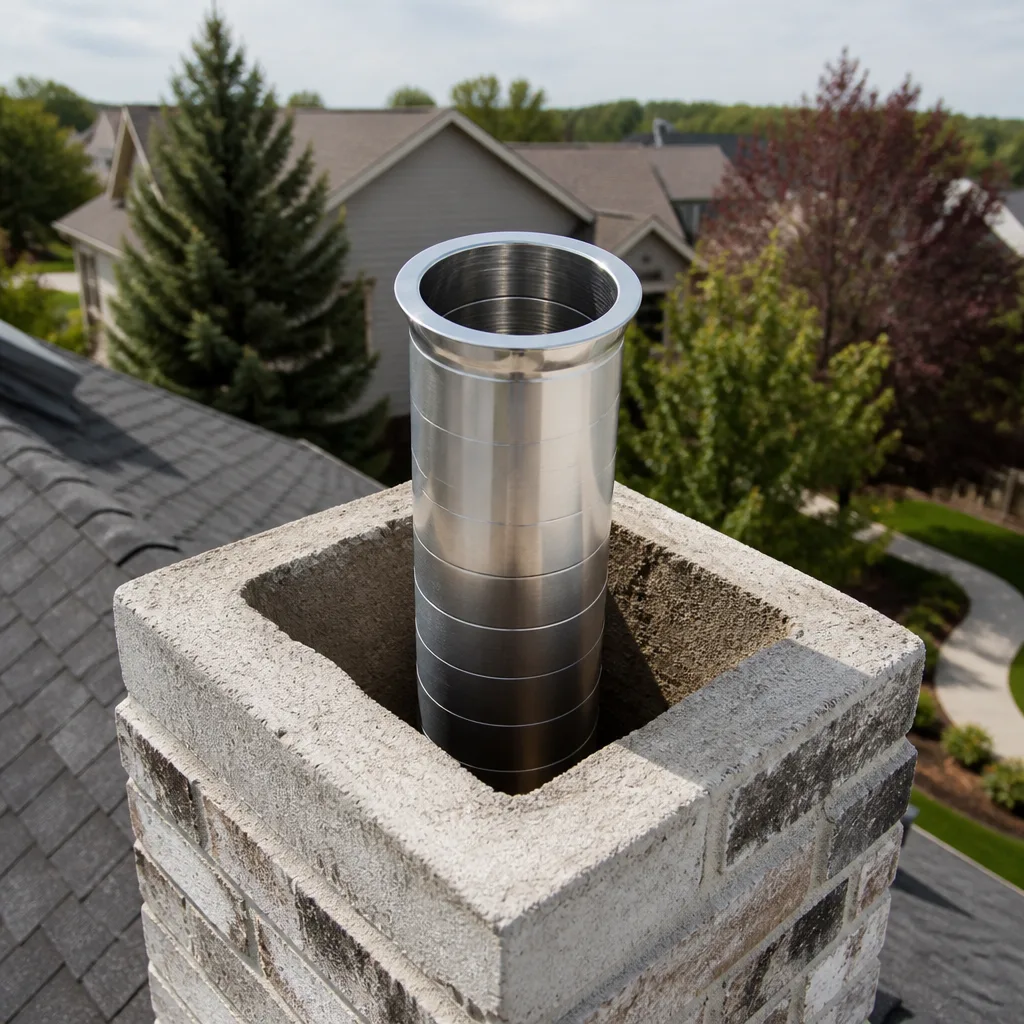 Flue relining
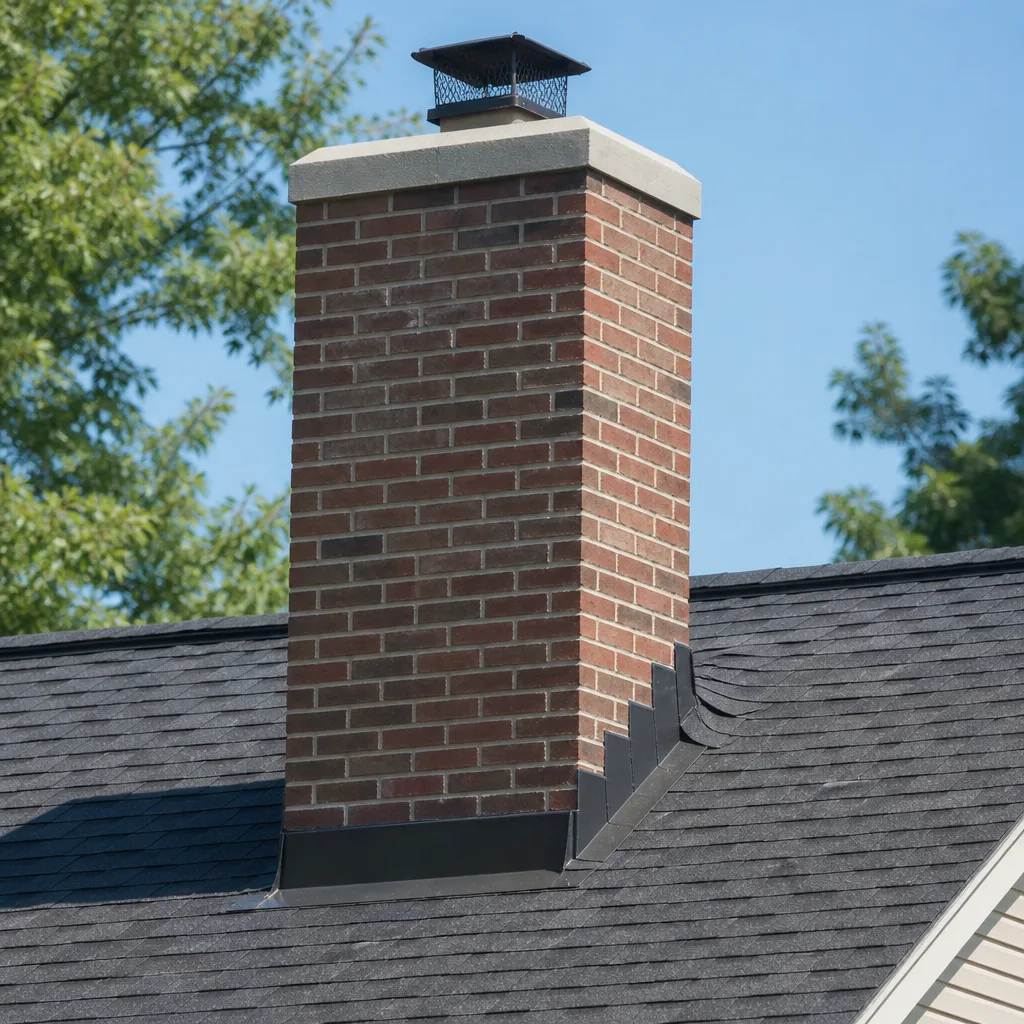 Masonry repair
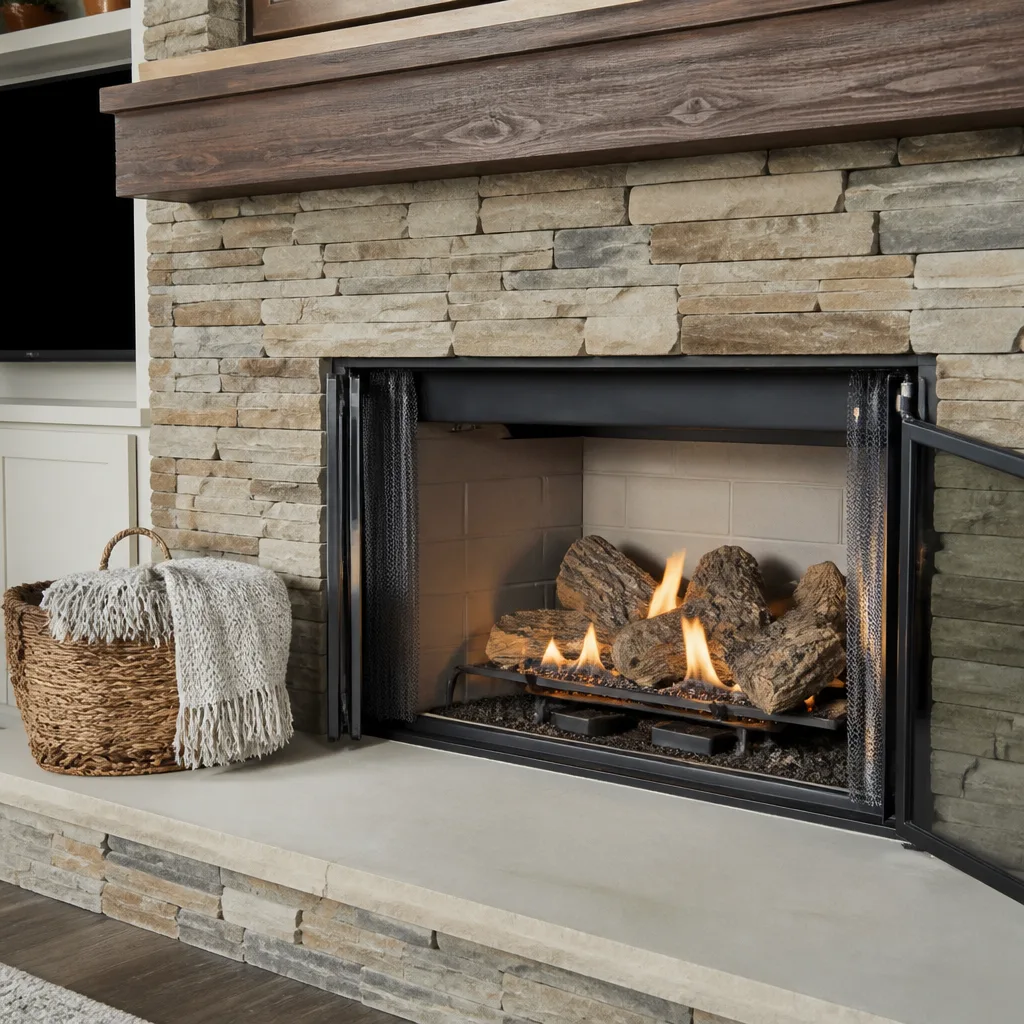 Gas fireplace service
Level 1 sweep and inspection to the NFPA 211 annual standard - flue, crown, cap, and flashing checked and photographed
Chimney sweep logs do not sweep chimneys. They loosen some creosote - which then falls where a brush and vacuum still have to collect it.
Choosing the Right Chimney Cleaning Brand: A Buyer’s Guide for Encinitas
Here’s a fact most Encinitas homeowners don’t realize until it’s too late: the chimney sweep industry quietly splits into two very different animals. One is built on volume, the other on diagnosis. The first cleans what it can see and moves on. The second opens the system, investigates what’s happening inside the flue, and has the parts on hand to fix a problem before it becomes a hazard. This guide explains how to tell them apart before you book the appointment, not after the technician has packed up and left.
Styles & brands we work with
- Sweep & inspection
- Caps & crowns
- Flue relining
- Masonry repair
- Gas fireplace service
Quick Answer
The right chimney cleaning company in Encinitas is a locally based specialist with repair capability, not a national franchise optimized for appointment volume. Look for a company that stocks professional-grade liner and component materials, employs technicians trained specifically in chimney and venting systems, and can fix what they find on the same visit. Verify this by asking about repair parts before booking, not after the sweep reveals a problem.
Table of Contents
- The Structural Difference Between Sweep-Only and Repair-Capable Providers
- How the National Franchise Model Shapes Service Quality
- What “Local Specialist” Actually Means in Encinitas
- How to Evaluate Repair Capability Before You Book
- The Brand Name on the Van Matters Less Than the Parts Inside It
- Reading Reviews for Signal, Not Volume
- Seven Questions That Reveal What You’re Actually Hiring
- Common Mistakes to Avoid
- When to Call a Professional
- Frequently Asked Questions
- The Bottom Line
The Structural Difference Between Sweep-Only and Repair-Capable Providers
Most homeowners use “chimney cleaning” and “chimney service” interchangeably. They are not the same thing. A sweep-only provider arrives with brushes, rods, a vacuum, and a limited inspection scope. If they find cracked flue tiles, deteriorating mortar joints, or a rusted damper, they write it up, recommend a repair contractor, and move to the next appointment. You’re back at square one: another phone call, another scheduling window, another diagnostic fee.
A repair-capable chimney specialist arrives with the same cleaning equipment plus a full assessment kit and the materials to address common deficiencies on the spot. At Chimney Cleaning Encinitas, our technicians carry DuraFlex liner components, ChimneySaver sealants, and replacement caps and dampers as standard inventory. When a sweep reveals a compromised liner section or a failed cap, the repair discussion starts immediately, with the parts in hand, not in a catalog.
This distinction reshapes the entire service relationship. A Chimney Sweep in Encinitas who can also repair is accountable for the condition of the system they leave behind. A sweep-only provider is accountable for removing soot. Both are legitimate services. But if your goal is fire safety and system integrity, the difference is the entire point.
Think of it this way: a dentist who notices a cavity and asks you to schedule a follow-up with an oral surgeon is providing incomplete care. Dentistry and oral surgery are separate disciplines, but the best general dentists handle routine fillings in the chair. Chimney work works the same way. Some repairs do require specialty techniques and materials, but a surprising amount of what gets “written up” by sweep-only providers is straightforward work that a properly equipped specialist can complete the same day.
The practical implication for Encinitas homeowners is direct: before you book, ask whether the company repairs chimneys or only cleans them. If the answer is “we only clean,” you now know the full value proposition you’re purchasing. A clean chimney and a repaired one aren’t the same thing. We do both.
How the National Franchise Model Shapes Service Quality
National chimney cleaning franchises operate on a franchisee model that shapes everything downstream of the corporate logo. The franchisee may be local, but their operating parameters are not. Corporate sets the pricing structure, the service scope, the training curriculum, and the appointment density. The economics require multiple jobs per day per technician, which means each job gets a fixed time window. If an inspection reveals something that needs extra attention, the clock keeps ticking.
None of this means franchise technicians are incompetent. Many are perfectly capable at the cleaning task they were trained to perform. But the model optimizes for throughput, and throughput is the enemy of thorough diagnosis. A technician with three more appointments in Encinitas, Carlsbad, and Solana Beach has a structural incentive to finish the job efficiently and flag problems for a second visit rather than investigate them now. That second visit may be scheduled, rescheduled, or forgotten. The system writes itself a pass.
Training depth follows the same logic. Franchise companies often train technicians internally, which is fine for cleaning procedures. But that training rarely extends to the diagnostic and repair competency that comes from working with multiple liner systems, understanding factory-built fireplace construction, and evaluating masonry condition. A technician who only sweeps chimneys all day becomes excellent at sweeping chimneys. They do not become excellent at understanding why a chimney is failing.
The Encinitas housing stock makes this distinction particularly relevant. Our service area includes masonry chimneys from the 1960s and 1970s, factory-built systems installed during the 1980s and 1990s construction boom, and plenty of prefabricated fireplaces in newer developments. Each type fails differently. Each type requires different repair approaches and materials. A volume-optimized technician with a standardized scope may not recognize the specific failure mode of a 1970s unlined masonry flue in Encinitas’s coastal climate.
Coastal air compounds these issues. Salt-laden marine air from the Pacific accelerates corrosion on chimney caps, dampers, and exposed metal components. It also interacts with masonry in ways that inland homes rarely experience. A specialist who works exclusively in coastal North County sees this pattern daily and builds it into their inspection process. A franchise technician trained on a national curriculum sees it once every few weeks at best.
What “Local Specialist” Actually Means in Encinitas
The phrase “local specialist” gets thrown around so casually in home services marketing that it’s nearly meaningless. Let’s define it concretely for chimney work. A local specialist operates within a defined geographic radius, builds its reputation within that radius, and is personally familiar with the housing inventory and failure patterns of that radius. In Encinitas, that means understanding three distinct chimney populations.
The first population is older masonry chimneys, many of which were built without clay tile liners or with liners that have since cracked and separated. These systems are now reaching the age where liner failure is common, and they require either stainless steel relining or complete system evaluation before regular use. The second population is factory-built fireplaces from the 1980s and 1990s, when Encinitas expanded significantly. These systems have specific clearance requirements, specific connector pipe standards, and specific failure modes involving warped panels and refractory deterioration. The third population is the simplest to overlook: gas hearths, including direct-vent and vent-free units, which still move combustion byproducts through a venting system that needs annual inspection.
Local specialists see all three types weekly and know what failure looks like in each. They also source materials from local and regional supply chains rather than national distribution centers. This means shorter lead times on parts, and it means the technician actually knows which materials perform in Encinitas’s specific climate. Coastal corrosion, wildfire season particulates, and the salt-heavy marine layer all shape which components last and which fail early.
There’s also an accountability mechanism that works silently in a defined service area. A local specialist whose entire reputation lives in Encinitas, Cardiff, Leucadia, and Olivenhain cannot afford to leave a bad outcome behind. Their next job is likely on the same street or in the same neighborhood. Fleet branding matters more when you drive past your last five jobs on the way to the next one. This is not a statement about franchise quality. It’s a statement about how incentives work.
We work professionally with a focused material lineup for a reason. Our teams install DuraFlex liner systems and HeatShield chimney resurfacing (we are certified in that application, not just quoting it), and we use Copperfield and Olympia Chimney components for caps, dampers, and top-sealing dampers. These are not box-store brands. They are professional-grade products carried by chimney specialists, and they perform differently in coastal conditions than generic hardware-store substitutes. Professional-grade materials on every job, and our work is supported by the fact that we use them deliberately, not by marketing language.
How to Evaluate Repair Capability Before You Book
Here is the approach we recommend to every Encinitas homeowner who calls us. It costs you nothing and takes five minutes, and it separates the two provider types faster than any review scroll.
- Ask whether the company repairs chimneys or only sweeps them. If the answer is anything other than an unhesitating “yes, we repair,” treat them as a sweep-only provider regardless of what their website says.
- Ask what repair materials they carry on the truck. A repair-capable technician should be able to name specific products: liner sections, sealants, caps, dampers. “We have whatever we need” is not an answer.
- Ask whether they reline chimneys. Relining is the most common significant chimney repair for older Encinitas homes. A provider who cannot reline cannot address the problem they’re most likely to find.
- Ask whether they repoint fireboxes. Firebox mortar joint deterioration is common, especially in masonry fireplaces that see regular use. If the answer is “we’d need to refer that out,” you’re speaking with a cleaning service.
- Ask whether they replace caps and dampers at the same appointment. These are the two most common small-repair items after a sweep. If they need a return visit, you’re paying for time you shouldn’t be.
- Ask about HeatShield or equivalent resurfacing. HeatShield is a ceramic coating system that can restore a damaged flue without full relining. Most cleaning-only companies cannot offer it because it requires certification and equipment. Our team is certified in HeatShield application, and we mention it specifically because it’s a capability question, not a brand endorsement.
Most Encinitas homeowners who do this exercise are surprised by how quickly the field narrows. That’s the point. The phrase “full-service chimney company” is meaningless because the industry never agreed on a definition. The questions above create one in real time.
The Brand Name on the Van Matters Less Than the Parts Inside It
The chimney and venting industry has a branding problem. National franchises invest heavily in fleet wraps, uniform design, and jingle recognition. These things create the impression of professionalism, and sometimes they correlate with it. But the brand on the van tells you almost nothing about the brand of the components that will end up in your chimney.
Component brands matter because they’re the difference between a liner that lasts 15 years and one that fails in 6. Between a chimney cap that rusts through in three coastal winters and one that’s still sound after a decade. Between a damper that seals properly and one that constantly leaks conditioned air into the flue. Encinitas’s coastal environment punishes generic hardware in ways inland markets never experience.
Ask any provider what brand of liner system they install. If the answer is “stainless steel” without a manufacturer name, that’s a generic answer. A specialist answers with specific products: DuraFlex, HeatShield, Copperfield, Olympia Chimney. We name these because they’re the materials our technicians work with, and because naming them is a form of accountability. A company that installs professional-grade materials is willing to stand behind the manufacturer’s spec sheet, not just the labor.
The same logic applies to dryer vent work, which we handle alongside chimney services. A proper dryer vent system uses specific termination fittings, proper transition duct, and materials that meet code for concealed spaces. Famco is one of the manufacturers whose components we stock for dryer and exhaust work. The difference between a Famco termination fitting and a generic box-store part is fitment and code compliance. Improvised venting is not the place to save twelve dollars, because the failure mode is a lint-choked exhaust inside a wall cavity. That’s a fire hazard, and it’s easily avoided by using the correct part.
You will never know the brand of liner in your chimney unless you ask. And the asking itself reveals something. A company that’s proud of its material lineup answers immediately. A company that’s never thought about it pauses. The pause is your answer.
Reading Reviews for Signal, Not Volume
Review counts are the most overrated signal in home services. A franchise with 850 five-star reviews may simply be efficient at generating them. A local specialist with 80 reviews may have a stronger reputation in the specific neighborhoods you care about. The goal is not to count stars. The goal is to read for evidence of the distinction this guide describes.
Here’s what to look for, in order of signal strength:
- “They found a problem and fixed it same day.” This phrase, or any variation of it, is the strongest possible review signal. It confirms repair capability during a cleaning visit, which is precisely the structural difference this guide explains. These reviews cannot be faked easily because they describe a specific sequence of events.
- Mention of specific materials or components. A review that says “they installed a new liner” or “replaced the chimney cap and damper” confirms repair scope. A review that says “they swept the chimney and it looks great” only confirms cleaning.
- References to inspection findings. “They showed me photos of cracked tiles in the flue” or “they explained the creosote buildup level and what it meant” indicates a diagnostic mindset, not a volume mindset.
- Reviews from Encinitas neighborhoods. Leucadia, Old Encinitas, Olivenhain, Cardiff-by-the-Sea. Reviews from your own streets signal a provider who actually works your area, not one who occasionally drives through.
- Dryer vent mentions. A chimney company that also handles dryer vents is uncommon. Reviews that mention both services signal a true venting specialist, not a chimney-only operation with a website add-on.
Five-star volume alone tells you almost nothing. A provider that leaves every chimney “clean” but writes up every deficiency for a separate contractor will generate plenty of five-star reviews. The review you’re looking for is the one that says the cleaner also fixed what the cleaning revealed, on the same truck, in the same visit.
Seven Questions That Reveal What You’re Actually Hiring
We’ve covered evaluation in pieces throughout this guide. Here is the consolidated list, with the answer that should give you confidence.
- “Does your company repair chimneys, or do you only clean?” A confident “both” is the answer. A pause or a “we work with repair partners” means sweep-only.
- “What liner system do you install?” Expect a specific answer: DuraFlex, HeatShield, or an equivalent brand name. “Stainless steel” is a color, not a brand.
- “Do you replace caps and dampers?” If yes, and the technician carries common sizes on the truck, you’re talking to a repair-capable provider. If this triggers a second appointment, not so much.
- “Can you repoint a deteriorating firebox?” A yes means masonry repair capability. A “we’d refer that out” means you’re hiring a cleaning service with a chimney-themed logo.
- “Do you handle dryer vent cleaning too?” This is a discrimination question. A company that handles both major residential combustion venting systems under one roof is a specialist. One that doesn’t is narrower, which is fine, but know what you’re buying.
- “What do you do if you find a cracked flue tile during the sweep?” A repair-capable company explains the relining options. A sweep-only company explains the referral process. Listen for the difference.
- “Do you serve all of Encinitas, or specific neighborhoods?” A local specialist operates throughout Encinitas: Old Encinitas, New Encinitas, Leucadia, Olivenhain, Cardiff. A provider that sounds hesitant about neighborhood names may be a lead-generation service, not an operator.
These questions take five minutes on the phone. They’ll save you from the most common outcome in this industry: hiring a cleaner, discovering a problem, and starting the hiring process all over again for the repair.
Common Mistakes to Avoid
- Assuming all chimney companies are the same. The sweep-only versus repair-capable distinction changes the entire service outcome. Ask before booking, not after the sweep.
- Choosing based on franchise brand recognition. National brands optimize for volume, which constrains time-per-job and technician training depth. Recognize the trade-off you’re accepting.
- Ignoring coastal corrosion as a factor. Chimney caps, dampers, and exposed metal components fail faster in Encinitas’s salt-laden marine air. A provider unfamiliar with this fails to look for it.
- Accepting “we’ll refer you to a repair company” without question. That’s a second diagnostic visit, a second fee, and a second scheduling window, when the right provider could handle it in the same visit.
- Reading review volume instead of review content. Look for the phrase “found a problem and fixed it same day” or any variation. That’s the only signal that matters.
- Ignoring the dryer vent. Lint-choked dryer exhausts are a leading cause of residential fires. If your chimney company doesn’t handle dryer vents, you’re leaving a major venting hazard unaddressed.
- Waiting until fall to book. Chimney and venting specialists in Encinitas book solid from October through January. Schedule in late summer or early fall if you want a pre-burn-season slot.
When to Call a Professional
Call a chimney specialist if you haven’t had your chimney inspected in the past 12 months, if you’ve noticed a burning smell that persists after the fire is out, if you see visible creosote or black buildup inside the firebox, if your chimney cap is rusted or missing, or if your dryer takes longer than normal to dry a load. These are all signals that something inside the venting system has changed. A diagnostic inspection is how you find out what. Chimney Repair in Encinitas is our core service area and we’ll tell you plainly when a repair can wait and when it can’t. Chimney Cleaning Encinitas offers free estimates throughout Encinitas, from Leucadia to Olivenhain. Call (866) 282-6347 to schedule an inspection.
Frequently Asked Questions
Chimney cleaning in Encinitas typically runs between $180 and $350 depending on system type, accessibility, and the level of creosote buildup, with masonry chimneys at the higher end due to labor. The cost is shaped by our coastal environment, which accelerates corrosion on caps and dampers and can add repair items to the scope. Call (866) 282-6347 for an exact quote based on your system, and we’ll tell you what’s included before we book.
You need a new liner if the existing one has cracked tiles, separated joints, or gaps that allow heat and combustion gases to reach combustible materials around the flue. The honest way to verify this is with a camera inspection: if a company recommends a liner, insist on seeing the photos before you spend thousands. We never recommend a liner or any repair without camera evidence we can show you, and we’ll tell you plainly when the existing system can safely keep working.
The National Fire Protection Association standard is an annual inspection, with sweeping performed when creosote buildup reaches 1/8 inch or more. In Encinitas, our mild coastal climate means many homeowners use wood-burning fireplaces seasonally rather than continuously, which can actually produce heavier creosote deposits from a few hot fires than steady use. Schedule annually, and let the inspection determine whether sweeping is needed. Call (866) 282-6347 to schedule your annual inspection.
Creosote, a byproduct of wood combustion, accumulates inside the flue and can ignite at around 451°F, producing a chimney fire that damages the liner and can spread into the home’s structure. In Encinitas’s coastal climate, skipping maintenance also allows corrosion to progress on caps, dampers, and exposed metal components, which then require replacement rather than simple servicing. The safest schedule is an annual inspection with cleaning as indicated.
Gas fireplaces produce less creosote than wood-burning systems, but they still move combustion byproducts through a venting system that needs annual inspection for blockages, corrosion, and proper draft. In Encinitas, coastal corrosion affects gas vent terminations and caps just as it affects wood-burning chimney components. A quick annual check is cheap insurance against carbon monoxide problems that don’t announce themselves.
Dryer vents and chimneys are both combustion venting systems, and both fail through the same mechanism: buildup that restricts airflow and eventually ignites. A specialist who handles both systems understands venting as a discipline, not as two separate tasks. One call covers your chimney and your dryer vent. Both fire risks, one specialist. Dryer Vent Cleaning in Encinitas is part of the same service visit when you book both.
Clear the area around the fireplace, remove decorative items from the mantel, and have a clear path from the entry door to the fireplace. There’s no need to move furniture further away unless it blocks access. Our technicians use drop cloths and HEPA filtration to keep soot contained, and we’ll explain the process before we start. Call (866) 282-6347 if you have questions about your specific setup before the appointment.
The Bottom Line
The chimney cleaning industry in Encinitas offers two distinct services under one umbrella label. The first service cleans chimneys. The second service inspects, diagnoses, and repairs combustion venting systems, with cleaning as one component of a fire-safety process. The right company for you depends on what you’re actually trying to accomplish. If you want soot removed, a sweep-only provider will do fine. If you want to know that your chimney, your fireplace, and your dryer vent are safe to operate, and you don’t want to orchestrate a second contractor to handle whatever gets found, hire a local specialist with repair capability. Ask the questions in this guide. The answers will tell you everything you need to know about what you’re actually booking.
We inspect, clean, and fix, so you’re not scheduling a second contractor. Fire safety starts with what’s inside the flue, not just what you can see. Call (866) 282-6347 for a free estimate in Encinitas.
Written by the team at Chimney Cleaning Encinitas, serving Encinitas since 2012.
Related: Chimney Cleaning Encinitas home | Chimney Sweep in Encinitas | Chimney Repair in Encinitas | Dryer Vent Cleaning in Encinitas
See the difference
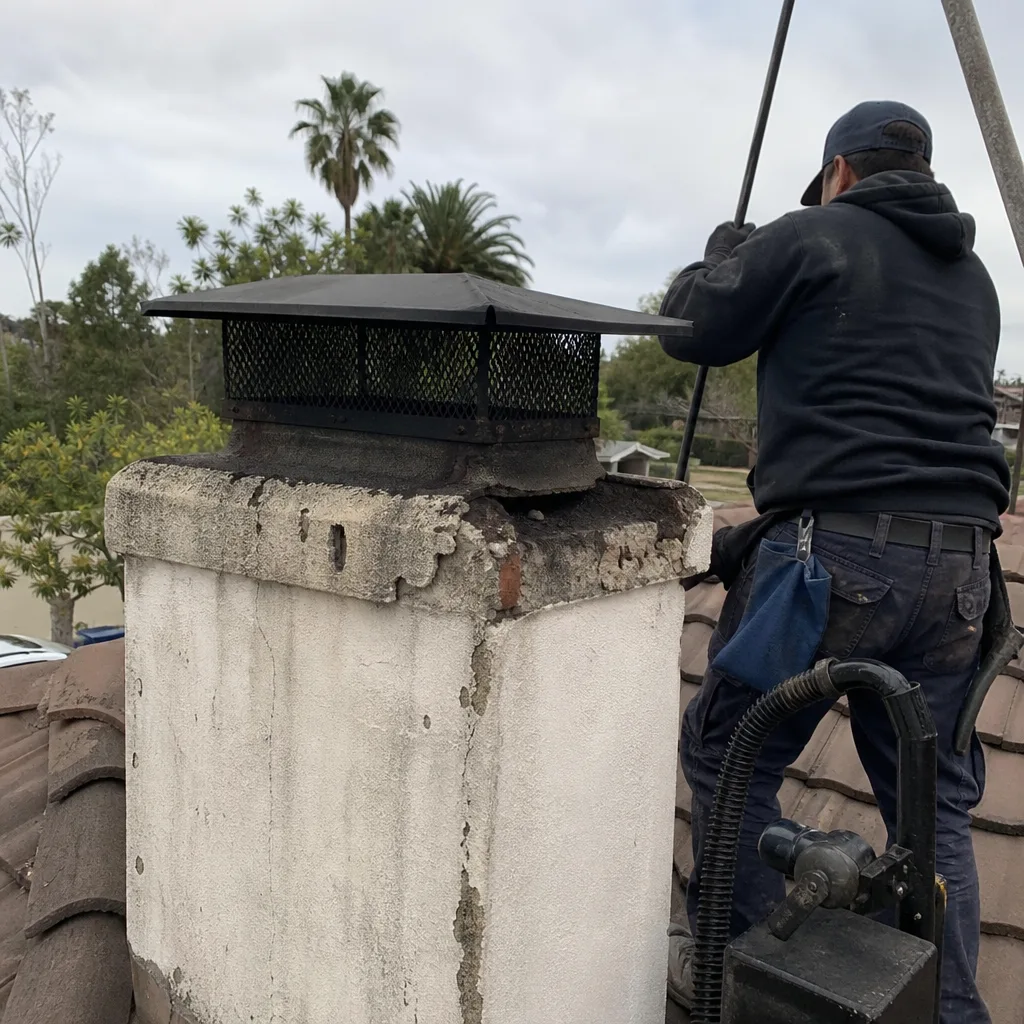 Before
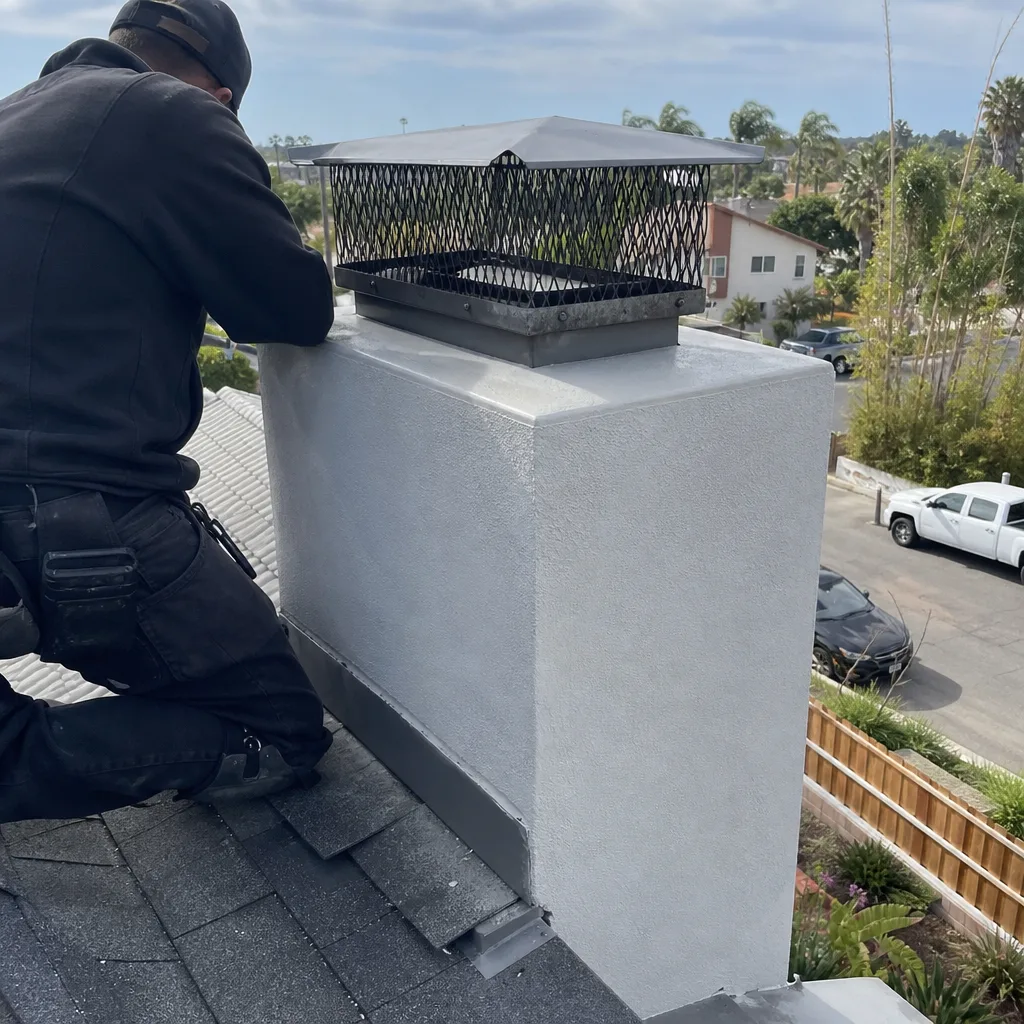 After
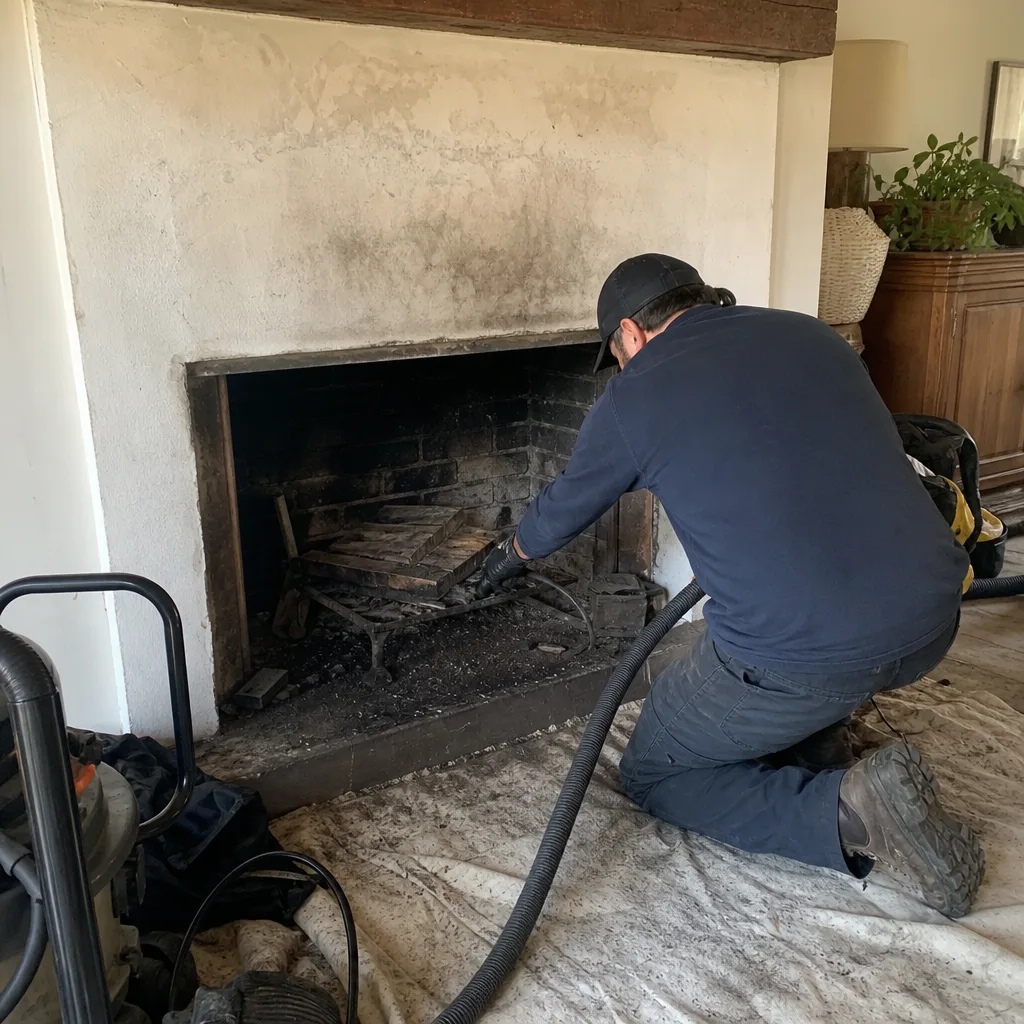 Before
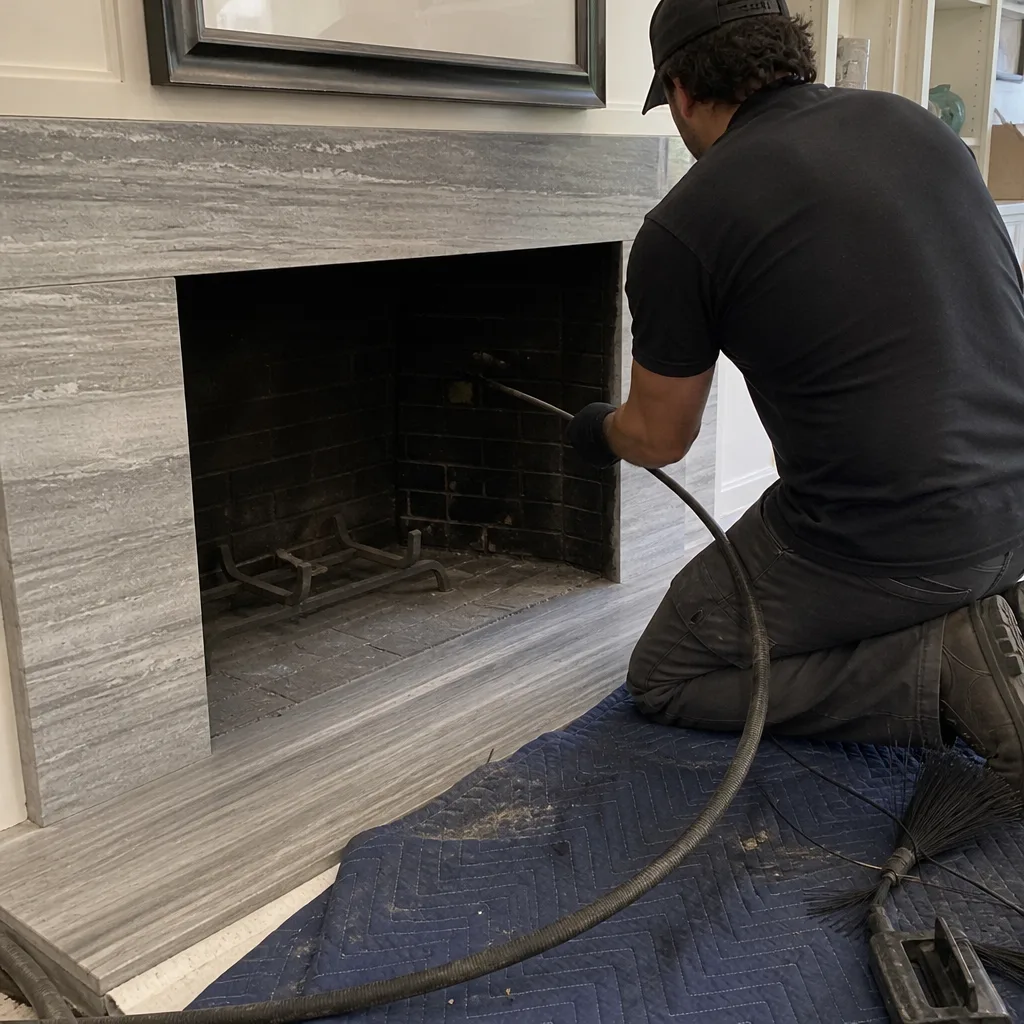 After
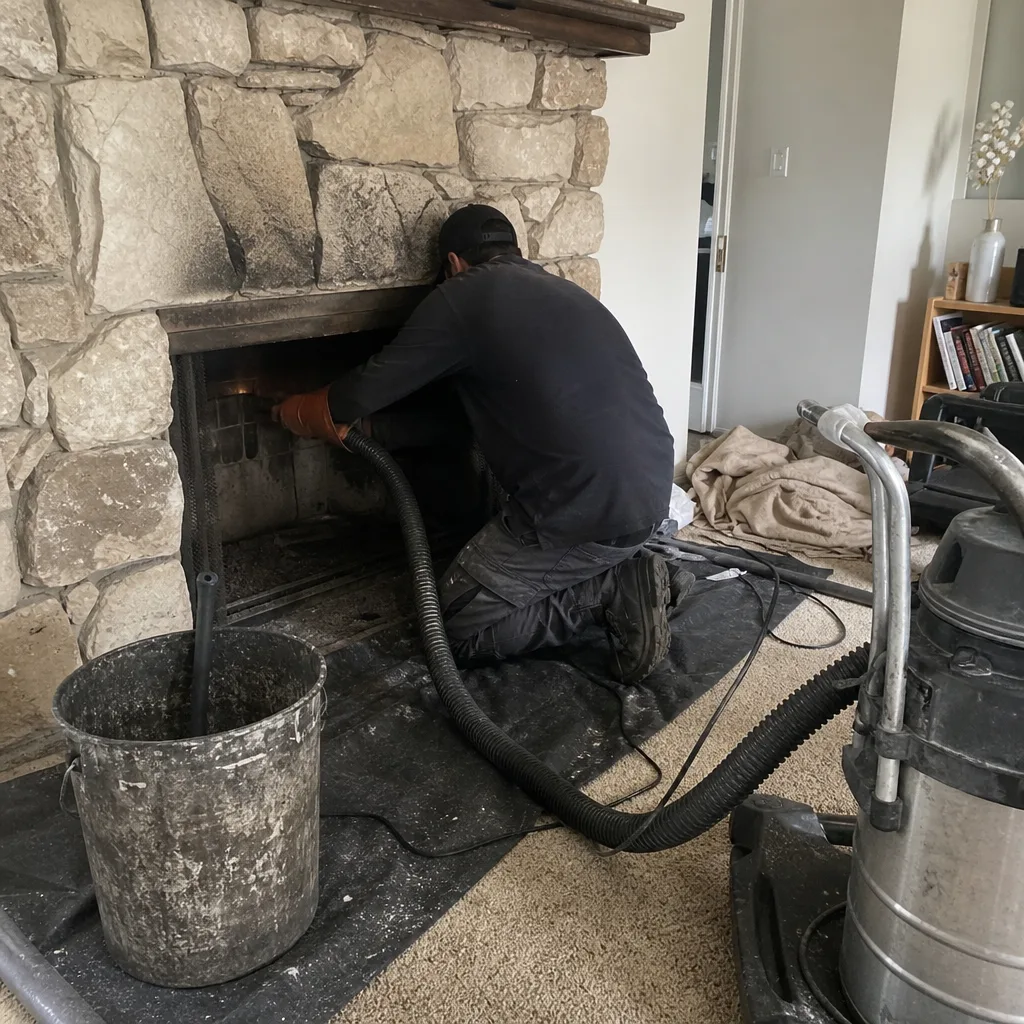 Before
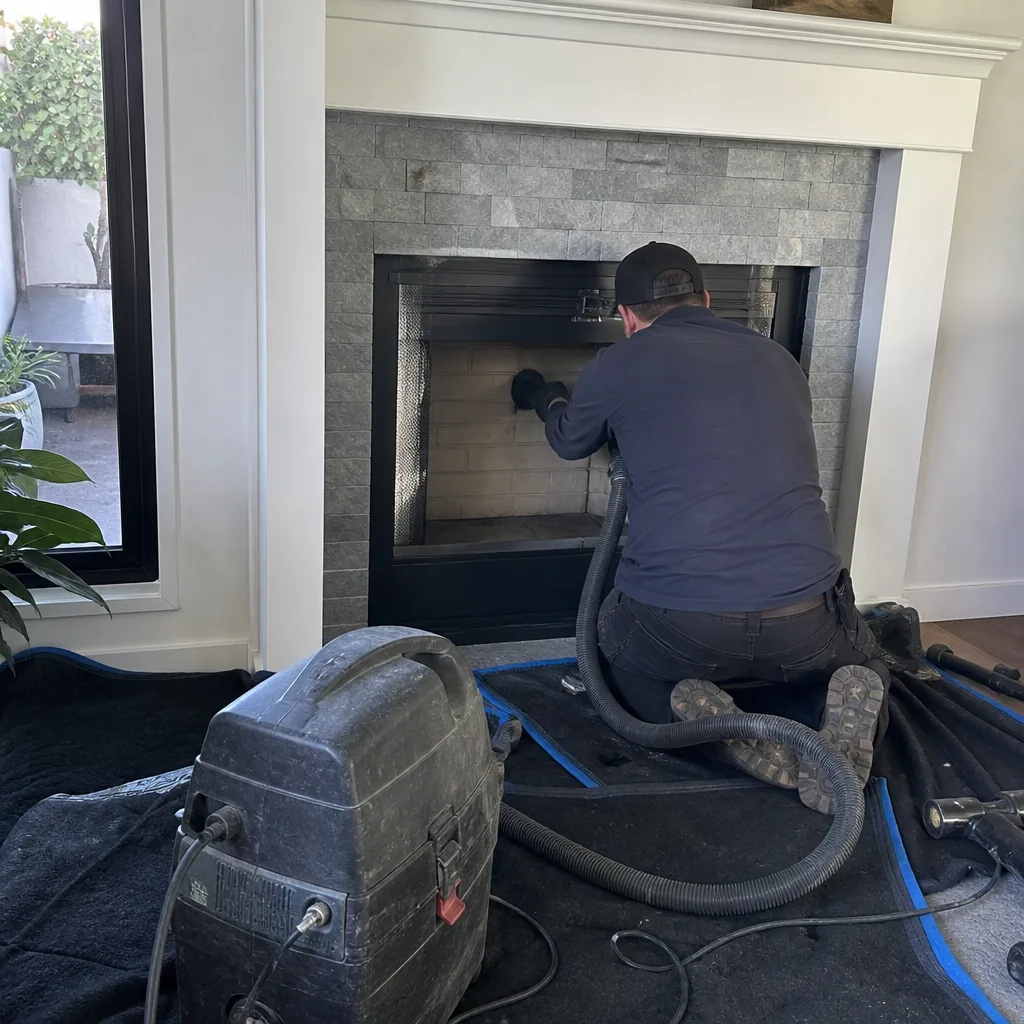 After