
Last updated November 2, 2026
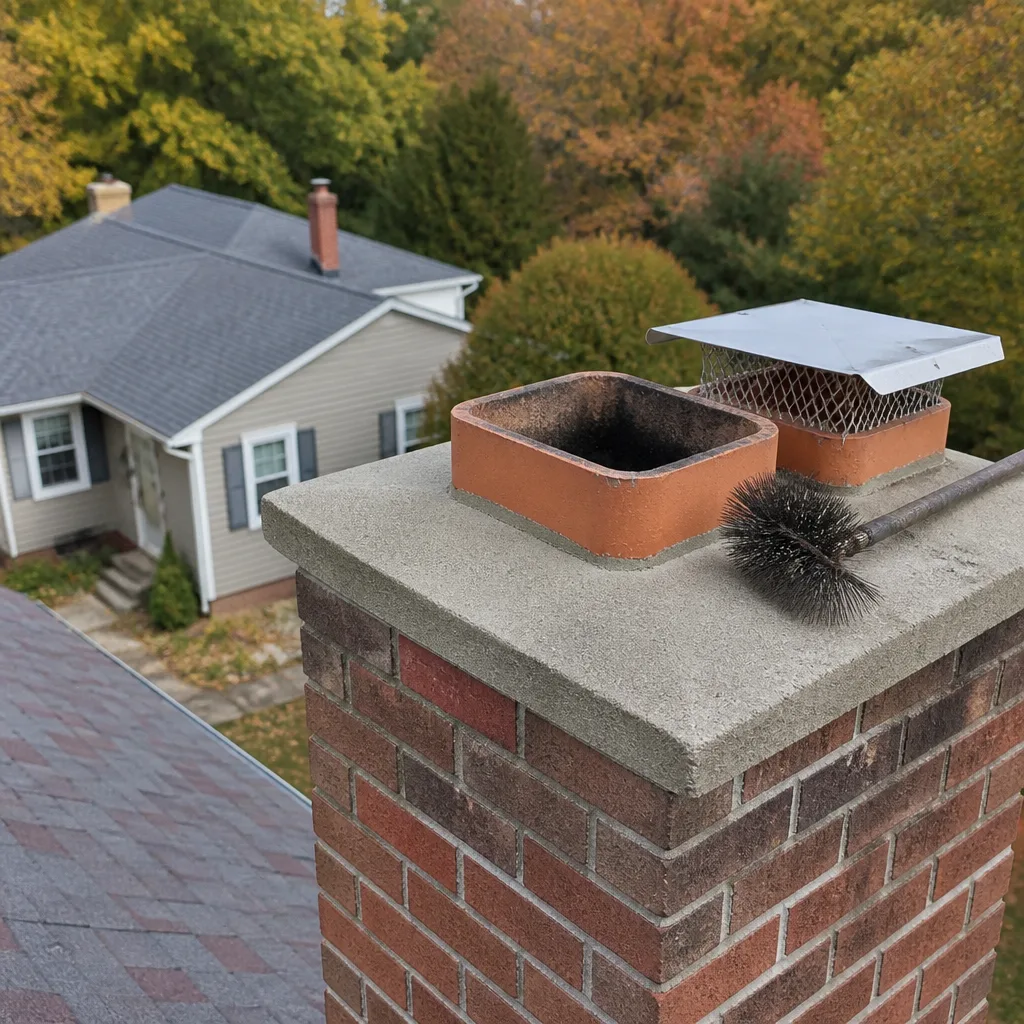 Sweep & inspection
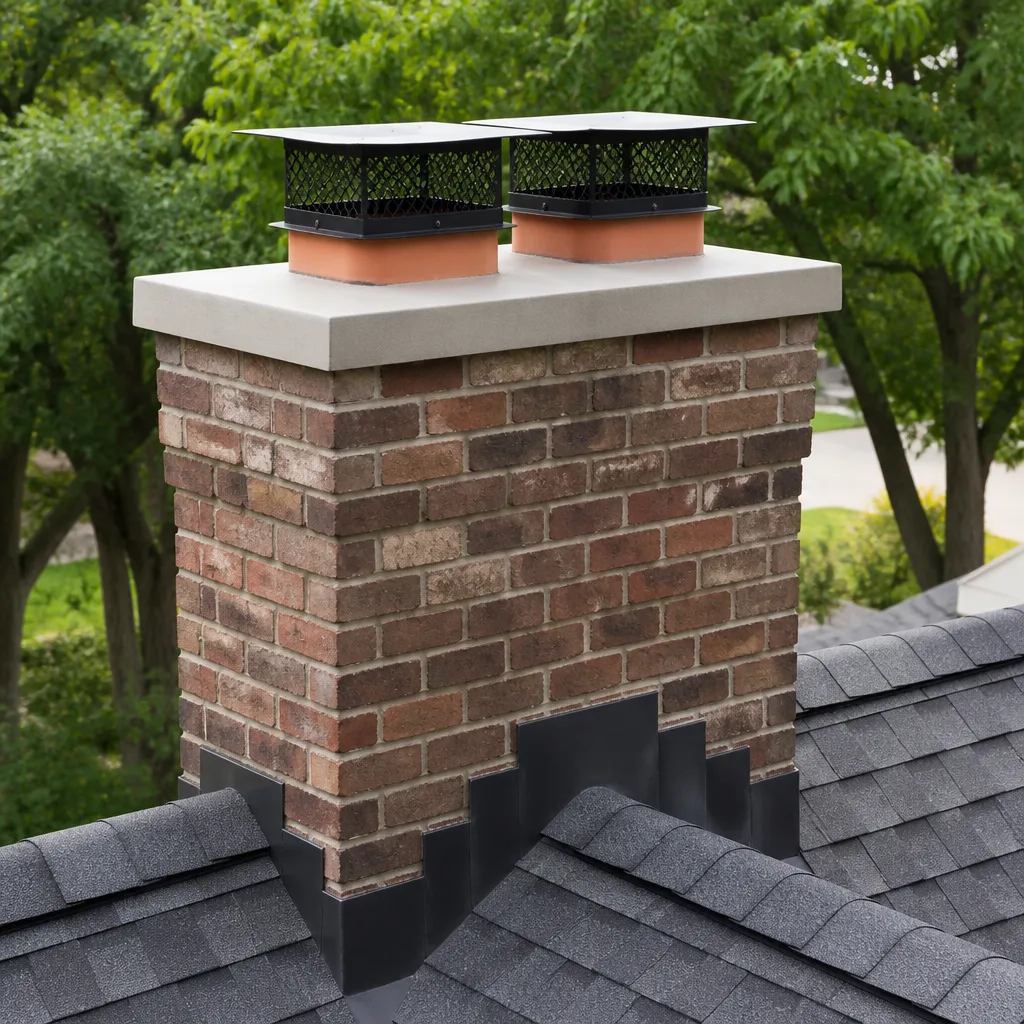 Caps & crowns
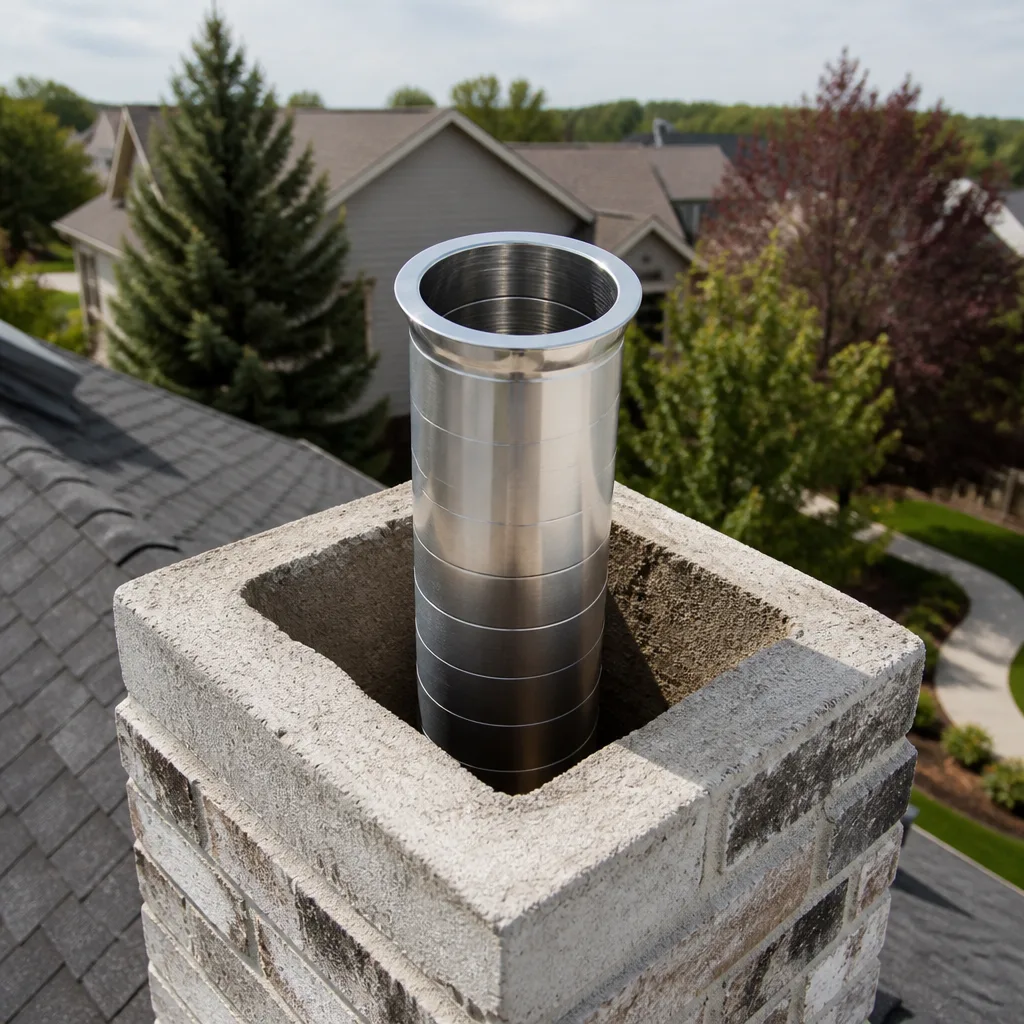 Flue relining
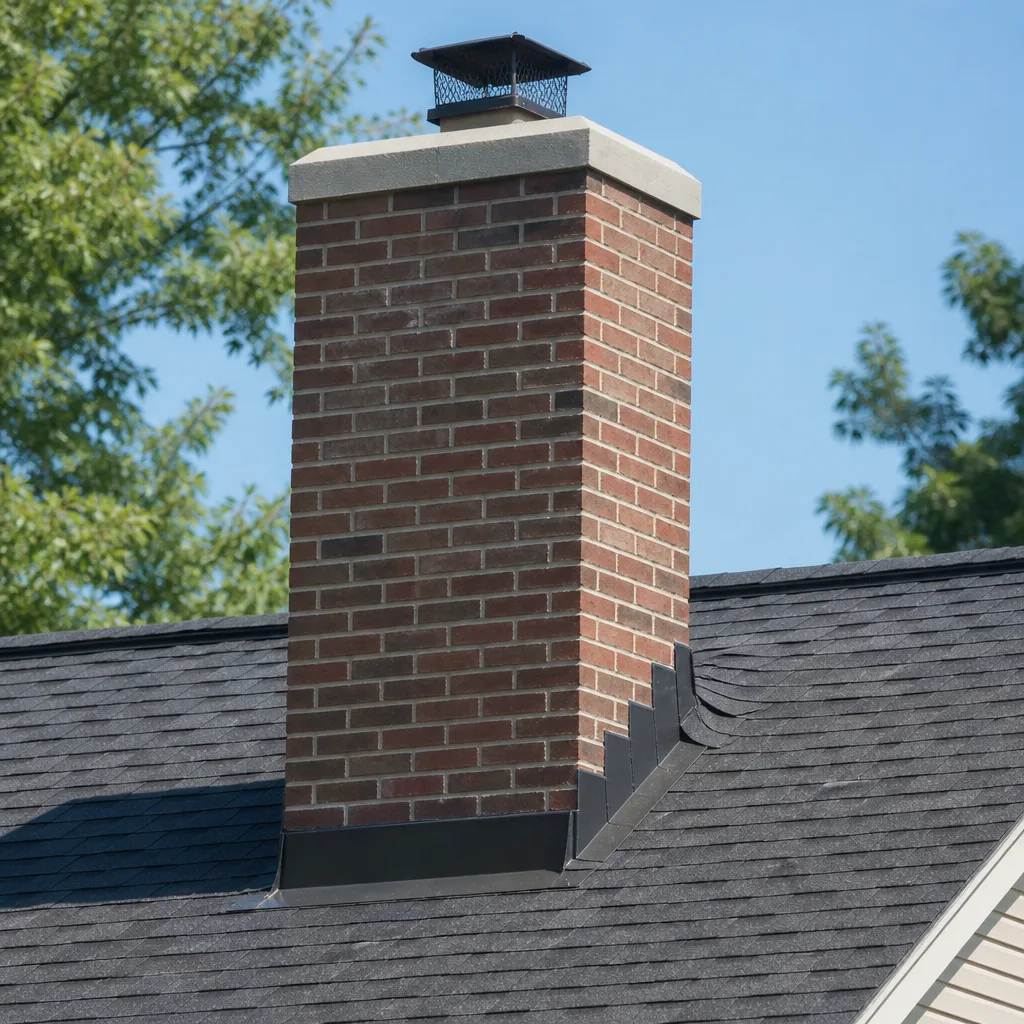 Masonry repair
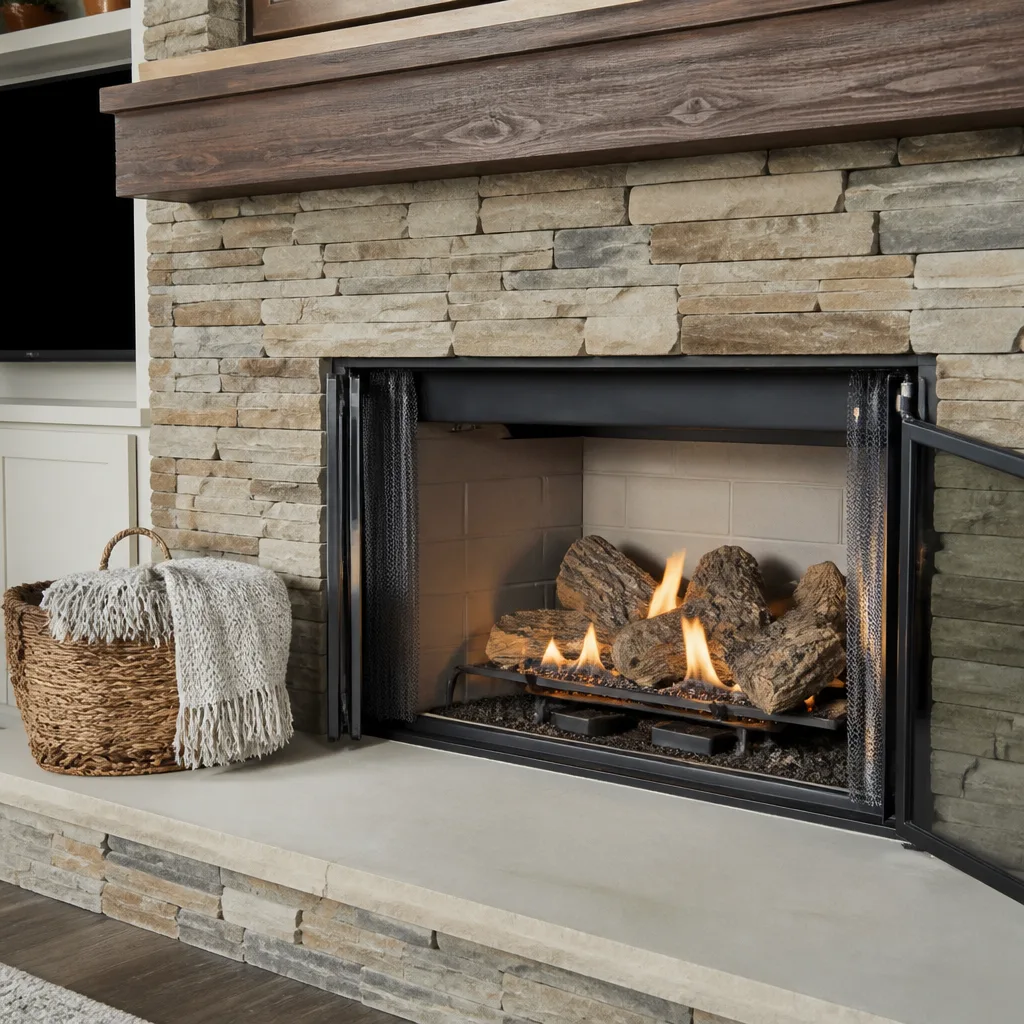 Gas fireplace service
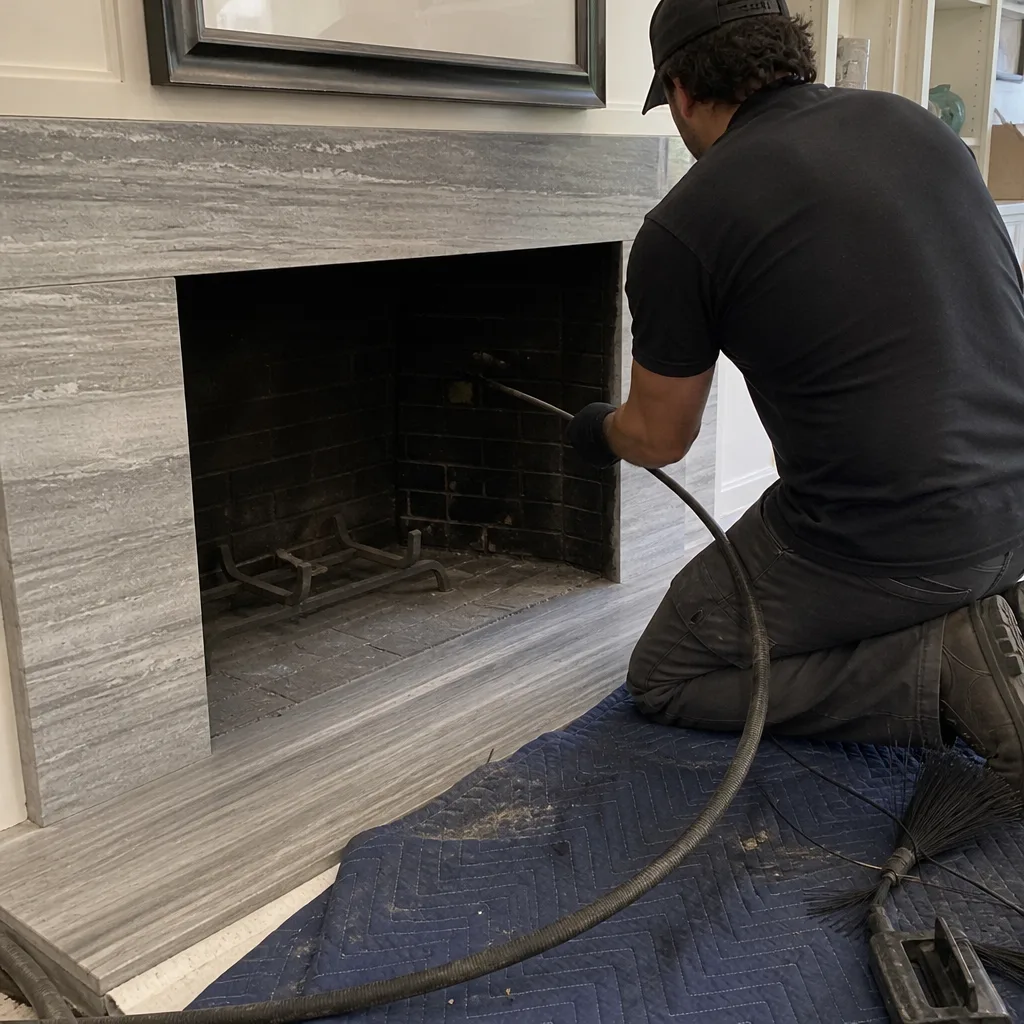
Level 1 sweep and inspection to the NFPA 211 annual standard - flue, crown, cap, and flashing checked and photographed
Chimney sweep logs do not sweep chimneys. They loosen some creosote - which then falls where a brush and vacuum still have to collect it.
DIY vs Professional Chimney Cleaning: The Encinitas Homeowner’s Decision Guide
You can buy the same rotary cleaning rods a professional uses on Amazon for about $80. What you cannot buy is the ability to classify what you are removing, and the difference between Stage 1 creosote (brushable) and Stage 2 creosote (requires chemical treatment before mechanical removal) is the difference between a safe flue and a fire waiting to happen. In Encinitas, where coastal humidity accelerates creosote bonding inside unlined and older masonry chimneys, this distinction matters more than most homeowners realize. This guide maps exactly where the DIY boundary sits, why it sits there, and how to decide which side of it you belong on, with more guides & resources available for homeowners ready to go pro.
Styles & brands we work with
- Sweep & inspection
- Caps & crowns
- Flue relining
- Masonry repair
- Gas fireplace service
Quick Answer
DIY chimney cleaning is reasonable for a lightly used, modern, lined fireplace where you are only removing loose Stage 1 soot and want to save $150 to $250. Professional chimney cleaning is the correct choice when you have heavy use, any history of smoking problems, an older or unlined chimney, gas appliance venting, or you want a real diagnostic assessment of liner integrity and creosote stage before burning season in Encinitas.
Table of Contents
- What DIY Chimney Cleaning Can Legitimately Accomplish
- The Technical Limitations of DIY: What You Cannot See or Do
- The Real Costs: DIY Equipment vs Professional Service in Encinitas
- Understanding Creosote Stages: Why Classification Changes Everything
- Insurance and Liability: What Your Policy Actually Expects
- When DIY Is a Reasonable Choice (And How to Do It Correctly)
- When Professional Cleaning Is the Only Sensible Option
- Common Mistakes to Avoid
- When to Call a Professional
- Frequently Asked Questions
- The Bottom Line
What DIY Chimney Cleaning Can Legitimately Accomplish
A homeowner with the right tools can remove loose, powdery soot from the visible portion of a flue. That is the honest boundary. If your fireplace gets used a few dozen times per season, burns seasoned hardwood, drafts well, and has never produced smoke odors inside the house, the inside of your flue likely has Stage 1 creosote: a light, dusty film that brushes off readily. In that narrow scenario, DIY cleaning is a legitimate maintenance task, not a gamble.
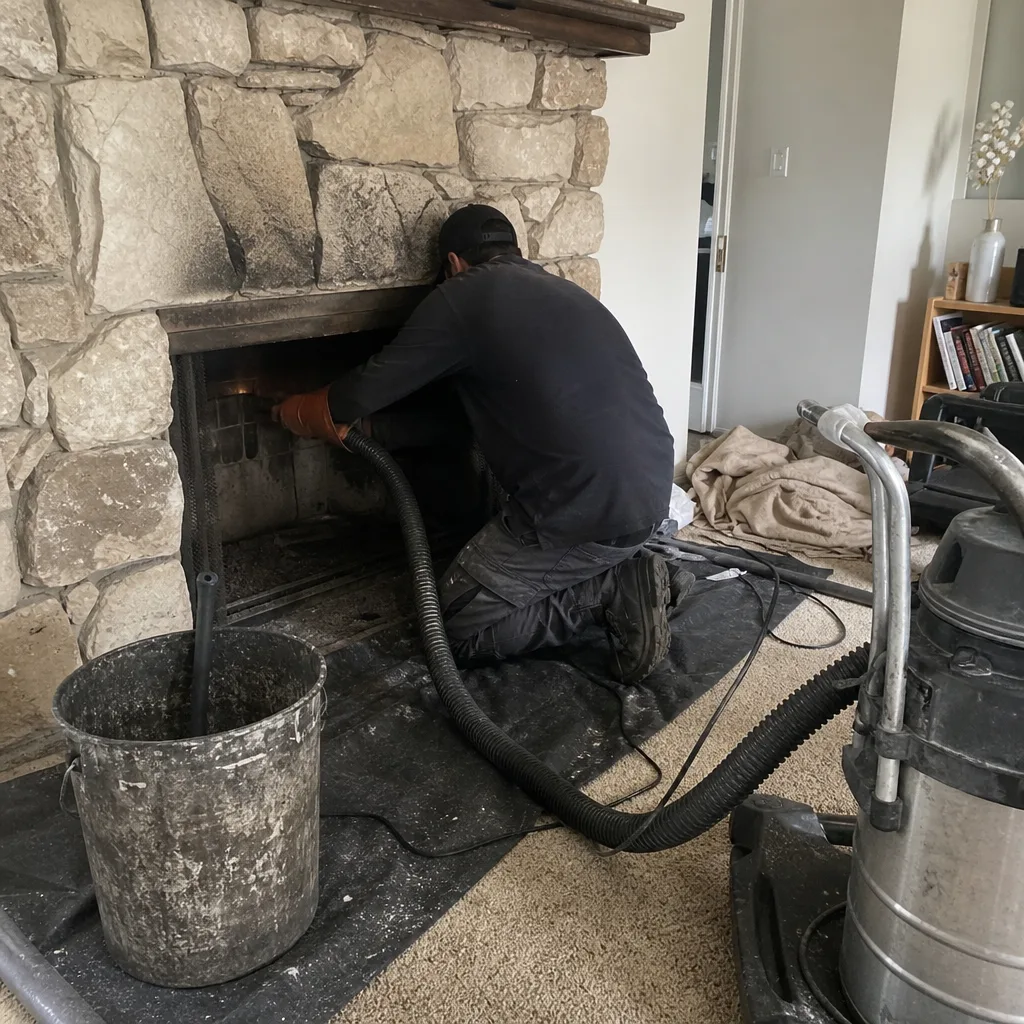
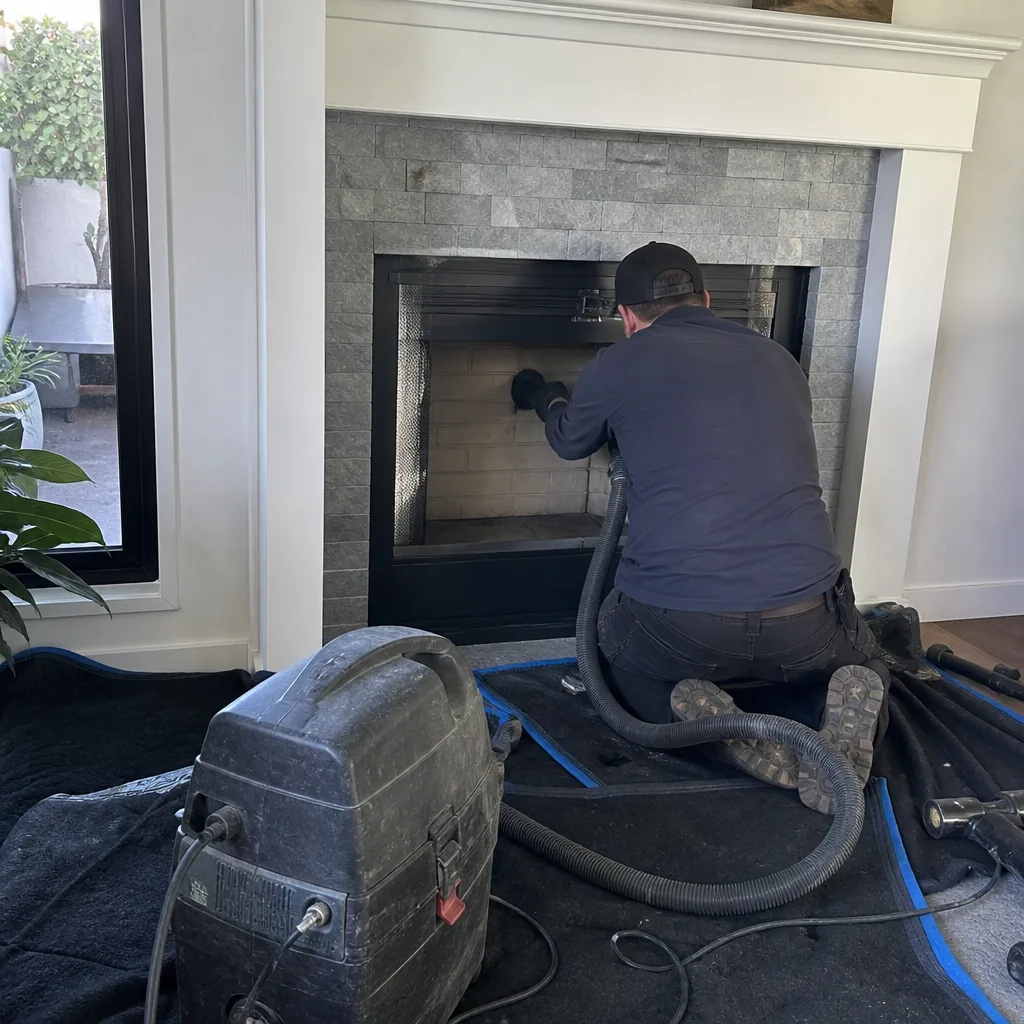
What DIY cleaning actually involves is straightforward to describe but tedious to execute. You need a correctly sized wire or poly brush matched to your flue dimensions, enough rods to reach from the firebox or roof to the termination cap, a HEPA-rated vacuum (a standard shop vac will send fine soot into your living room air), drop cloths, tape, a headlamp, and a respirator rated for fine particulates. Expect 2 to 4 hours of work on a single-story Encinitas rancher, longer if you have a two-story home or a roof with any pitch to negotiate.
The honest takeaway: DIY works for surface soot. Surface soot is not the primary fire risk in a chimney. Glazed creosote is. And you cannot tell the difference without seeing it up close, which means getting onto the roof or inserting a camera. Most DIY kits sold online do not include the one tool that actually matters: a way to see what the brush is touching.
The Technical Limitations of DIY: What You Cannot See or Do
The DIY chimney cleaning debate usually focuses on difficulty and mess. That is a distraction. The real issue is diagnostic capability, and the gap between what a brush removes and what a trained eye can identify is wide. Here is what a homeowner cannot do alone, no matter how thorough the brushing:
- Classify creosote stage. Stage 1 creosote is dusty and removable with a brush. Stage 2 is flaky, tar-like, and requires chemical treatment before mechanical removal will work. Stage 3 is glazed, hardened, and sometimes requires rotary chain or chemical protocol over multiple visits. A homeowner without training cannot distinguish Stage 2 from early Stage 3, and brushing Stage 3 glazing does nothing but polish it.
- Inspect liner joints with a camera. The joints between flue tile sections, the throat, and the smoke chamber are where deterioration starts. A sweeping brush does not reveal a cracked flue tile, a shifted joint, or a gap that is venting heat into the surrounding masonry. Camera inspection reveals all three.
- Access the smoke chamber properly. The smoke chamber sits above the damper and below the flue. It is an oddly shaped area that standard brushes do not reach well. Creosote accumulates there because the smoke slows and cools as it passes through the chamber. DIY tools skip this space almost entirely, which means the most fire-prone area of the chimney gets the least attention.
- Establish a diagnostic baseline for future comparison. A professional sweep generates a written inspection report with photographs. That report is your baseline. Next year, the technician compares new images against old ones. A homeowner sweeping their own chimney has no baseline, no comparison point, and no way to know whether a new crack appeared or an old one widened.
- Identify material-specific problems. A stainless steel liner like DuraFlex behaves differently than a clay tile flue. Masonry chimneys in Encinitas neighborhoods with older construction often have original clay liners that crack under decades of thermal cycling combined with salt air exposure. Knowing what material you are dealing with, and what its failure modes look like, is not something a YouTube video teaches.
A clean chimney and a repaired one are not the same thing. We do both, because the brush only addresses the first half of the job. The second half is knowing what the brush revealed.
The Real Costs: DIY Equipment vs Professional Service in Encinitas
A basic chimney sweep in Encinitas typically costs between $150 and $250 for a standard wood-burning fireplace with a single flue. Add a camera inspection and the total lands between $200 and $350 depending on chimney height, roof accessibility, and whether repairs or chemical treatments are needed. Those are the numbers homeowners should be comparing against the equipment list below.
Here is what an honest DIY kit costs, priced at 2025 retail levels:
- Chimney brush (wire or poly, sized to flue): $25 to $60
- Rod set (fiberglass or nylon, 6 – 8 rods): $40 to $90
- HEPA-rated vacuum: $150 to $400 for a unit with adequate filtration
- Drop cloths, tape, plastic sheeting: $20 to $40
- Respirator (N100 or P100, not a dust mask): $30 to $60
- Headlamp and work gloves: $20 to $40
- Roof ladder and safety harness (if roof access needed): $150 to $400
Total for a first-time DIY setup: roughly $435 to $1,090. That is more than a professional sweep with camera inspection in most cases, and it buys no diagnostic information, no inspection report, and no repair capability. The math only tilts toward DIY in year two or three, assuming you own the equipment, use it annually, and never need anything beyond surface soot removal. The moment you need a liner assessment, heat shield evaluation, or smoke chamber inspection, the DIY math collapses.
There is also the question of what you do with the creosote you remove. Coastal Encinitas sits in San Diego County, where creosote and soot are classified as household waste only in small quantities. The material is flammable and sticky. Bagging it properly and disposing of it through household waste streams is manageable but unpleasant. A professional service handles disposal as part of the job, which is a small but real convenience factor that DIY cost estimates never include.
Understanding Creosote Stages: Why Classification Changes Everything
Creosote forms when wood smoke condenses on the cooler walls of a chimney. Every wood fire produces it. The question is what form it takes, and that depends on flue temperature, wood moisture content, and how much air the fire gets. Encinitas coastal air carries higher humidity than inland San Diego, which means even properly seasoned wood produces slightly cooler flue gas and slightly more condensation than a dry inland burn would, a dynamic covered in our Seasonal Chimney Cleaning Care for Encinitas: Year-Round Homeowner’s Guide. The result is that Encinitas chimneys often trend one stage higher than homeowners expect.
The classification system matters because each stage requires a different removal method, and using the wrong method on the wrong stage is either ineffective or actively harmful:
- Stage 1: Soot and fine powder. Loose, dusty, brushes off easily. This is the only stage where DIY cleaning is genuinely effective. It forms early in the season and on every burn to some degree.
- Stage 2: Flaky, granular deposits. Think of dried coffee grounds glued to the flue wall. It forms when flue temperatures are moderate and the smoke cools before exiting. Brushing removes some of it but leaves a stubborn residue. Professional treatment uses a chemical catalyst (often a manganese-based spray like Anti-Creo-Soot) that modifies the creosote so mechanical removal can follow.
- Stage 3: Glazed, tar-like coating. This is the fire hazard everyone has heard about. It looks like molten black glass and can be an inch thick. It forms during low-temperature fires (smoldering fires, unseasoned wood, closed dampers). Brushing Stage 3 does almost nothing. It requires chemical treatment, rotary removal with chains or a specialized whip head, and sometimes multiple visits. It also indicates the homeowner has a larger problem: a burning habit or wood supply that is producing dangerously high creosote accumulation.
The critical insight: a homeowner sweeping their own chimney has no reliable way to distinguish Stage 2 from early Stage 3. The two look similar to an untrained eye, especially with poor lighting and an awkward roof angle. And the treatment protocol for the two stages is different. Getting this wrong means thinking you cleaned your chimney when you actually just polished a glaze layer.
Insurance and Liability: What Your Policy Actually Expects
Homeowner’s insurance policies in California do not typically require annual chimney cleaning. What they require is that the homeowner took reasonable steps to maintain the property. The problem is what “reasonable steps” means in the context of a chimney fire claim, and how an adjuster interprets it afterward.
After a chimney fire, an insurance adjuster will look for evidence that the chimney was maintained. A professional cleaning receipt with a date, an inspection report, and photographs is that evidence. A homeowner’s statement that “I swept it myself last fall” is not, partly because there is no documentation, and partly because an adjuster cannot verify the cleaning was done correctly or thoroughly. In practice, a DIY cleaning history leaves a homeowner in a weaker claims position than a professional record would, even if the homeowner did the work conscientiously.
There is also the matter of what happens when DIY work damages the chimney. A too-large brush can crack clay flue tiles. Over-aggressive rod work can dislodge mortar joints. A homeowner who damages their own flue during a DIY sweep and then files a claim for the resulting repair will likely find that damage excluded, because the policyholder caused the damage through maintenance work. Professional services carry liability insurance for exactly this reason. The cost of a sweep includes the insurance that stands behind the work.
For Encinitas homeowners specifically, the coastal salt air is an added factor. Salt accelerates corrosion on metal dampers, caps, and chase tops. A homeowner sweeping their own chimney might not notice that a damper frame is rusted through, but that condition is exactly the kind of thing an inspection report from a professional sweep documents and dates. In an insurance context, documentation is leverage.
When DIY Is a Reasonable Choice (And How to Do It Correctly)
There are homeowners for whom DIY chimney maintenance is a defensible, sensible decision. The key is knowing exactly which conditions must be true before picking up a brush. Here is the checklist:
- Your fireplace is factory-built with a stainless steel liner installed within the last 10 to 15 years. Newer liners are smooth, round, and shed soot more easily than corrugated or clay surfaces. They are also less likely to have hidden damage from thermal cycling.
- You burn fewer than 20 to 25 fires per season. Light use means limited creosote formation, and limited creosote formation means Stage 1 is the realistic ceiling for what you are dealing with.
- You burn only seasoned hardwood with moisture below 20 percent. Use a moisture meter. Encinitas coastal air means “seasoned” takes longer here than it does in inland San Diego. Wood left uncovered in a foggy coastal winter never dries properly. If your wood is questionable, your creosote load is higher than you think.
- You have roof access that is safe and you are comfortable working at height with a harness. If the thought of walking a roof makes you uneasy, do not put a brush on a rod and pretend the unease will pass. It will not, and a fall from a roof is a life-altering event, not a lesson learned.
- You have no history of smoking problems, animal entry, unusual odors, or water staining around the fireplace. Each of those is a symptom that points to a condition a brush cannot fix. If any of them are present, stop and call a professional before you spend money on equipment.
If all five conditions are true, here is how to actually do the job correctly: seal the firebox opening with plastic and tape to keep soot out of the living space. Remove the damper plate carefully and note how it sits so you can reinstall it properly. Work from the top down if you can access the roof safely, or from the bottom up with a pulley system if you cannot. Use a brush matched to your flue dimensions; a brush that is too large will bind and can damage the liner. Go slow. After brushing, vacuum the firebox and smoke shelf with a HEPA-rated vacuum. Dispose of the creosote in sealed bags. Do not attempt chemical treatment on Stage 2 or 3 deposits as a DIY project. Chemical treatments change the creosote’s properties, and getting the dwell time or coverage wrong leaves you with a partially treated flue that is still not clean.
One more thing: after your first DIY sweep, look at what came out. If the debris was dry and dusty, your fire habits are likely fine. If it was flaky, shiny, or smell intensified during the sweep, you are dealing with Stage 2 or worse, and you need a professional evaluation, not a second pass with the brush.
When Professional Cleaning Is the Only Sensible Option
The decision flips to professional when any of the following are true: your chimney is masonry with a clay tile liner (most pre-1990 Encinitas construction), you burn more than 25 fires annually, you burn any amount of unseasoned wood, you have experienced smoke rollout into the room, you smell creosote inside the house during humid weather, you have had a chimney fire, you use a wood stove or insert, or your fireplace vents a gas appliance.
Gas hearths deserve a mention because many homeowners assume gas means no cleaning needed. That is wrong. Gas fireplaces and gas log sets produce acidic condensate that corrodes metal components and degrades masonry over time. They also produce soot when the flame impinges on artificial logs or when the burner is dirty. Gas appliance venting is a distinct inspection category that a general-purpose DIY chimney sweep does not address at all.
The other decisive factor is repair capability. A professional cleaning in Encinitas is not just a cleaning. It is an inspection that can turn into a same-visit repair. If the camera reveals a crack in a clay flue tile, a technician who carries HeatShield resurfacing materials can address it before it becomes a chimney fire vector. If the dryer vent cleaning (often done on the same appointment as a chimney sweep through companies that specialize in both) reveals a disconnected duct or a crushed transition hose, the repair can happen immediately with proper Famco or Gelco components instead of a box-store improvisation. A homeowner who sweeps their own chimney discovers none of this, because the tools reveal nothing.
Fire safety starts with what is inside the flue, not just what you can see. The whole point of a camera inspection is that the flue is not visible. It is inaccessible. It is the one part of your house that can be on fire from the inside without you knowing until it is too late. That is not alarmism; it is the physical reality of a vertical combustion chamber built into the center of your home.
Common Mistakes to Avoid
- Assuming a clean-looking firebox means a clean flue. The firebox is the one part you can see. The flue is the one part that matters. They are not the same thing, and a spotless firebox can conceal a Stage 3 glazed flue above the damper.
- Using a brush that does not match the flue dimensions. A brush that is too small polishes the center of the flue and leaves the corners loaded. A brush that is too large binds, gouges, and can crack clay tiles. Flue sizing is not a guess.
- Burning a “creosote sweeping log” and calling it a chimney cleaning. These products can modify Stage 2 creosote in a limited way, but they do not remove it. The creosote remains in the flue until mechanically brushed. A sweeping log is a maintenance aid, not a substitute for removal.
- Skipping the camera inspection because the chimney “looks fine from the bottom.” Most liner damage is invisible from below. The camera sees what the eye cannot. This is the single highest-value difference between DIY and professional service.
- Waiting until October or November to schedule anything. Encinitas does not have a harsh winter, but chimney service books out before the holidays. Coastal fog season is actually the ideal time to have the chimney cleaned and inspected, because the mild weather means no burning is happening and the flue is cool and dry.
- Treating a masonry chimney like a factory-built one. Older Encinitas homes with clay flue tiles need a different inspection protocol than newer homes with stainless liners. Assuming your chimney is fine because a neighbor’s newer fireplace never had issues is a category error.
When to Call a Professional
Call a professional if you have any of the following: visible creosote buildup thicker than a credit card, a history of smoke rollout or backdrafting, an animal in the chimney (you will hear it, and it will not be subtle), water staining on the ceiling near the fireplace, a strong creosote odor during humid weather, or an appliance venting into the chimney that you have never had inspected. Also call if you are simply not sure what you are looking at. The cost of an inspection is less than the cost of guessing wrong. Chimney Sweep in Encinitas is our core service, and we pair it with camera inspection on every job. If you are in Encinitas, Chimney Cleaning Encinitas offers free estimates. Call (866) 282-6347 and we will help you figure out exactly what is inside your flue before you decide whether a brush is enough.
Frequently Asked Questions
A standard chimney sweep in Encinitas runs between $150 and $250 for a wood-burning fireplace with a single flue. With camera inspection, expect $200 to $350. The price varies based on roof accessibility, chimney height, creosote stage, and whether chemical treatment or repair work is needed. Call (866) 282-6347 for a specific quote on your home.
DIY chimney cleaning is physically safe only if you have safe roof access, proper fall protection, a correctly sized brush, and a HEPA-rated vacuum to control soot. It is diagnostically incomplete no matter how carefully done, because a brush cannot inspect liner joints, classify creosote stage, or access the smoke chamber the way a camera and professional tools can.
Yes, but a few times a year changes the risk profile significantly. Light use means less creosote, which makes DIY more defensible. However, even a lightly used chimney should be inspected annually, because animals, water, and structural issues develop whether you burn or not. In coastal Encinitas, salt air and fog cycles affect chimneys even when the fireplace sits unused.
A sweep removes creosote and soot. An inspection evaluates the condition of the liner, damper, smoke chamber, crown, and cap. In a professional operation, the two happen together. The sweep provides access; the inspection provides diagnosis. A homeowner doing their own sweep gets access and removal, but no diagnosis, because they lack the camera and the trained eye to see what the brush uncovered.
The National Fire Protection Association standard is that chimneys should be inspected annually and swept whenever creosote reaches 1/8 inch of accumulation. For a typical wood-burning fireplace in Encinitas used 25 to 50 times per season, that usually translates to an annual professional sweep. Homes with light gas log use may stretch to every other year, but the annual inspection should still happen because gas condensate causes its own corrosion problems.
You can clean the first few feet of a dryer duct with a brush kit, but the full run from dryer to exterior vent termination is usually inaccessible without professional tools. Lint accumulation inside walls is a leading cause of dryer fires, and a DIY cleaning that leaves a hidden blockage untouched creates a false sense of security. Our Dryer Vent Cleaning in Encinitas service uses proper Famco and Gelco venting components and reaches the portions of the duct a homeowner cannot. If your dryer takes longer than 45 minutes to dry a load, call us before you assume the appliance is the problem.
The Bottom Line
A DIY chimney cleaning is the right choice for a narrow slice of Encinitas homeowners: those with newer lined fireplaces, light use, seasoned wood, safe roof access, and no history of problems. For everyone else, the math does not work. The equipment costs more than a professional sweep, the diagnostic gap is unfillable without a camera and training, and the insurance implications of an undocumented DIY cleaning stack against you in a claim. The brush removes the soot. It does not tell you what the soot was hiding. If you would rather know than guess, start with a professional inspection. Our Chimney Cleaning Encinitas home page covers our approach, and if the inspection reveals damage, our Chimney Repair in Encinitas team can address it the same day. One call covers your chimney and your dryer vent: (866) 282-6347.
Written by the team at Chimney Cleaning Encinitas, serving Encinitas since 2012. Browse our more guides & resources for local homeowners.
See the difference
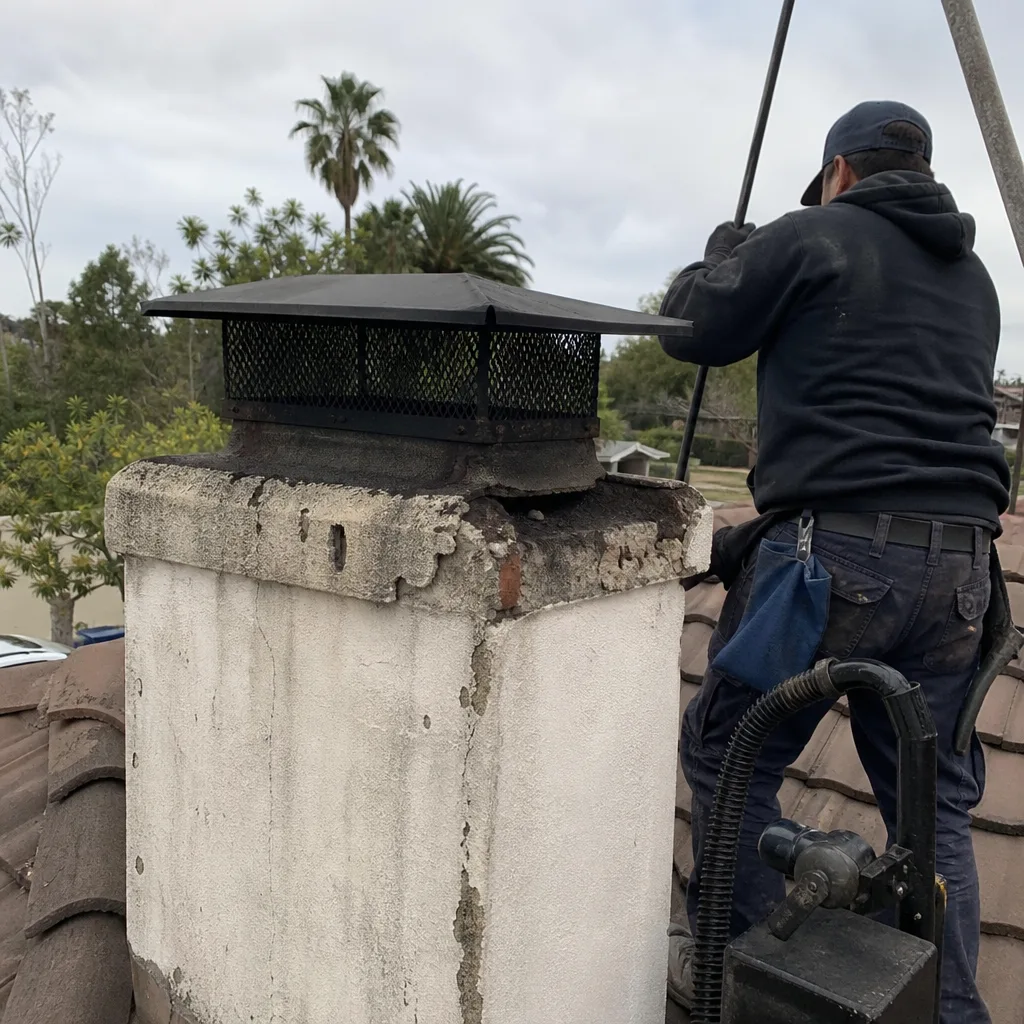 Before
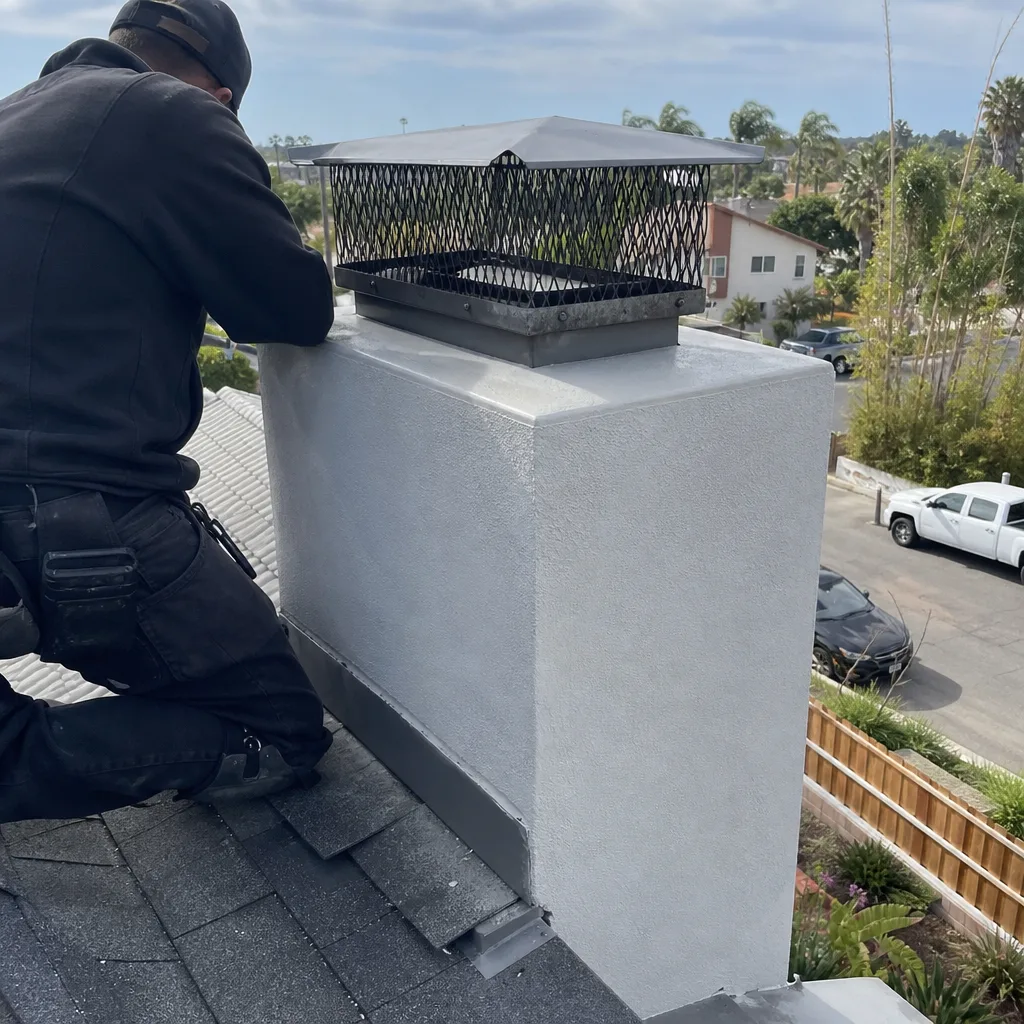 After
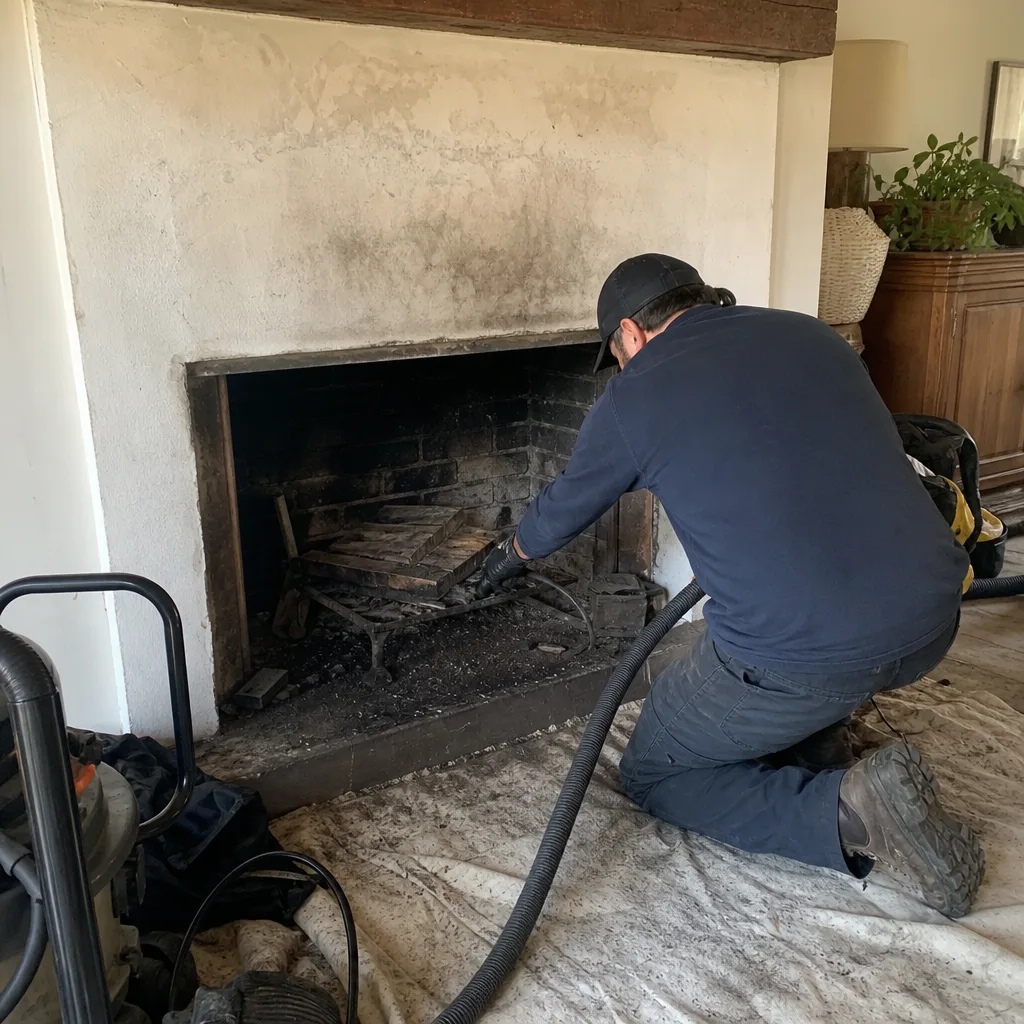 Before
 After
 Before
 After