
Last updated November 2, 2026
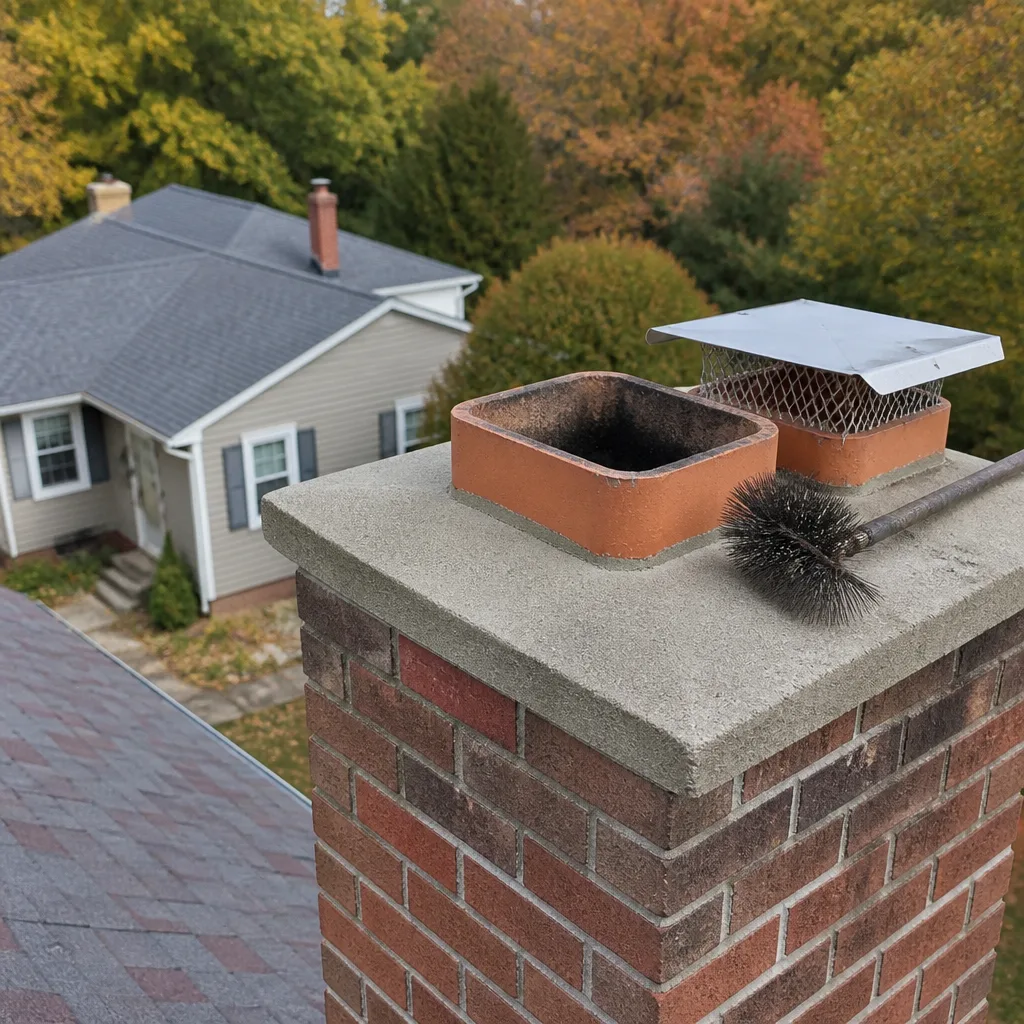 Sweep & inspection
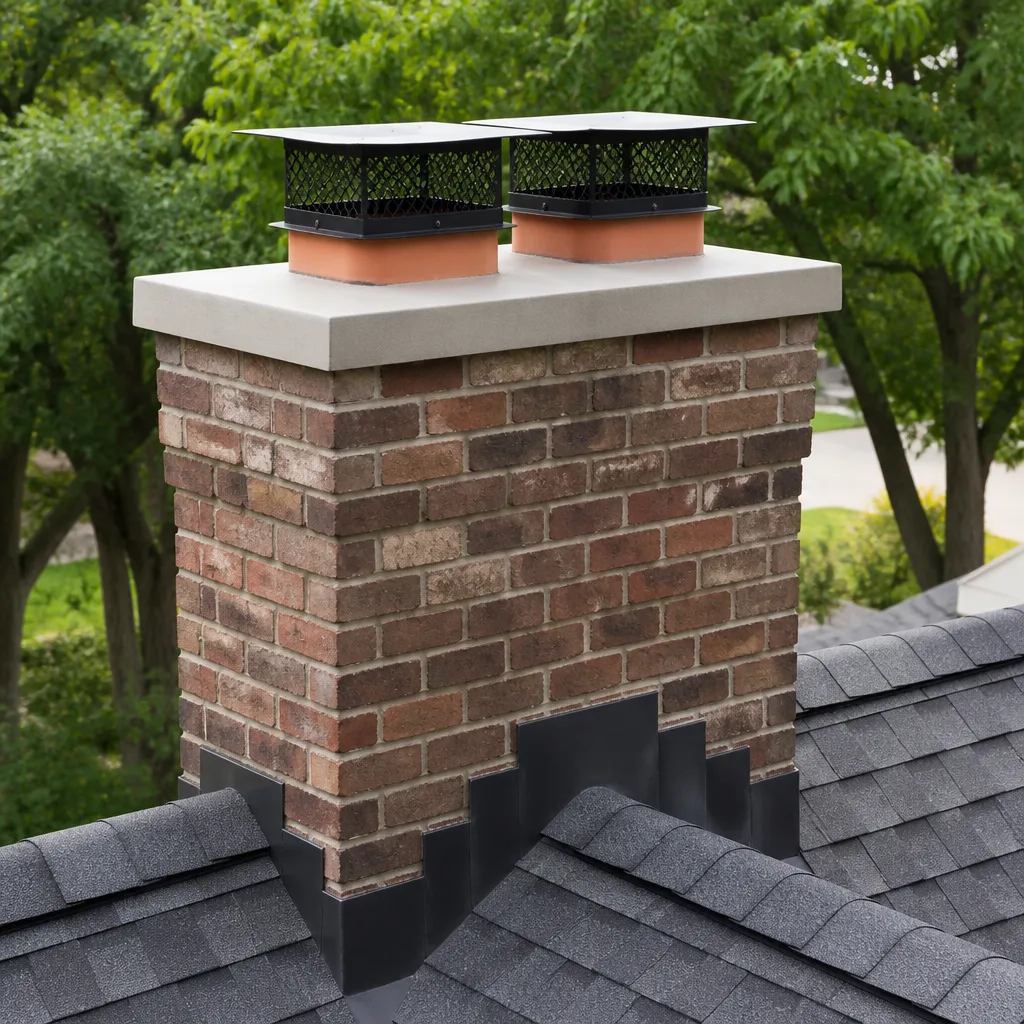 Caps & crowns
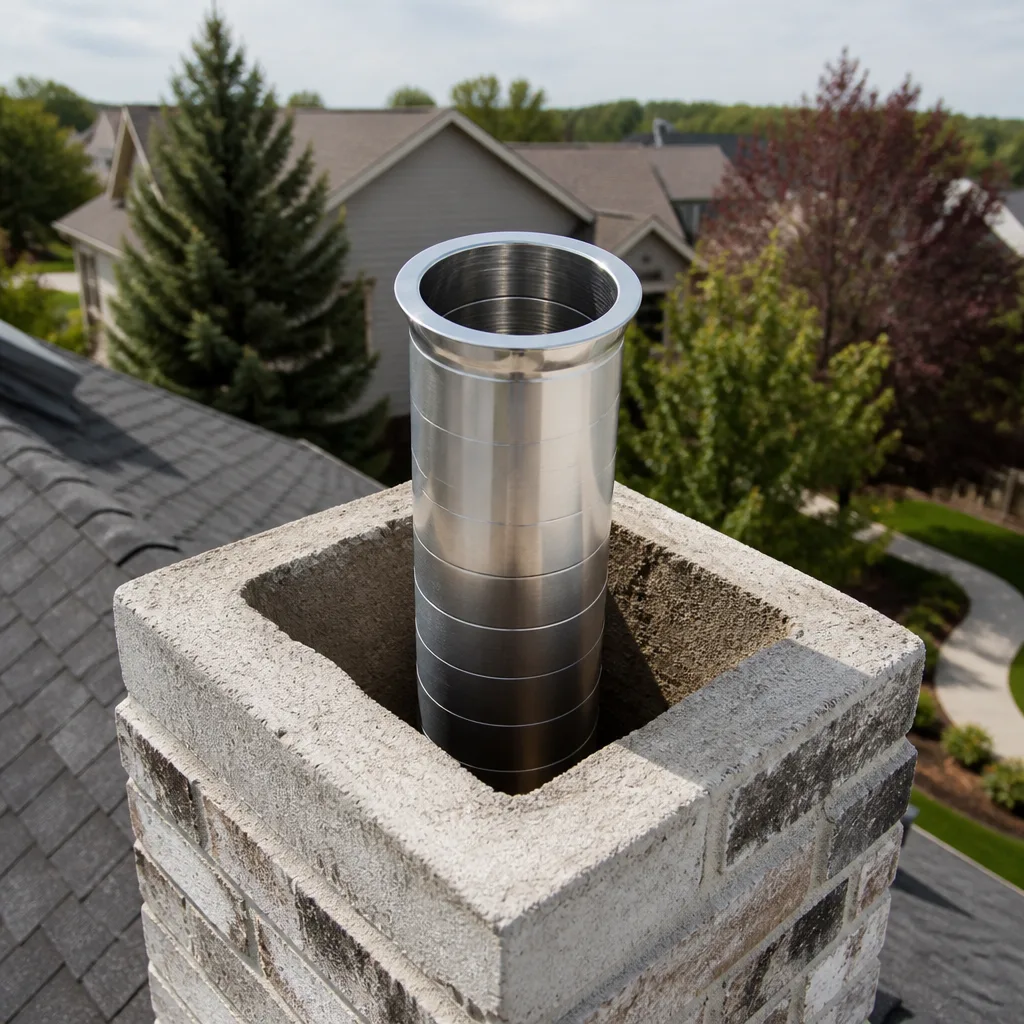 Flue relining
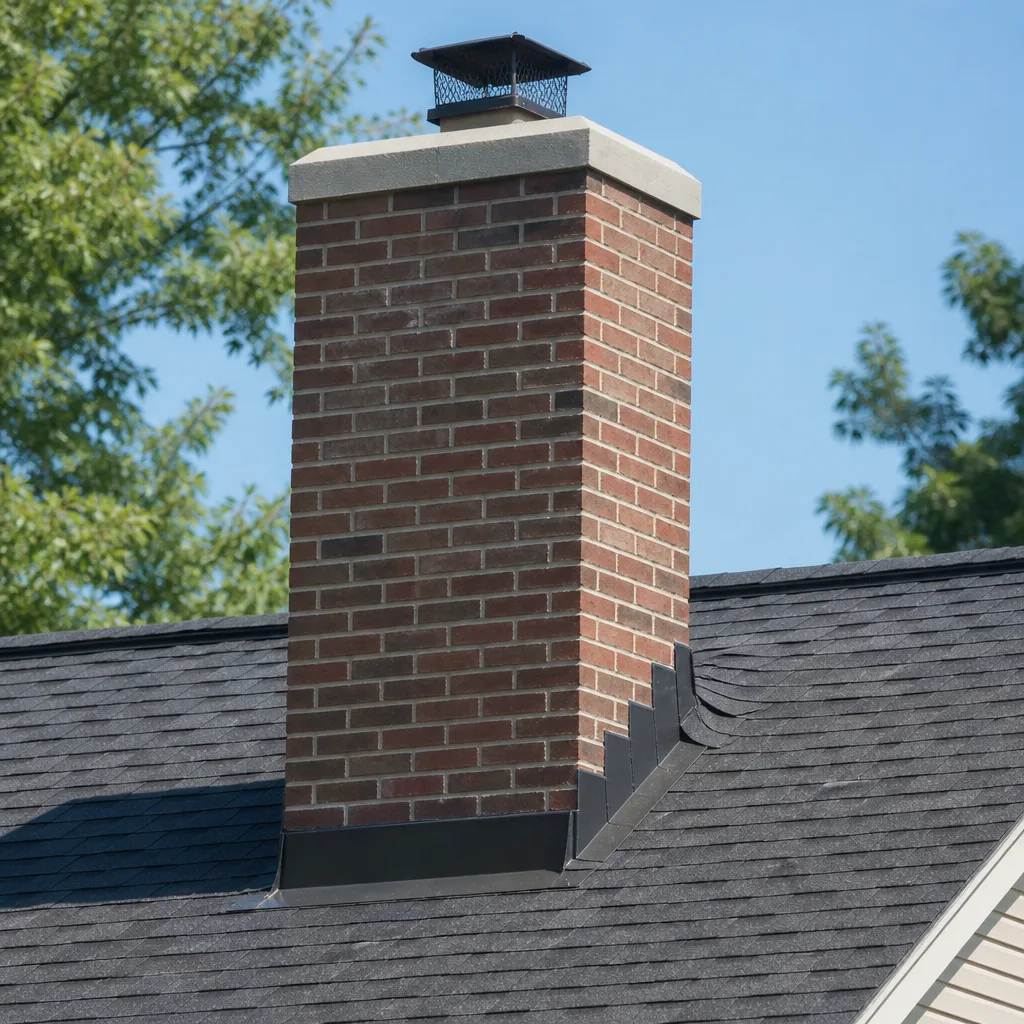 Masonry repair
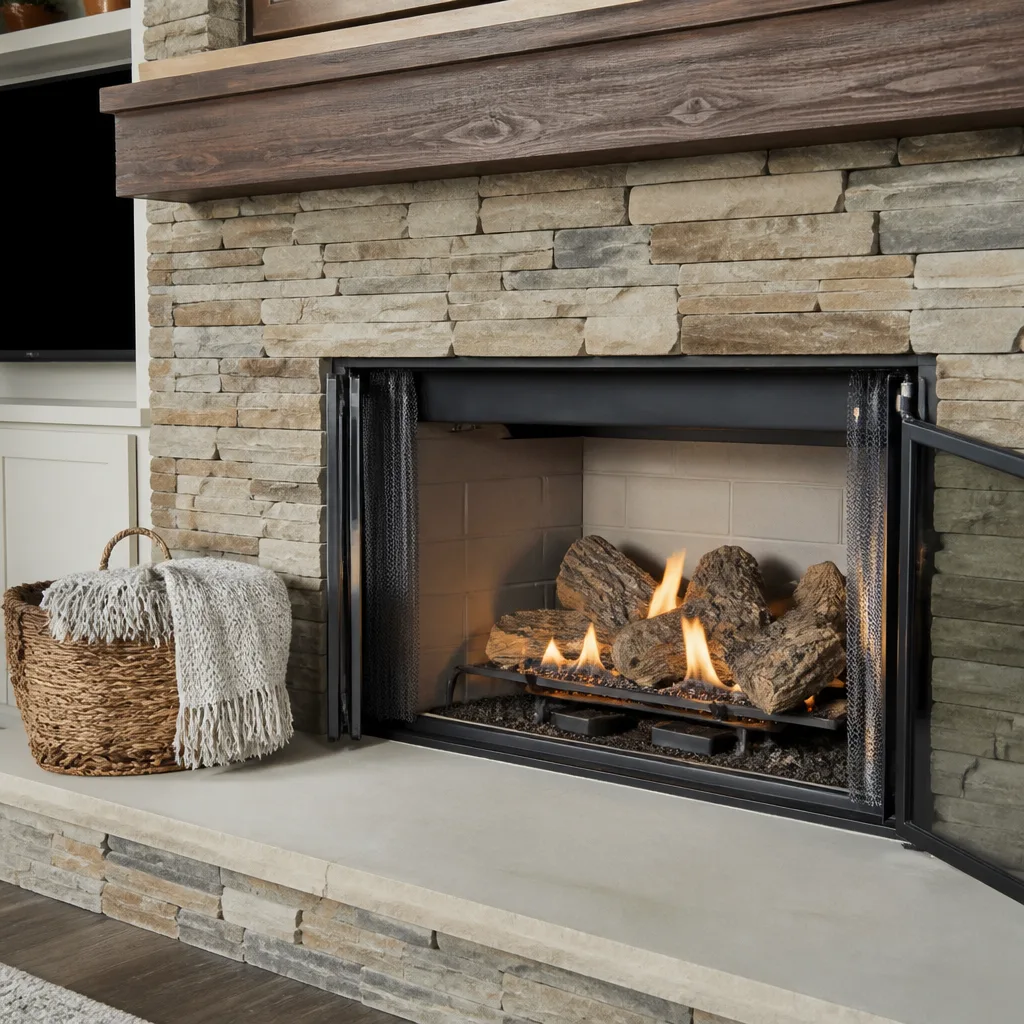 Gas fireplace service
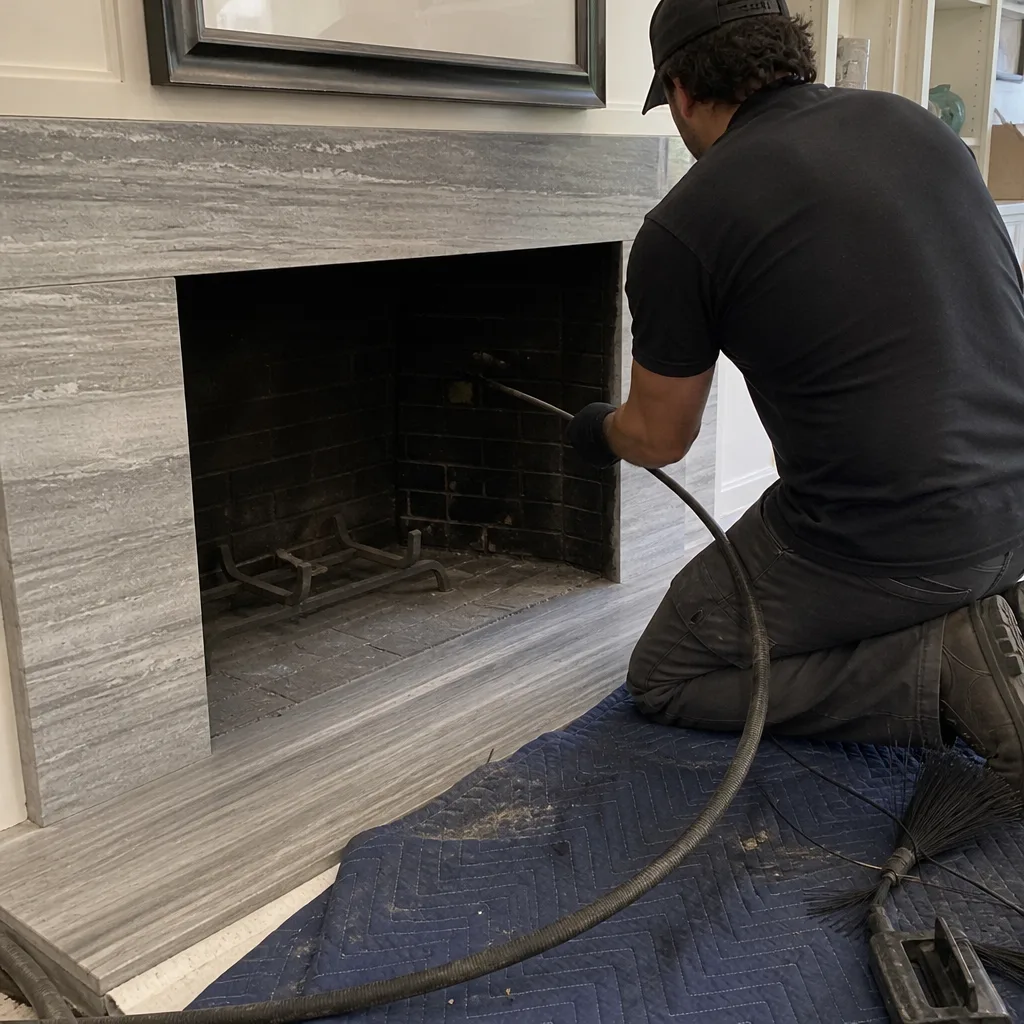
Level 1 sweep and inspection to the NFPA 211 annual standard - flue, crown, cap, and flashing checked and photographed
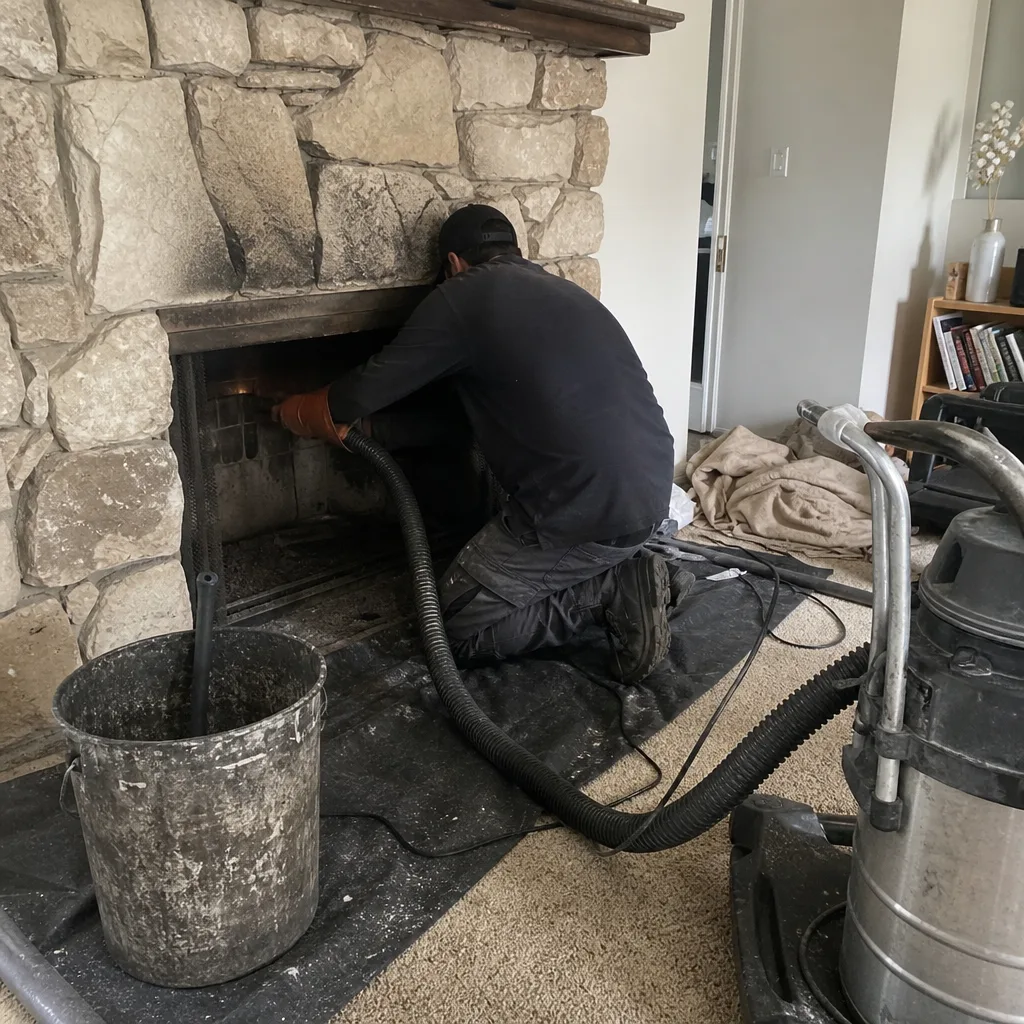
Chimney sweep logs do not sweep chimneys. They loosen some creosote - which then falls where a brush and vacuum still have to collect it.
Chimney Sweep Troubleshooting: Common Problems and How to Fix Them
Smoke rolling into your living room when you open the damper isn’t always a dirty chimney. Sometimes it’s a pressure problem caused by your HVAC system pulling air backward through the flue, or a bathroom exhaust fan depressurizing the whole house. A standard sweep won’t fix that. In Encinitas, where coastal air and mild winters mean fireplaces get used less consistently than in colder climates, problems tend to accumulate slowly and show up in ways that confuse homeowners. This Complete Chimney Sweep Guide for Encinitas Homeowners teaches you to read the evidence your chimney leaves behind so you can describe the actual problem accurately. You’ll learn how to distinguish a flue obstruction from a draft problem, what summer chimney odors actually indicate, when the smoke chamber is the hidden culprit, and which symptoms mean you should stop using the fireplace until a professional assesses it.
Quick Answer
Chimney problems fall into four broad categories: draft failures (smoke backdrafting, slow draw), moisture issues (odors, staining, deteriorated mortar), obstructions (bird nests, debris, creosote buildup), and structural damage (liner cracks, firebox deterioration, smoke chamber damage). Each symptom points to a specific system failure, and treating the wrong one wastes money while leaving the hazard in place. The most common mistake homeowners make is assuming every chimney issue is solved by a chimney sweep, when many require actual repair.
Styles & brands we work with
- Sweep & inspection
- Caps & crowns
- Flue relining
- Masonry repair
- Gas fireplace service
Table of Contents
- Smoke Backdrafting Into the Room: The Pressure Problem Nobody Mentions
- Chimney Smell in Summer: What Moisture-Activated Creosote Is Telling You
- Slow Draw and Weak Fires: The Smoke Chamber’s Hidden Role
- Flue Obstruction vs. Draft Problem: How to Tell Without Climbing on the Roof
- Visible Debris and Soot Falling: When It’s Normal and When It’s Not
- Liner Breach and Firebox Crack Symptoms: When to Stop Using the Fireplace
- Dryer Vent Warning Signs That Mimic Chimney Problems
- What You Can Safely Check Yourself vs. What Requires a Trained Eye
Smoke Backdrafting Into the Room: The Pressure Problem Nobody Mentions
When smoke pours into your living room instead of up the flue, most people assume the chimney is blocked. Often it’s not. The first question we ask in Encinitas is whether anything changed in the house recently: new windows, a kitchen remodel with a bigger range hood, a new HVAC system, even a new bathroom fan. All of these change the pressure balance inside your home.
Here’s what’s happening. A fire needs air to burn, and it pulls that air from the room. If your house is tightly sealed and something else is also pulling air out (a range hood running, a bathroom exhaust fan, a furnace competing for combustion air), the house goes into negative pressure. Air then gets pulled down the chimney to equalize. That air carries smoke with it. The chimney isn’t dirty. The house is just starved for air.
The telltale sign is timing. Does smoke roll in only when the fire is first lit, then settle down? Or does it happen consistently whenever the HVAC kicks on or a specific appliance runs? Most backdrafting in Encinitas homes traces to one of these pressure conflicts, not to obstruction inside the flue.
Quick checks you can do
- Open a window near the fireplace by about two inches. If the smoke stops rolling in, you have a pressure problem, not a chimney problem. You’ll still want a professional to verify and suggest a fix, but this test narrows it down.
- Turn off the HVAC system, close all exhaust fans, and crack a window. Light a small piece of newspaper and hold it near the open damper. If the smoke rises into the chimney, your flue is drafting fine when house pressure is neutral.
- If smoke still rolls in with a window open and all fans off, you have a legitimate flue or firebox issue that needs a sweep or repair assessment.
This distinction matters because it changes who fixes the problem. A sweep that removes creosote won’t stop backdrafting caused by a depressurized house. And a homeowner who spends money on a liner replacement they don’t need gets angry at the wrong person. At Chimney Cleaning Encinitas home, we start every troubleshooting call with questions about pressure before we ever talk about soot. It’s one reason our technicians are trained as chimney specialists rather than generalists: combustion science is the job, not a side note.
Chimney Smell in Summer: What Moisture-Activated Creosote Is Telling You
That campfire smell that fills your living room in August, when you haven’t burned anything since April, is one of the most misunderstood symptoms in chimney work. Homeowners assume they need a sweep. Sometimes they do. But the smell itself is a moisture signal, and sweeping alone won’t stop it from coming back.
Creosote is a byproduct of wood combustion, and it coats the inside of your flue every time you burn. When you stop burning for the season, creosote sits there. In coastal Encinitas, where summer humidity routinely sits above 70%, that creosote absorbs moisture from the air. Moisture activates the volatile compounds in the creosote, and they off-gas down into your living space. The smell is not coming from an actively dirty chimney. It’s coming from a chimney that has creosote plus humidity.
This is why some homes smell strongly in summer while others don’t. Two chimneys can have the same amount of creosote, but the one in a cooler, dryer house might never off-gas. The one near the coast, with marine layer mornings and humid afternoons, can smell for weeks.
How moisture gets in
- Missing or cracked chimney cap letting rain directly into the flue
- Damaged crown mortar allowing water to soak into the masonry and migrate into the flue
- Failed flashing where the chimney meets the roof, channeling water down the outside and into the structure
- Interior humidity alone, even with no leak, when the creosote layer is thick enough
The fix for a true summer odor problem is rarely just a sweep. A sweep removes the current creosote, which may temporarily reduce the smell. But if moisture is entering through a failed crown or missing cap, the next season’s creosote will smell again. The actual repair involves stopping the water: a new cap, crown repair, flashing work, or in some cases a liner that separates the combustion path from the damp masonry. Chimney Repair in Encinitas addresses these root causes on the same visit as a sweep, which is the practical advantage of a company that does both.
Slow Draw and Weak Fires: The Smoke Chamber’s Hidden Role
Most homeowners have never heard of the smoke chamber, and most chimney troubleshooting guides skip it entirely. That’s a shame, because the smoke chamber is a frequent cause of sluggish draft and smoky startups, and its condition rarely gets checked during a basic sweep.
The smoke chamber is the sloped area above the firebox that funnels smoke up into the flue. It’s shaped like an inverted funnel, and its inner walls are coated with a material called parging: a smooth, heat-resistant mortar skim coat. Think of parging the way you’d think of the inside of a well-designed exhaust manifold. A smooth surface channels smoke efficiently. If the parging is cracked, spalling, or missing in sections, the smoke hits rough brick, swirls, loses velocity, and cools. Cool smoke doesn’t rise well. It lingers, stalls, and pushes back into the room.
In older Encinitas homes, where chimneys may have been built decades ago before modern parging standards, we see smoke chamber damage with some regularity. The homeowner reports that the fireplace “never drew right since we bought the house.” The flue gets swept, the fire still smokes on startup, and everyone shrugs. The smoke chamber is why.
A professional chimney inspection includes assessing the smoke chamber and the condition of its parging. When the parge coat fails, repairs involve re-coating the chamber or resurfacing it. This is a repair, not a cleaning, and it’s a prime example of the distinction we make constantly: a clean chimney and a repaired one are not the same thing. For help choosing the right chimney cleaning brand in Encinitas, a repair-capable company matters. Companies that only sweep can’t fix this, and homeowners end up either living with a smoky fireplace or calling a second contractor. That second call is what a repair-capable chimney company eliminates.
Flue Obstruction vs. Draft Problem: How to Tell Without Climbing on the Roof
You don’t need to get on your roof to narrow this down. There are some field tests that separate a physical blockage from a fundamental draft issue, and they’re safe for any homeowner to perform.
A flue obstruction is a physical object or material blocking the smoke path. Things we find in Encinitas chimneys include bird nests (often from starlings or sparrows), squirrel debris, leaves packed in by coastal winds, dead birds, and chunks of deteriorated flue tile that have collapsed inward. Obstructions create specific symptoms: smoke that worsens immediately after lighting, difficulty getting a fire going at all, visible debris falling into the firebox, and sometimes animal sounds from the flue.
A draft problem is different. The chimney is physically open, but smoke doesn’t rise properly because of pressure, sizing, height, or temperature issues. Symptoms include smoke that rolls in only on startup but improves after ten minutes of hot fire, smoke that appears when specific appliances run, and fires that burn lazily with weak flame even when the wood is good and dry.
Step-by-step field test
- With the fireplace cold, open the damper fully. Shine a flashlight up into the flue from inside the firebox. If you can’t see daylight or a clear path, you may have an obstruction or a closed/partially-closed damper. If you see clear sky or light, the flue is at least open.
- Light a tightly rolled piece of newspaper and hold it up near the open damper. Ideally the smoke should be pulled upward. If it drifts backward into the room, you have a draft failure even before any fire is lit.
- Open a window near the fireplace and repeat the newspaper test. If the smoke rises now, the problem is house pressure, not the chimney.
- If the smoke rises with a window open but the fireplace still smokes when you light a real fire, consider a sizing or height issue: the flue may be too small for the firebox, or the chimney may be too short to overcome local air currents.
This sequence costs nothing and takes ten minutes. It gives you a much clearer vocabulary when you call a sweep, because you can say “the newspaper test pulls smoke up with the window open, but the real fire smokes for the first fifteen minutes” instead of just “my chimney smokes.” The more precise your description, the faster a good technician can isolate the cause. And here’s an Encinitas-specific note: if you live near the coast in Leucadia or along Neptune Avenue, you’re dealing with stronger, gustier marine winds than homes further inland toward Olivenhain. Wind can force smoke down a short chimney or overwhelm a weak draft. This is a legitimate local variable.
Visible Debris and Soot Falling: When It’s Normal and When It’s Not
Some soot inside a firebox is normal. A few flakes falling when you open the damper is not automatically a red flag. But there’s a line, and knowing where it is will save you from either overreacting or dangerously ignoring a real problem.
Normal: a thin film of soot on the firebox walls and floor after a season of burning. You might see a light dusting on the damper handle. These are byproducts of combustion and get cleaned up during a standard sweep. If a small amount of soot falls when you first open the damper after months of non-use, that’s creosote flaking off the flue walls and dropping down. It’s expected in small quantities.
Not normal: chunks of dark, shiny creosote the size of a pea or larger falling regularly. Not normal: pieces of brick, mortar, or clay tile mixed in with the soot. Not normal: damp or wet debris, which indicates water intrusion. Not normal: debris that keeps falling even after a recent sweep.
Large creosote flakes signal a heavy buildup that has undergone thermal expansion and contraction cycles. It’s starting to delaminate from the flue walls. This is a fire hazard: those chunks are fuel, and a chimney fire can ignite them. Clay tile pieces falling mean the flue liner itself is deteriorating. In an older Encinitas home, this is a sign that the flue may need resurfacing or a new liner system. Chimney Sweep in Encinitas technicians inspect for exactly these signs during a sweep, and because they’re trained in repair too, they can address liner damage on the spot rather than telling you to find someone else. That’s the practical difference: one call covers your chimney and your dryer vent, both fire risks, one specialist.
Liner Breach and Firebox Crack Symptoms: When to Stop Using the Fireplace
Some symptoms mean stop burning immediately until a professional evaluates the system. This is not being dramatic. It’s recognizing that a chimney fire or carbon monoxide intrusion is a catastrophic and potentially fatal failure, and the warning signs are there if you know what to look for.
A flue liner separates combustion gases and heat from the surrounding masonry and house structure. When a liner cracks, gaps, or collapses, the original design fails. Heat and gases can reach combustible materials. Carbon monoxide can migrate into living spaces. The liner is the single most important safety component in your chimney, and it wears out.
Stop-burning symptoms
- You hear a crackling or popping sound from inside the chimney while a fire is burning. This can be creosote igniting or masonry shifting under stress.
- You smell smoke in rooms far from the fireplace, or in the attic or upstairs bedrooms. This suggests gas leakage into wall cavities or living spaces.
- You see white staining, efflorescence, or dark streaks on the outside of the chimney brick. This is moisture migration, which often accompanies liner damage.
- You notice cracks in the firebox walls where you can fit a coin edge. Surface cracks are sometimes cosmetic; deeper cracks signal structural movement.
- Chunks of clay tile have appeared in the firebox. This is flue liner material, and its presence is unambiguous evidence of deterioration.
If any of these appear, the next step is a professional inspection, not a cleaning. A repair-capable chimney company can assess whether you need a new liner system (we install DuraFlex stainless steel liners, which are professional-grade and designed for this application) or whether a resurfacing treatment is appropriate. We also apply HeatShield, a specialized chimney resurfacing material that restores flue integrity without a full liner replacement in some cases. Most cleaning-only companies can’t offer HeatShield because it requires training and certification most sweeps don’t have.
Dryer Vent Warning Signs That Mimic Chimney Problems
One of the most useful things a homeowner can understand is that dryers and chimneys fail in similar ways, because both are combustion venting systems. A dryer vent that’s clogged with lint behaves like a chimney with a flue obstruction. The symptoms are nearly identical, and we see them confused all the time in Encinitas homes.
If your dryer is taking two cycles to dry a load, the vent is restricted. If the dryer is hot to the touch on the outside, restricted. If you smell a burning odor when the dryer runs, that’s lint overheating around the heating element, and it’s a fire hazard. If clothes come out damp and hot rather than damp and cool, the moisture can’t escape, which means the vent path is compromised. These are the dryer equivalents of smoke backdrafting.
We use Famco and Gelco venting components when we repair or replace dryer vent runs, because these are professional-grade materials made for proper fitment. Box-store flexible hose is a common problem itself: it sags, kinks, collects lint in the ridges, and can’t be properly cleaned. A rigid or semi-rigid vent installed with the right components flows air properly and is cleanable. This is the same principle as a smooth parge coat in a smoke chamber: smooth surfaces move gases efficiently, and rough or damaged surfaces don’t.
If you have dryer symptoms and chimney symptoms in the same house, that’s actually useful information. It suggests the home has generalized venting problems that a specialized venting inspection can address systematically. One call to Dryer Vent Cleaning covers both systems, which is more efficient than calling two separate companies and hoping they diagnose the same way.
What You Can Safely Check Yourself vs. What Requires a Trained Eye
Here’s the honest breakdown. There are things you can check yourself without any training, and there are things you should not touch. Knowing the line is the difference between a helpful homeowner and a hospital visit.
Safe to check yourself
- Visual inspection of the firebox and damper with a flashlight
- The newspaper draft test described earlier
- The open-window pressure test
- Checking the chimney cap from the ground with binoculars (Is it still there? Is it crooked? Is there visible debris around it?)
- Looking for water stains on the ceiling near the chimney or on the chimney chase
- Checking that your carbon monoxide detector is functioning
Leave to a professional
- Anything on the roof. Do not climb on your roof to inspect a chimney. Falls from roofs are a leading cause of home injury, and most homeowners lack proper roof safety equipment.
- Removing a bird nest or animal. Birds carry mites and diseases, and some species are protected. Removing a nest inside a flue requires a professional with the right equipment and understanding of wildlife rules.
- Any repair to the flue liner, smoke chamber, or firebox. These require specialized materials and an understanding of combustion clearances and code requirements.
- Any situation where you suspect a chimney fire has occurred, even a small one. Chimney fires can damage liners in ways that aren’t visible without specialized cameras.
- Installing or modifying any venting component. Improper venting kills people. This is not the place for a YouTube education.
A good chimney company will show you the evidence. Nothing should be recommended without camera inspection footage you can see for yourself. If a sweep tells you that you need a liner replacement but won’t show you the camera video, get a second opinion. Fire safety starts with what’s inside the flue, not just what you can see.
Common Mistakes to Avoid
- Assuming every problem is fixed by a sweep. A sweep removes creosote. It does not fix pressure problems, liner cracks, crown damage, or smoke chamber deterioration. If you pay for a sweep and the problem persists, the issue is almost certainly a repair matter.
- Treating summer odor as a cleaning problem only. If moisture is entering through a failed cap or crown, the smell will return after every sweep until you fix the water intrusion. Address the water first.
- Ignoring pressure symptoms and repeatedly lighting smoky fires. Every smoky fire deposits more creosote faster, because the smoke lingers in the flue and cools. You’re making the problem worse every time you burn through the smoke.
- Using box-store flexible dryer vent hose. It kinks, sags, collects lint, and can’t be cleaned properly. Use rigid or semi-rigid venting with professional-grade components.
- Waiting until the fall to inspect. In Encinitas, chimney companies get swamped in October and November when people suddenly remember their fireplaces. Spring and summer are better times for inspection and repair, when you’re not competing with the seasonal rush.
- Believing a chimney is fine because it was swept last year. A sweep removes creosote. It doesn’t verify liner integrity, crown condition, or smoke chamber parging unless it’s part of a full inspection. Those components fail on their own timelines.
- Ignoring your dryer vent because it’s not a chimney. Dryer vents cause more house fires in the U.S. than chimneys do. The same principles of obstruction and airflow apply, and cleaning both under one service roof is simpler than juggling two contractors.
See the difference
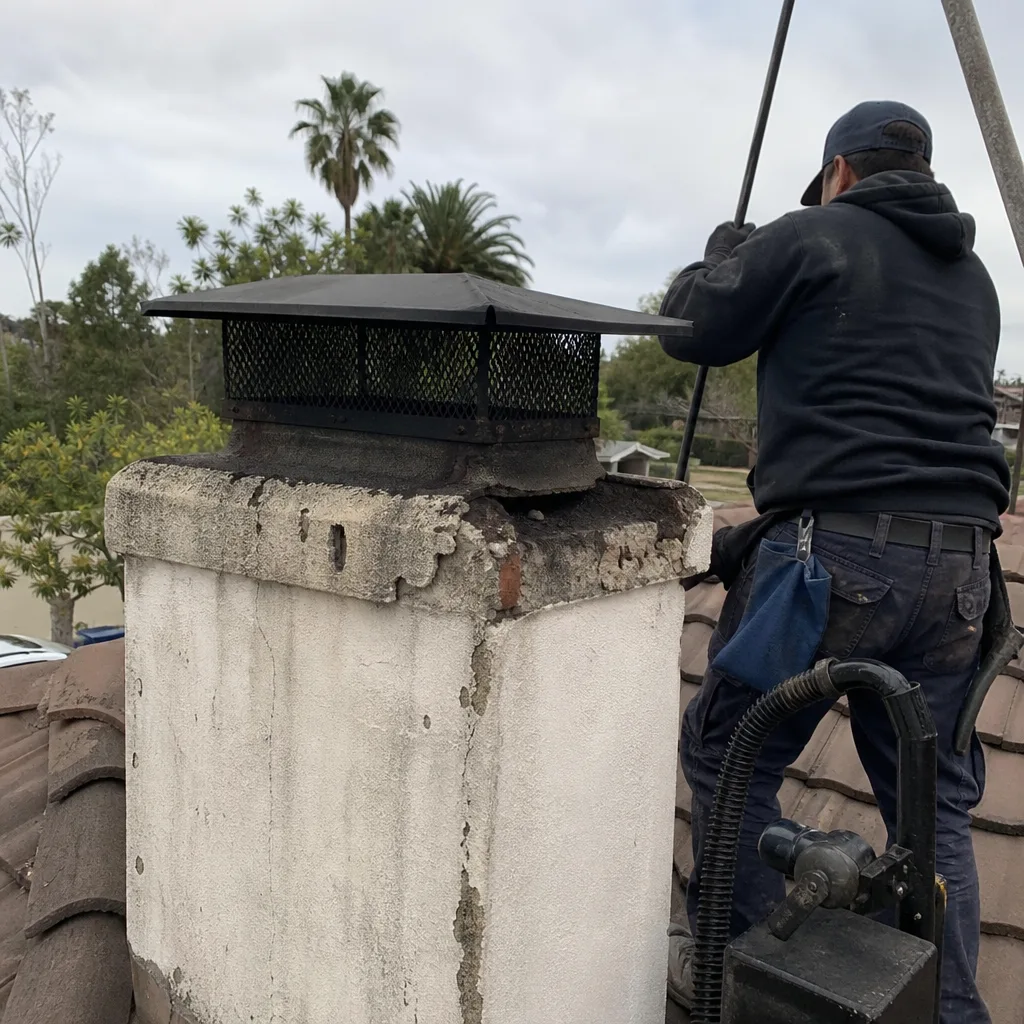 Before
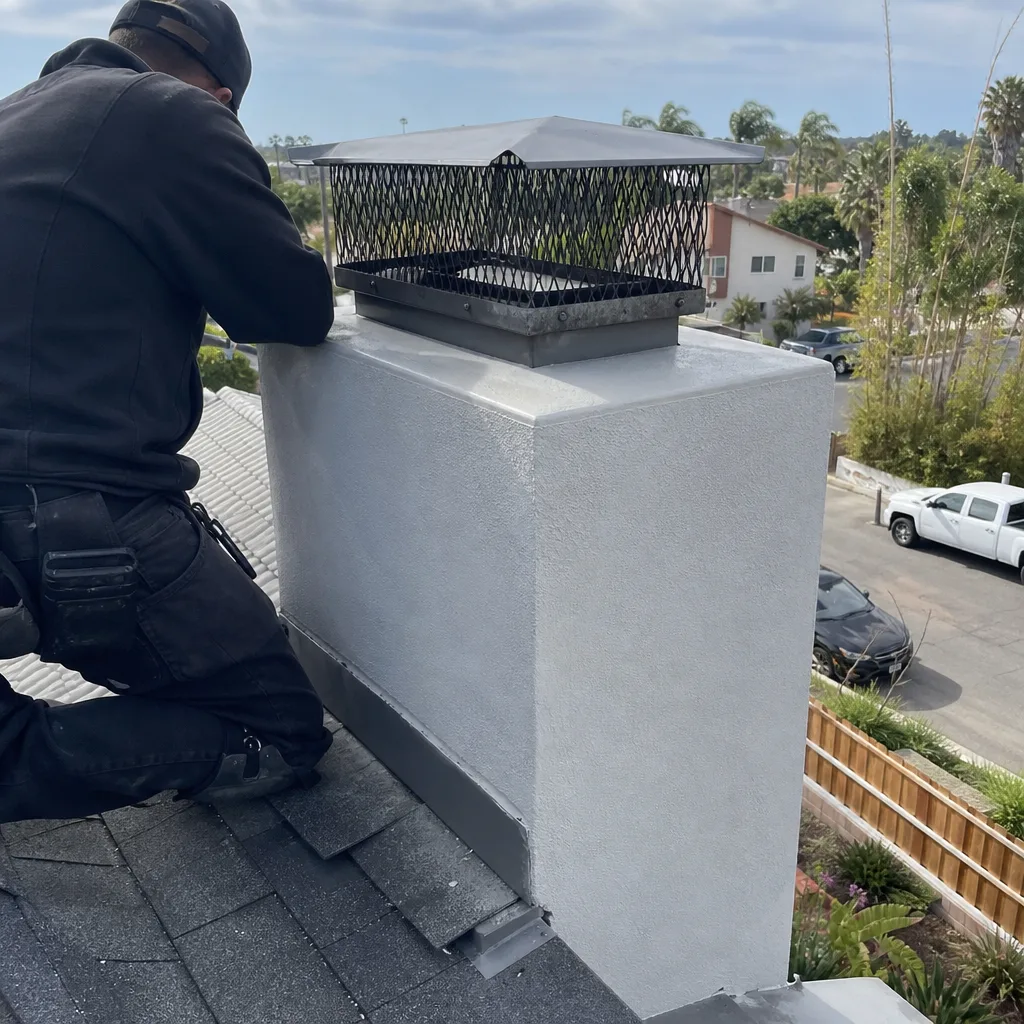 After
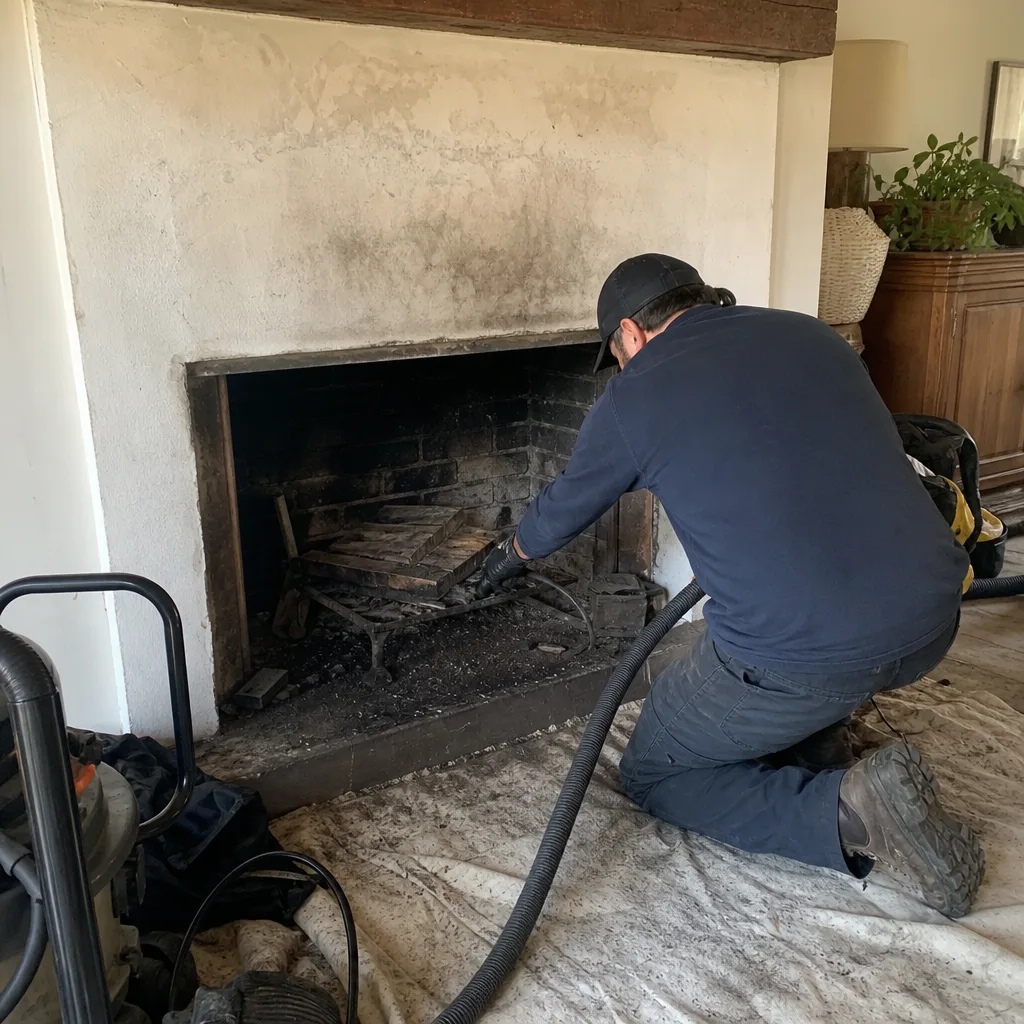 Before
 After
 Before
 After
When to Call a Professional
Call when you’ve done the basic field tests and the problem persists. Call when you see chunks of creosote, clay tile, or mortar falling into the firebox. Call when you smell smoke in rooms far from the fireplace. Call when summer chimney odor returns after a sweep. Call when your dryer takes two cycles to dry a load. Call when you’ve just bought a home and have never had the chimney inspected. None of these situations are things you should live with or attempt to fix yourself. They’re all conditions that a specialized venting inspection can identify quickly, usually with camera equipment and a trained eye. Chimney Cleaning Encinitas offers free estimates in Encinitas – call (866) 282-6347.
Frequently Asked Questions
Summer chimney odor is caused by moisture-activated creosote off-gassing: built-up creosote absorbs humid air and releases volatile compounds into your living space, and the real fix is stopping the moisture entry, not just sweeping.
The National Fire Protection Association recommends a sweep whenever creosote reaches 1/8 inch thickness, and for most wood-burning fireplaces in Encinitas that means every 1 to 2 years depending on how frequently you burn and what kind of wood you use; gas fireplaces typically need less frequent sweeping but still require annual inspection.
You need a new liner if the existing one is cracked, collapsed, or missing sections, and the only way to know is a camera inspection that shows the actual condition of the flue, not a guess based on age alone; a proper liner protects your house from heat transfer and gas leakage, so this is a safety decision, not a cosmetic one.
Creosote accumulates with every fire, and creosote is fuel, which means a thick enough layer can ignite into a chimney fire that reaches temperatures hot enough to crack masonry and damage the liner, and even if that doesn’t happen, the restricted airflow causes smoky, inefficient fires that deposit creosote even faster.
Yes, an HVAC system or exhaust fan can depressurize your house enough to reverse airflow down the chimney, pulling smoke into the room instead of up the flue, and this is one of the most common causes of backdrafting we see in modern, tightly-sealed homes.
Chimney sweep pricing in Encinitas depends on the condition of the flue, the amount of creosote, and whether repairs are needed, but standard sweeps typically run in the range of $150 to $300 while repair work like liner resurfacing or smoke chamber parging is priced separately after inspection; call (866) 282-6347 for an exact quote, and estimates are free.
The Bottom Line
Most chimney problems are misdiagnosed because homeowners treat every symptom as a cleaning issue. Smoke backdrafting is often a pressure problem. Summer odors are moisture problems. Slow draws may be smoke chamber failures. Debris falling can mean liner deterioration. If you learn nothing else from this guide, learn this: a clean chimney and a repaired one are not the same thing. For more guides & resources on keeping your system safe, explore our blog. Sweeping removes fuel. Repairing restores function. And sometimes the problem isn’t the chimney at all, it’s your dryer vent, or your house’s pressure balance. The right specialist looks at all of it, because combustion venting is one system with many failure points. When you’re ready to figure out what’s actually wrong, we’re a phone call away at (866) 282-6347.
Written by the team at Chimney Cleaning Encinitas, serving Encinitas since 2012.