
Last updated November 2, 2026
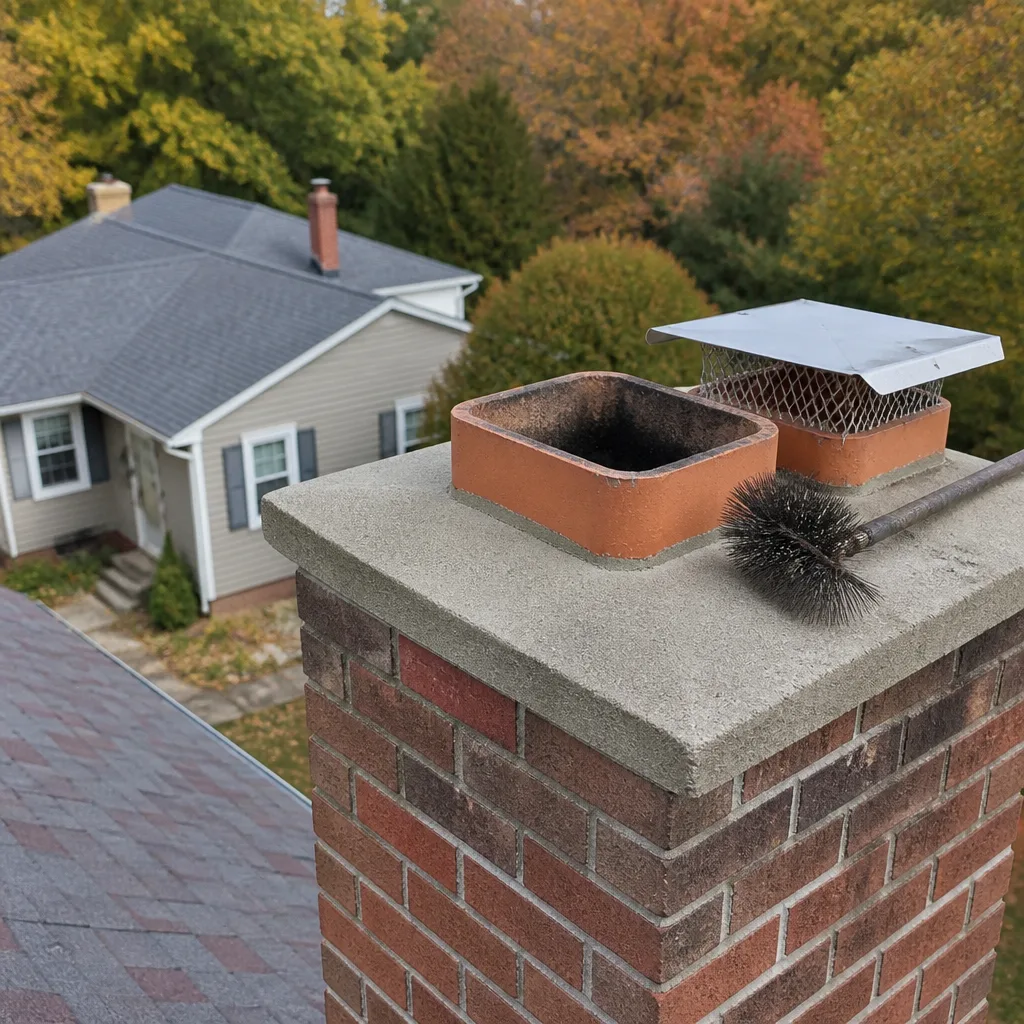 Sweep & inspection
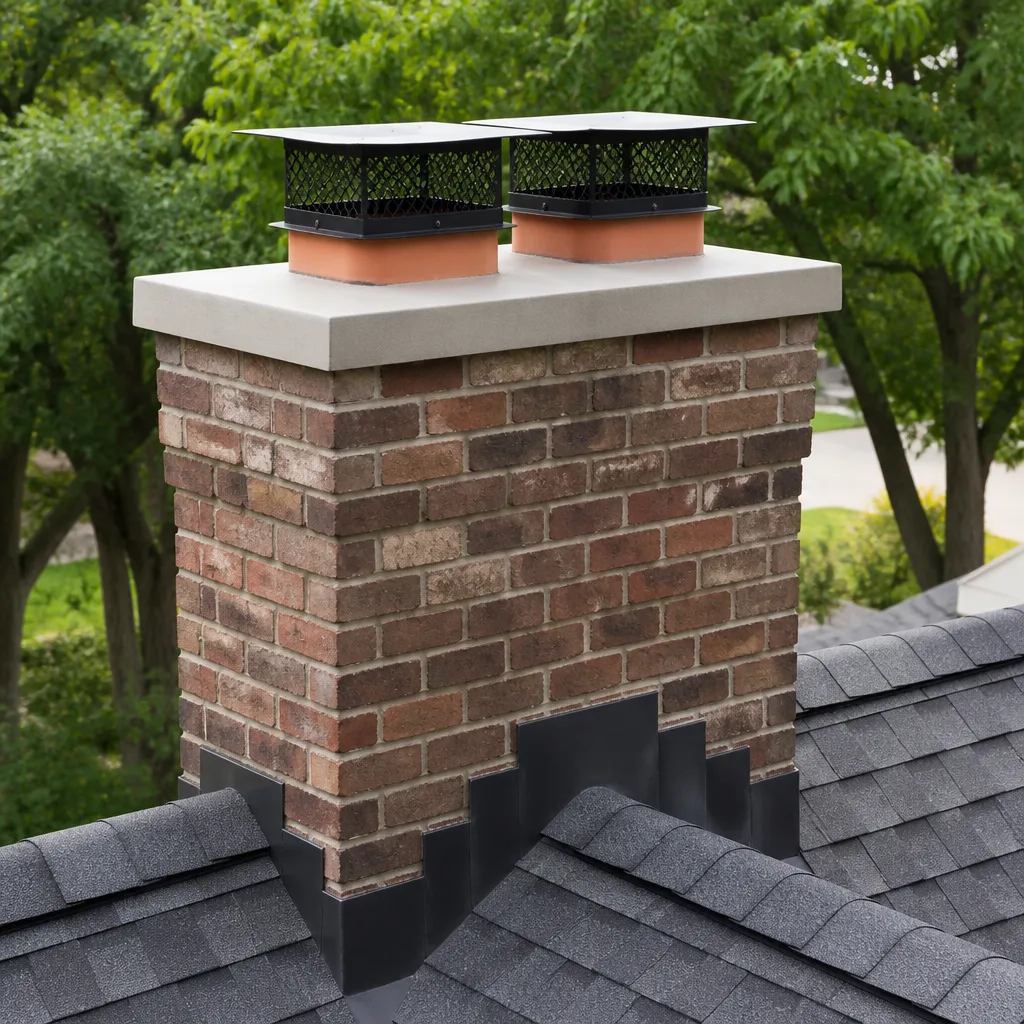 Caps & crowns
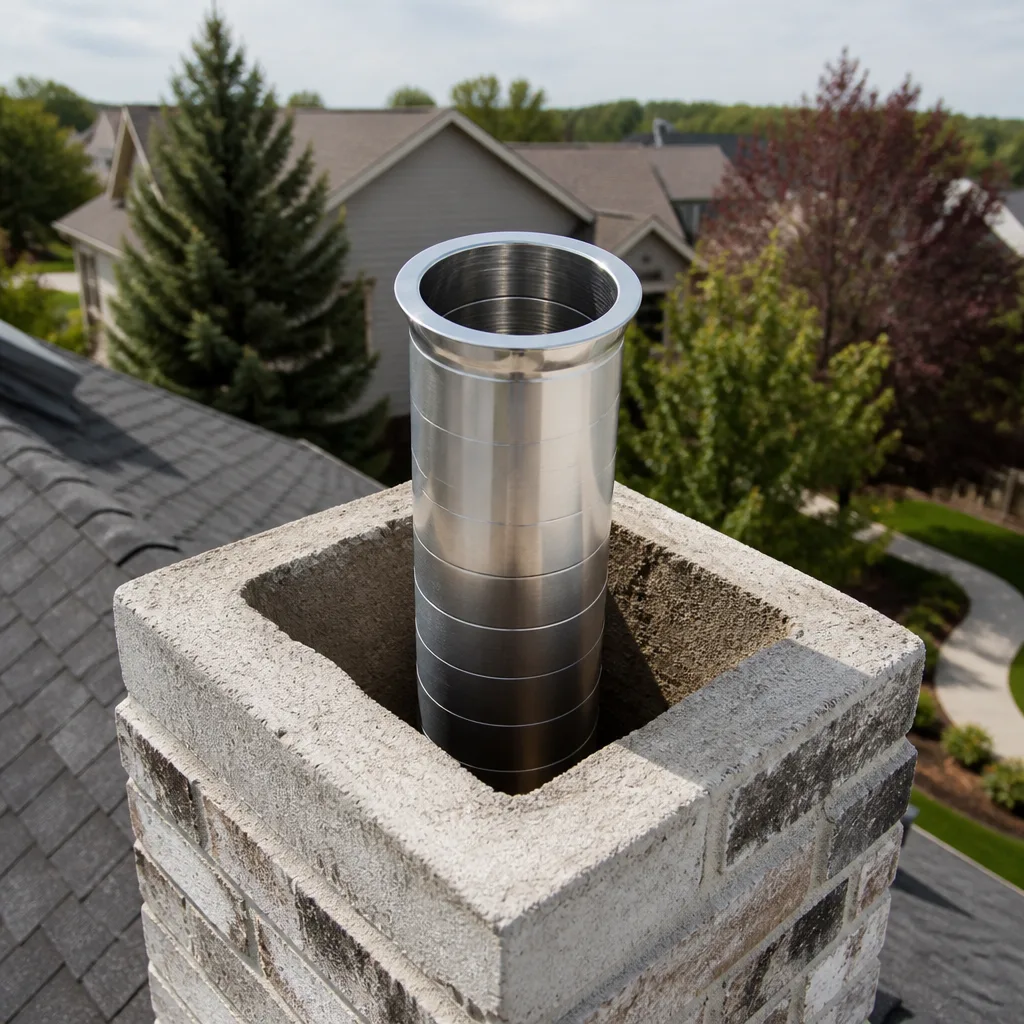 Flue relining
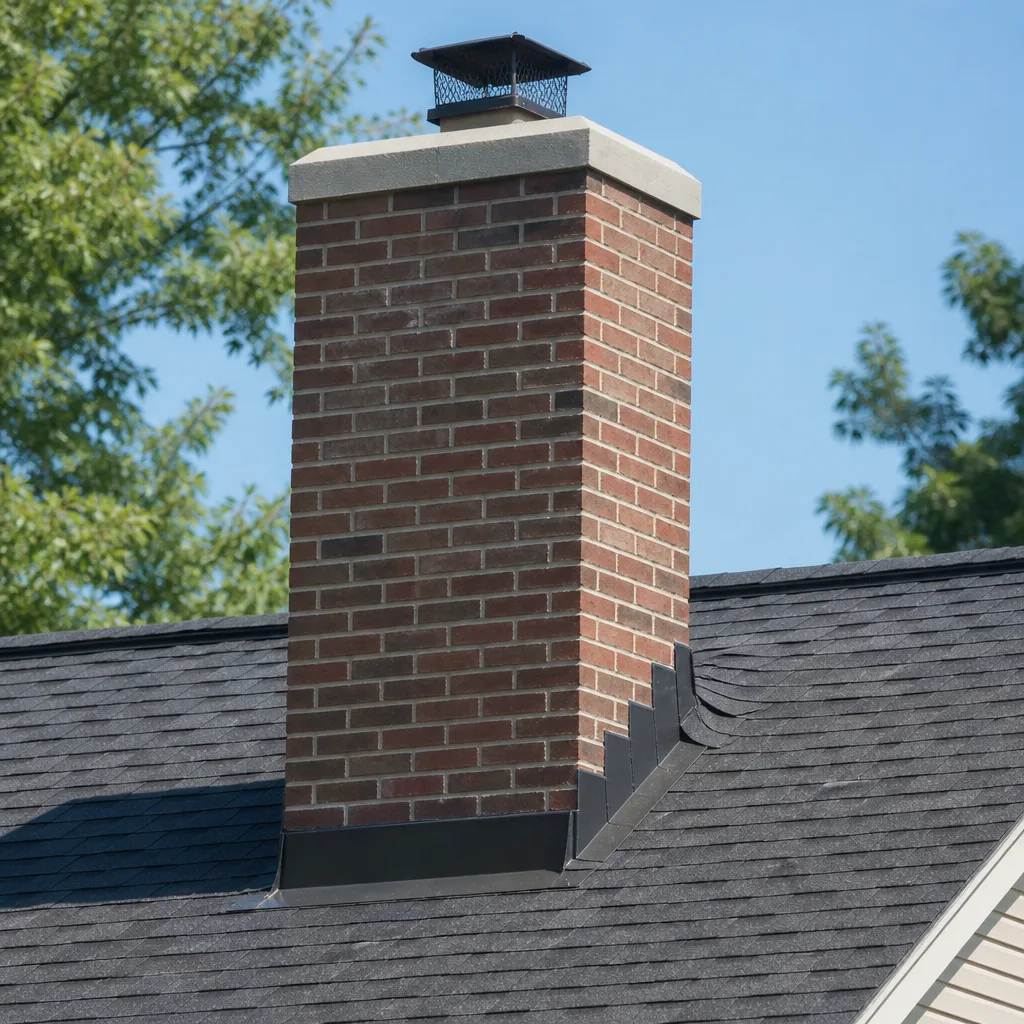 Masonry repair
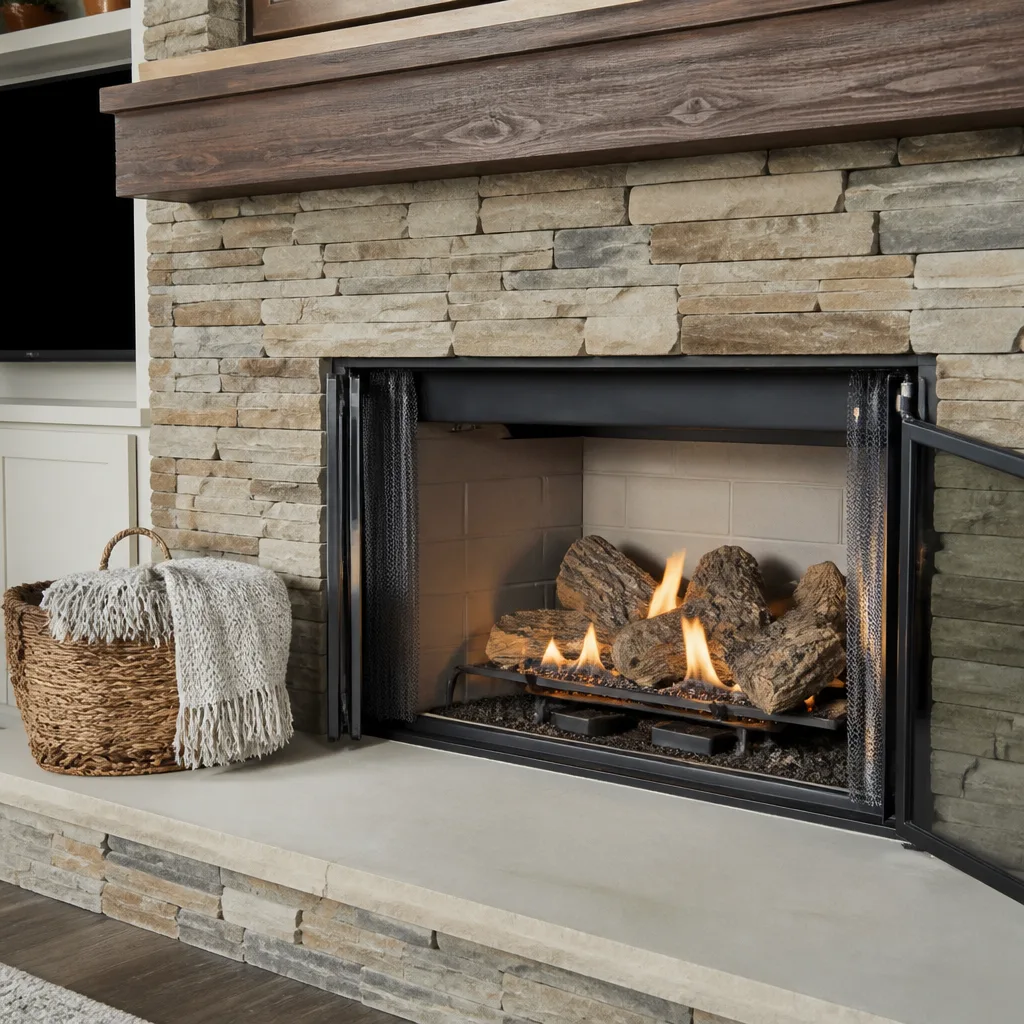 Gas fireplace service
Level 1 sweep and inspection to the NFPA 211 annual standard - flue, crown, cap, and flashing checked and photographed
Chimney sweep logs do not sweep chimneys. They loosen some creosote - which then falls where a brush and vacuum still have to collect it.
Chimney Cleaning Emergency Preparedness Guide for Encinitas Homes
Here’s a fact most Encinitas homeowners don’t learn until it’s too late: during a chimney fire, the instinct to douse it with water is wrong. Thermal shock can crack a clay liner instantly, turning a contained event into a structural failure that vents heat directly into wall framing. Knowing the correct response takes 30 seconds to learn, and it may determine whether your house survives the event. This guide covers what actually happens during a chimney fire, the correct sequence of actions in the first two minutes, what you must do afterward before using the fireplace again, and how to position your chimney system as an asset rather than a liability in Encinitas’ fire-prone coastal corridor. We’ll walk through documentation for insurance, pre-season readiness, and the specific ways wildfire conditions affect chimney systems in San Diego County.
Quick Answer
Chimney fire emergency preparedness for Encinitas homes means knowing the correct immediate response (close the damper if safe to reach, call 911, evacuate, never use water), understanding that every chimney fire requires a professional Level 3 inspection before reuse, and maintaining documented cleaning and inspection records so an insurance claim can’t be disputed on maintenance grounds. Encinitas sits in a high fire-risk corridor where ember intrusion through damaged chimney caps and ash accumulation in flues after nearby wildfires are real, documented conditions. The most effective emergency preparedness measure is a clean, properly capped, professionally inspected chimney before fire season begins, as outlined in our Chimney Sweep Maintenance Checklist for Encinitas Homeowners.
Styles & brands we work with
- Sweep & inspection
- Caps & crowns
- Flue relining
- Masonry repair
- Gas fireplace service
Table of Contents
- What Actually Happens Inside a Chimney Fire
- The First Two Minutes: Correct Response Sequence
- After the Fire: Mandatory Protocol Before Reuse
- Is Your Chimney an Asset or a Liability During Wildfire Season?
- Pre-Season Emergency Readiness for Encinitas Homes
- What to Document for Insurance Purposes
- Common Mistakes to Avoid
- Frequently Asked Questions
What Actually Happens Inside a Chimney Fire
Chimney fires aren’t rare flukes. They’re predictable combustion events that occur when creosote, the black or brown residue that condenses on flue walls during wood burning, reaches ignition temperature. Creosote ignites at around 451°F, and a typical wood fire can push flue gases well above 1,000°F. In Encinitas, where coastal humidity often leads homeowners to burn slower, cooler fires to take the chill off without overheating the house, creosote accumulates faster than in drier inland climates. A slow-burning fire produces more unburned wood particles, which condense as creosote rather than combusting fully. That’s not a theoretical concern. In our experience with Chimney Sweep in Encinitas visits, we routinely find heavy creosote buildup in homes where the fireplace sees only occasional, low-intensity use.
Once creosote ignites, the fire behaves differently depending on its stage. A free-burning chimney fire sounds like a freight train or a low rumble and can produce flames shooting from the chimney top. A slow-burning chimney fire may be nearly silent, with no visible flames, but reaches temperatures that damage the flue lining equally. Clay tile liners crack under thermal stress. Stainless steel liners can warp. Mortar joints between flue tiles open up. Once the liner is compromised, the next fire has a direct pathway for heat and embers to reach wood framing, and that’s when a chimney fire becomes a house fire.
Chimneys in Encinitas face a specific compounding factor: salt air. Coastal moisture carries salt that accelerates corrosion on metal components like caps, dampers, and flashing. A rusted damper that no longer seals properly can’t be closed effectively during an emergency, which removes your first and most important response tool. A rusted-through chimney cap can’t stop embers from entering or escaping. This is why the concept of emergency preparedness extends beyond the moment of crisis into the condition of the components you’ll depend on.
The First Two Minutes: Correct Response Sequence
The correct response to an active chimney fire follows a specific sequence, and each step has a mechanical reason behind it. Here’s what to do:
- Close the damper if you can reach it safely. The damper controls oxygen flow to the fire. Closing it starves the chimney fire of air, which slows combustion. This is why a functional damper matters. A damper that’s rusted open, common in coastal Encinitas homes, removes this tool from your emergency response.
- Call 911 immediately. Even if the fire appears contained, you cannot see what’s happening inside the flue. Heat may be transferring into attic framing or wall cavities. Firefighters carried out over 22,000 chimney fire responses in the U.S. in a recent year, and a meaningful share of those involved hidden extension into the structure.
- Evacuate everyone from the home. Do not go onto the roof. Do not attempt to inspect the chimney from outside. Get everyone out and stay out until firefighters clear the scene.
- Never use water on the fire. Water hitting a hot clay liner causes rapid, uneven cooling. Clay tile cracks under thermal shock. Water on a free-burning creosote fire can also create a steam explosion that spreads burning material. This is the single most dangerous instinct, and it’s worth repeating: close the damper, don’t reach for a hose.
One additional note that’s relevant specifically for Encinitas and San Diego County: if the chimney fire occurs during Santa Ana wind conditions, the risk of structural involvement is higher. High winds create strong draft pressure that feeds oxygen to the fire and can push embers out through any gap in the chimney cap or flue, landing them on shake roofs or dry vegetation. If you’re already under a Red Flag Warning when a chimney fire starts, treat it as a structural fire from the first moment and communicate that clearly to the 911 dispatcher.
After the Fire: Mandatory Protocol Before Reuse
Once the fire is out, the most dangerous mistake you can make is assuming the system is fine because the house is still standing. A chimney fire changes the internal condition of your flue in ways that are often invisible from the outside. Here’s what must happen before the fireplace is used again:
- A Level 3 inspection is mandatory. A Level 3 inspection is the most comprehensive level defined by the National Fire Protection Association’s standard for chimney systems. It includes everything in a Level 1 and Level 2 inspection, plus the removal of portions of the chimney structure or building components to access concealed areas. After a chimney fire, a visual check through the firebox is not sufficient. Heat can travel through cracked mortar joints into wall cavities you can’t see, and the only way to determine whether that happened is through a Level 3 inspection.
- Document everything before cleanup begins. Photograph the firebox, the damper, and the chimney from the outside. If creosote debris blew onto the roof or into the yard, photograph that too. Don’t attempt to clean any of it up until you’ve documented it and contacted your insurance company.
- Do not relight the fireplace based on a visual check. A homeowner looking up the flue with a flashlight sees black walls. That tells you nothing about whether the liner cracked behind the creosote layer, whether mortar joints opened, or whether the smoke chamber sustained damage. A non-specialist visual check is not clearance to operate.
- Have any necessary repairs documented before using the system. If the inspection reveals a compromised clay liner, a repaired or relined system needs sign-off from the chimney specialist who performed the work. For homes where liner damage is confirmed, Chimney Repair in Encinitas should be handled by a repair-capable technician, not deferred to a handyman who can’t assess the full scope of flue damage.
This protocol exists because the most dangerous chimney fire isn’t the one that’s happening. It’s the next one, in a system that’s already compromised. A cracked liner that would have been caught after the first event becomes the pathway for a second, much more serious fire.
Is Your Chimney an Asset or a Liability During Wildfire Season?
Encinitas sits in a vegetation-dense coastal zone where wildfire preparedness is a year-round conversation. Your chimney system is either a stabilizing feature of your home’s fire resistance or a structural vulnerability. The difference comes down to three specific conditions:
Ember intrusion through chimney caps
During a wildfire, embers travel miles ahead of the fire front. The most common way embers enter homes isn’t through open windows. It’s through attic vents, under eaves, and through damaged or missing chimney caps. A chimney cap with a proper spark arrestor mesh, typically 3/4-inch mesh, stops embers from entering the flue while allowing smoke and gases to exit. A missing cap, or a cap that’s rusted through from coastal salt exposure, leaves an open pathway for wind-driven embers to drop directly into the firebox or, worse, through a cracked liner into wall framing. If your chimney cap is more than a few years old in Encinitas’ marine environment, have it inspected for rust-through.
Draft behavior during high-wind events
Santa Ana winds don’t just carry embers. They change draft dynamics inside your flue. Strong winds across the chimney top can create negative pressure that reverses draft, pulling smoke and combustion byproducts into the house rather than up and out. This is a health concern with wood-burning systems and a carbon monoxide concern with gas systems. A well-maintained chimney with a properly sized flue and intact cap handles wind pressure far better than a system with a restricted flue or a damaged top. If you notice smoke blowback during Santa Ana conditions, that’s a draft problem that needs correction before fire season, not a quirk to live with.
When to permanently seal a system
If a chimney has sustained repeated damage, if the liner is compromised beyond repair, or if the homeowner no longer intends to use the fireplace, a permanent seal may be the right decision. A sealed system closes the flue at the top and the firebox at the bottom, eliminating ember intrusion risk entirely. This isn’t a decision to make casually, and it should be done by a specialist who understands chimney anatomy well enough to ensure the seal doesn’t trap moisture inside the flue, which creates its own structural problems. The core principle is that any unused chimney should be either properly maintained or properly sealed. A neglected chimney you don’t use is still a fire risk you own.
Your chimney is part of your household fire plan, not a separate item from it. If you’ve prepared your yard, cleared your vents, and made an evacuation plan but left a deteriorated chimney cap in place, you’ve left a known entry point for ignition. We’ve seen this pattern in Encinitas neighborhoods from Leucadia to Olivenhain, where coastal moisture accelerates cap deterioration faster than homeowners expect. For a broader look at how regular maintenance fits into household fire safety, see our Chimney Cleaning Encinitas home guide.
Pre-Season Emergency Readiness for Encinitas Homes
The most effective emergency preparedness measure available to any Encinitas homeowner is a clean, inspected chimney system before fire season begins. Here’s what that involves and why it matters:
Professional cleaning as risk mitigation
Creosote is fuel. Removing it removes the primary combustible material inside your chimney. The NFPA recommends cleaning when creosote accumulation reaches 1/8 inch, and annually at minimum for wood-burning systems. In Encinitas specifically, we recommend homeowners who burn coastal-driftwood or unseasoned wood get their flues checked twice a year. Salt-laden wood and high-moisture fuel from coastal sources produce heavier creosote deposits than dry inland hardwoods.
Post-wildfire flue inspection
If a wildfire has burned anywhere in San Diego County, even if the flames never approached your property, ash and ember debris can enter your flue. Ash carried on wind currents settles inside chimneys like it settles on cars and patio furniture. If that ash is still present when you light your first fire of the season, it becomes combustible material in the worst possible location. After any nearby wildfire event, have the flue inspected and cleaned before the first use. This is a real, documented condition in our area, not a hypothetical.
Component check: cap, damper, flashing
Before fire season, confirm your chimney cap is intact and its mesh isn’t clogged. Confirm the damper opens and closes completely. Confirm the flashing where the chimney meets the roof hasn’t lifted or rusted. Each of these components plays a role in emergency response. The cap stops ember intrusion. The damper is your oxygen-starvation tool during a chimney fire. Flashing gaps allow heat and embers to reach roofing materials. A broken component is a vulnerability that converts a routine cleaning interval into an emergency.
Dryer vent as the second combustion pathway
A home’s chimney isn’t the only venting system that can ignite. Dryer vents accumulate lint, which is highly combustible. Thousands of residential fires each year start in dryer venting. The same pre-season logic applies: if you’re checking one combustion outlet, check them all. Dryer Vent Cleaning in Encinitas addresses the second fire pathway in your home, and the two systems are mechanically similar in how they fail: restricted airflow, accumulated fuel, escalating temperatures. One call covers both.
What to Document for Insurance Purposes
Insurance claims after chimney-related fire events are frequently disputed on maintenance grounds. The insurer’s argument is simple: the homeowner failed to maintain the system, the failure caused the fire, and the damage falls outside coverage. You can preempt this by maintaining documentation that proves a consistent maintenance history. Here’s what to keep:
- Inspection reports. Every professional chimney inspection should produce a written report noting the system’s condition, any deficiencies found, and the technician’s recommendations. Keep these. They establish that you had the system evaluated by a professional at regular intervals.
- Cleaning receipts. A receipt from a chimney sweep proves not just that you were billed, but that the work was performed on a specific date. Paired with the inspection report, it creates a timeline of care that’s difficult for an insurer to dispute.
- Photographs. Before and after photos of the firebox, the flue interior, and the chimney cap after each service give you visual proof of the system’s condition over time. If you ever face a claim dispute, the photos tell the story in a way receipts can’t.
- Repair records. If a chimney specialist replaced a cap, repaired a liner, or addressed mortar issues, keep the invoice and any warranty documentation. These show that you corrected identified problems rather than ignoring them.
- Correspondence with any chimney professional. If a technician told you something needed repair and you had the repair done, keep both the recommendation and the completion record. The pair is stronger than either alone.
The practical rule: after every chimney service, you should leave the appointment with a piece of paper or a digital record that names the date, the work performed, and the system’s condition. If you don’t receive one, ask for it. A chimney professional who doesn’t provide documentation isn’t giving you what you need to protect yourself.
Common Mistakes to Avoid
- Associating dryer vents with emergency response. Lint fires in dryer vents are a leading cause of residential fires, and they follow the same pattern as chimney fires: accumulated fuel, restricted airflow, ignition without warning. Treat dryer vents with the same pre-season attention as your chimney.
Frequently Asked Questions
Chimney cleaning in Encinitas typically runs between $180 and $340, though the exact price varies with flue size, creosote accumulation, and whether any repairs are identified during the cleaning. Call (866) 282-6347 for a free estimate.
Most wood-burning chimneys should be swept annually, and more often if you burn high-moisture wood or notice thick creosote accumulation. Gas chimneys need less frequent cleaning, but their components should still be inspected annually. Coastal Encinitas homes may need more frequent service due to salt air corrosion on metal components.
Creosote accumulates until the next hot fire ignites it, and at that point you’re dealing with a chimney fire rather than a routine sweep. Skipping a year doesn’t just delay maintenance; it accumulates fuel, which is the specific condition that turns a normal fire into an emergency.
Chimney cap replacement varies depending on material and flue size, but a professional installation with a proper spark arrestor mesh is a modest investment compared to the damage an ember can cause through an uncapped flue. Call (866) 282-6347 for a free estimate, and we’ll assess the specific cap your system needs.
Gas fireplaces don’t produce creosote, but their venting systems still need inspection for blockages, corrosion, and proper draft. A specialist can evaluate the flue for signs of condensation damage, which is common in coastal Encinitas homes where salt air accelerates deterioration.
Smoke entering the living space means a draft problem that could be caused by a blocked flue, a closed damper, or negative pressure from exhaust systems. Open a window to equalize pressure and stop using the fireplace until a professional can assess the system. In coastal neighborhoods where homes are tightly sealed, negative pressure is a common culprit, and a chimney specialist can identify the cause.
See the difference
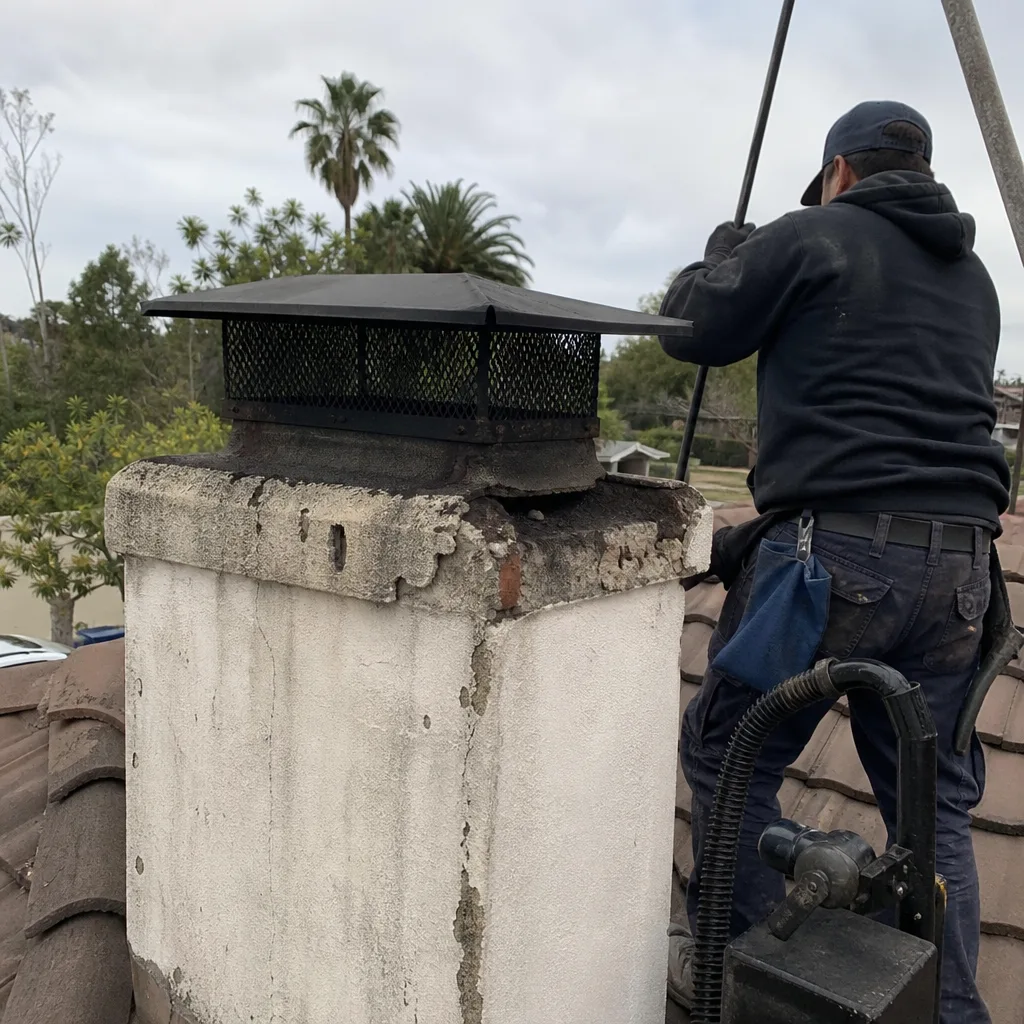 Before
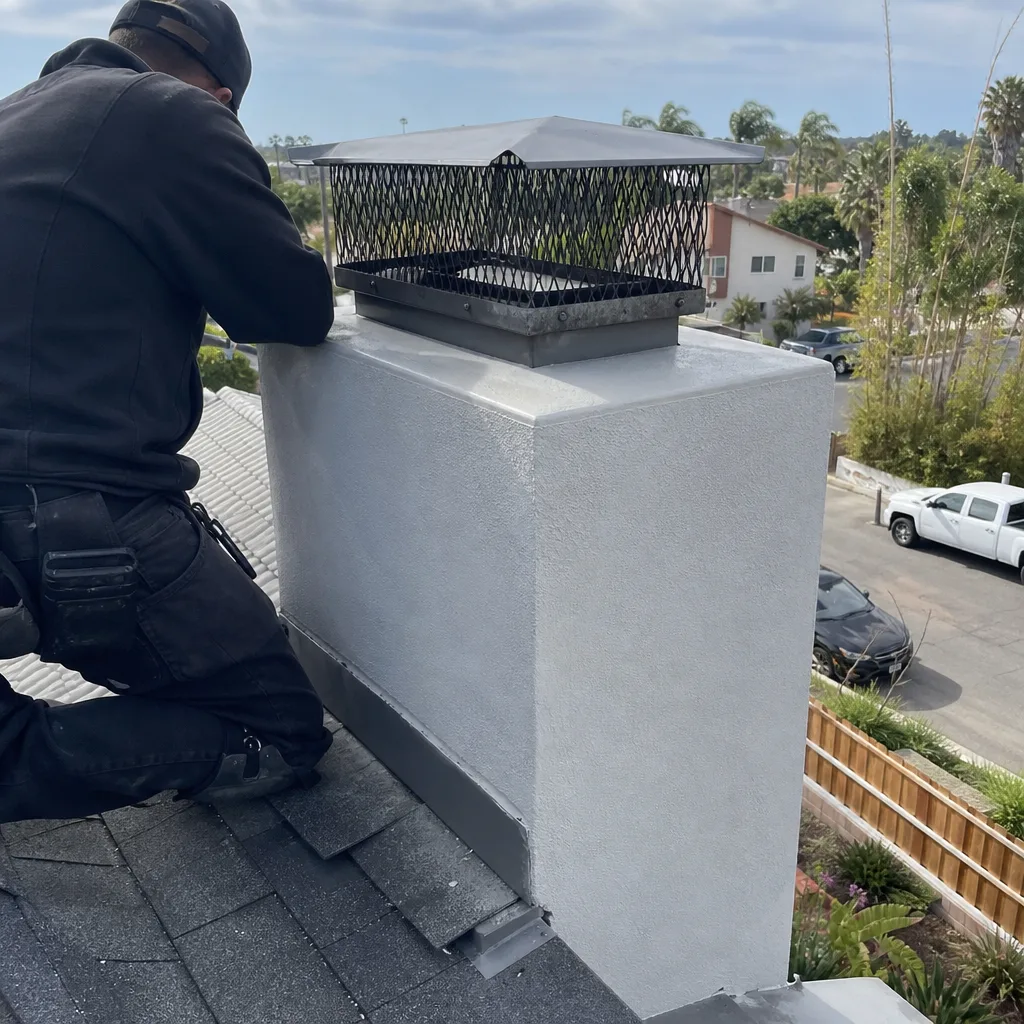 After
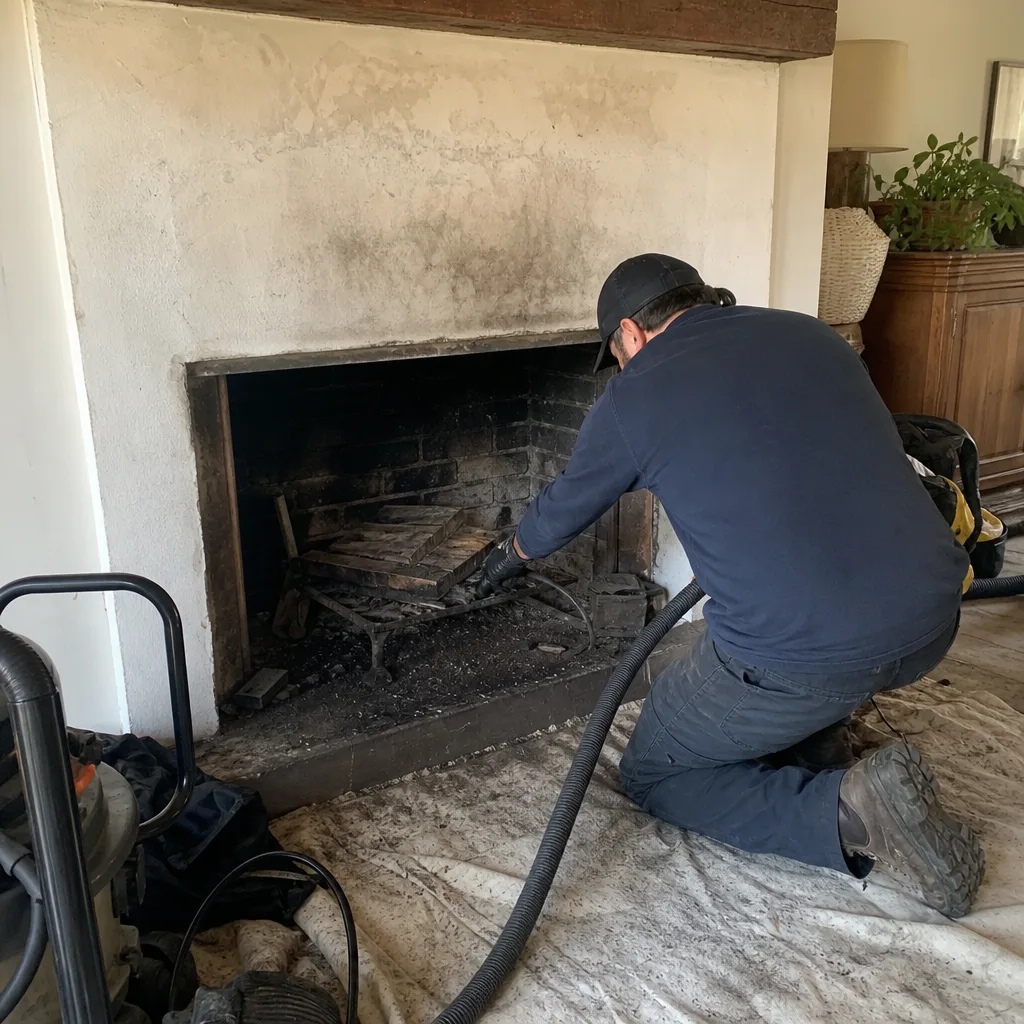 Before
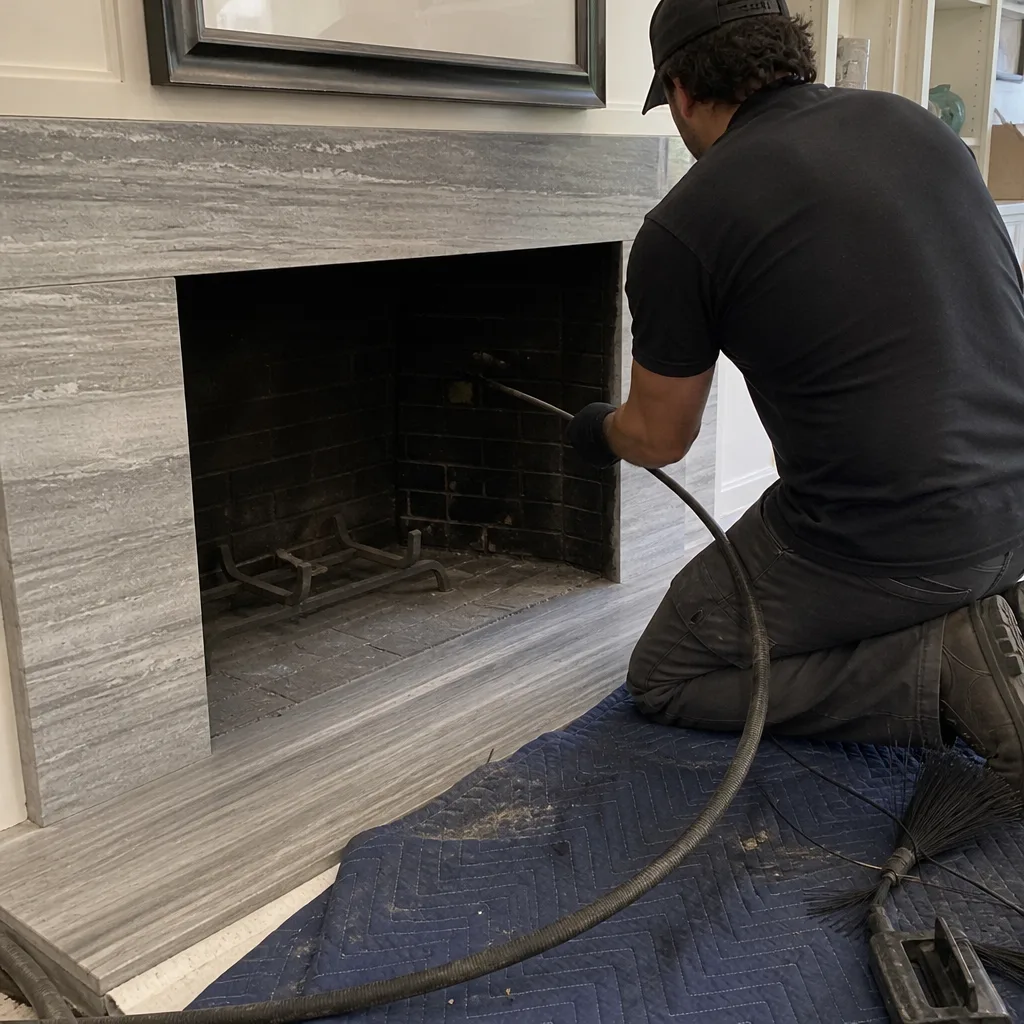 After
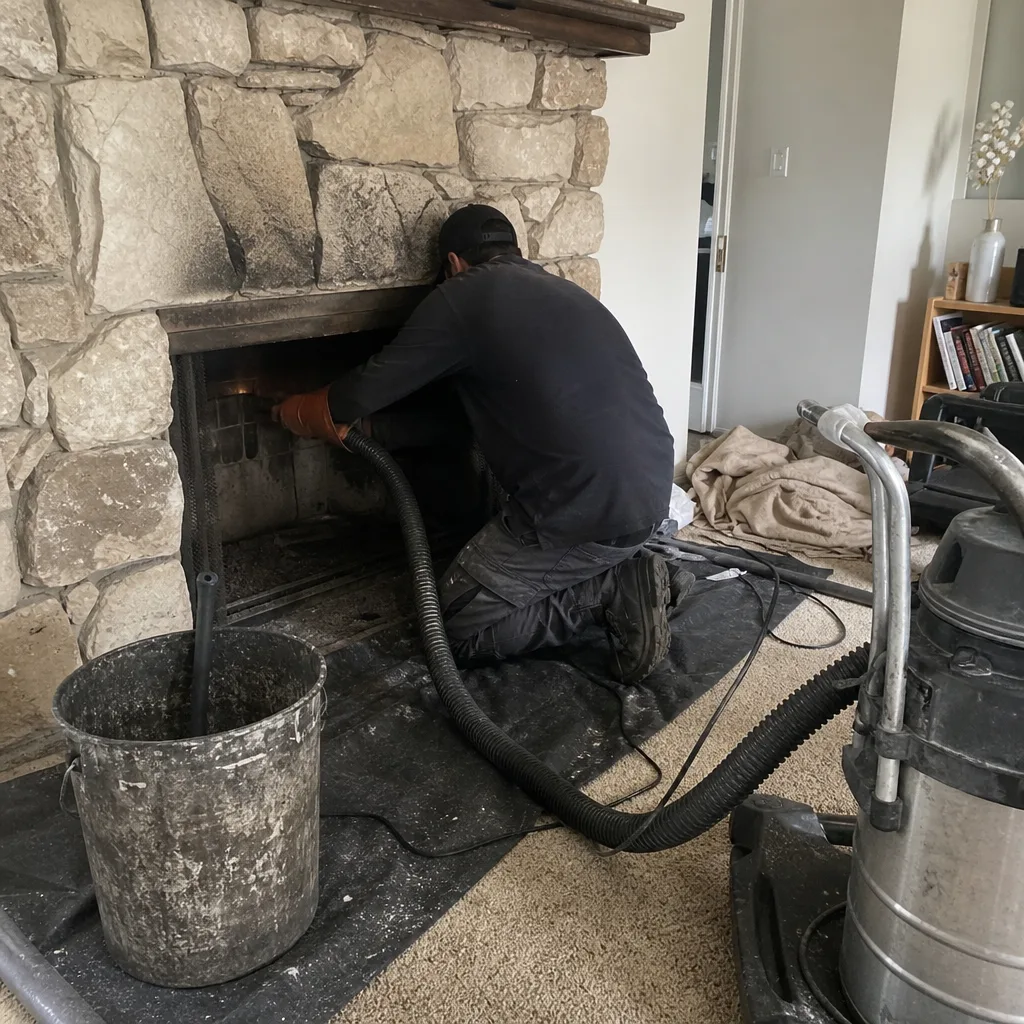 Before
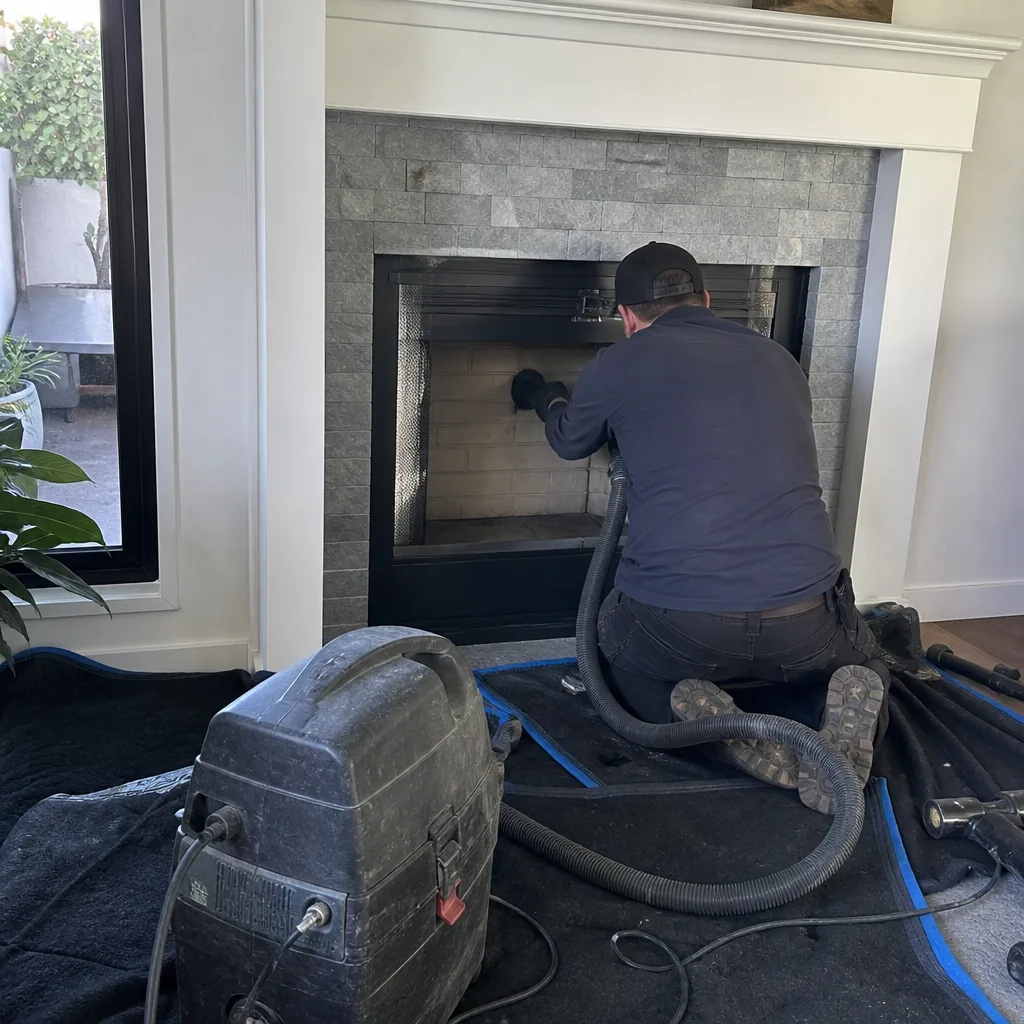 After
When to Call a Professional
Some chimney conditions require expert evaluation, and recognizing them before they become emergencies is the entire point of this guide. Call a professional if you notice smoke blowback during Santa Ana conditions, if you see creosote flaking from the flue walls, if you hear rumbling sounds during a fire, or if you haven’t had the system inspected in over a year. If you’ve experienced a chimney fire of any size, the call is non-negotiable: a specialist must inspect before the next use. Chimney Cleaning Encinitas offers free estimates in Encinitas and the surrounding area. Call (866) 282-6347 and we’ll assess what you need.
The Bottom Line
Chimney fire emergency preparedness in Encinitas is preparation, not panic. It’s a clean flue, a functional damper, an intact cap, and a documented maintenance history that protects you in the event of a claim. It’s knowing the 30-second response sequence that determines whether a chimney fire stays contained or becomes structural. And it’s recognizing that in a fire-prone coastal community, your chimney is either part of your household defense or a known vulnerability. Clean, inspect, document, and know what to do in the first two minutes. For more guides & resources, visit our blog. That’s the entire discipline, and it’s entirely within reach.
Written by the team at Chimney Cleaning Encinitas, serving Encinitas since 2012.